dsh-plugin-task-runner
Run the following command in DeepSeek Harness:
dsh plugin install weixshaw/dsh-plugin-task-runner
Paste the following prompt into your AI chat to install this plugin:
Run dsh plugin install weixshaw/dsh-plugin-task-runner in the terminal (source: https://github.com/weixshaw/dsh-plugin-task-runner), then restart the Web interface to activate Task-Runner mode from the mode selector.
About this plugin
A locally hosted mid-size model often carries only 64K or fewer context tokens, so anything past a single document can trigger memory overflow or a sharp drop in output quality. dsh-plugin-task-runner adds a Task-Runner mode to DeepSeek Harness: the orchestrator breaks a large job into independent sub-tasks and hands each one to a sub-agent that works in its own fresh, short context window. The orchestrator never accumulates raw material; it only keeps the plan and each worker's compact summary, so no single window ever has to hold the entire task.
Budgets are enforced at execution level, not just in the prompt. A real semaphore caps concurrency; a pre-dispatch token estimate rejects sub-tasks that would exceed the worker context budget; any worker result that overflows the result-bandwidth cap is silently truncated and persisted to disk. Sub-agents run in fully isolated sessions, so secrets and history in the parent session never leak into a worker. A structured .task-runner/ directory externalizes long-running state, letting the orchestrator write heavy context to disk and keep only a tight summary in memory, with the ability to resume after an interruption.
This preset is built for developers running OpenAI-compatible local endpoints on 48 GB or 64 GB Macs who want a 27B-class model to handle multi-document research, large refactors, or any job that outgrows one context window. Turn on Task-Runner mode, set concurrency to 1 or 2, pick your worker and fallback models, and a single machine can now carry work that would otherwise demand a much larger context.
Use Cases
- A 27B local model ingests dozens of documents and produces a unified report in one pass
- Cross-module refactoring across large files on a 48GB Mac without exceeding the context window
- Resume a long-running task after an interruption by reading state from the .task-runner/ directory
Best For
- Developers running OpenAI-compatible local endpoints such as omlx or llama.cpp
- Individual users capped at 64K context who want to avoid routing everything to the cloud
- Independent engineers who need a mid-size local model for tasks that outgrow a single window
Related Plugins
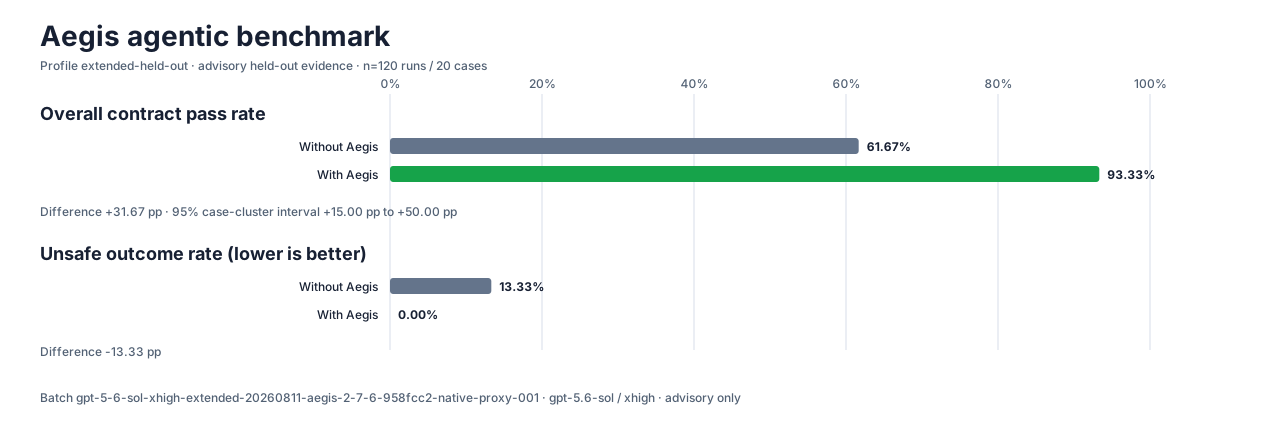
A method pack that makes AI coding agents plan against your real baseline, prove completion with fresh evidence, and reduce reworks and unsafe changes.
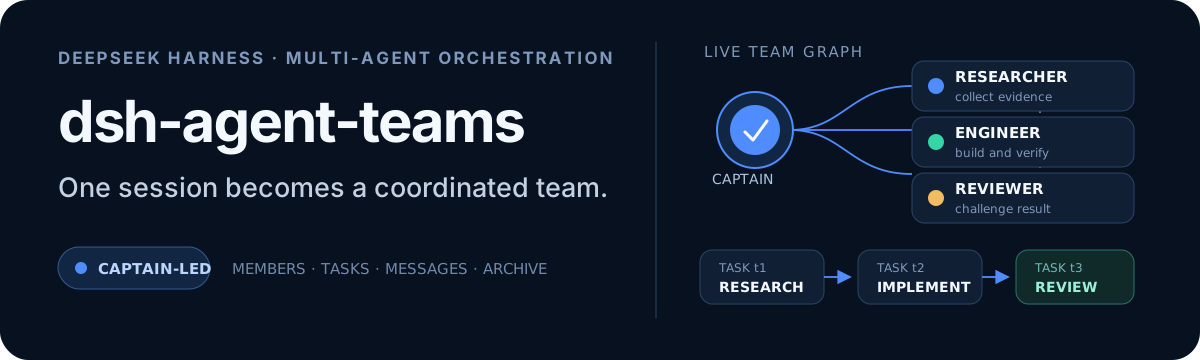
Turns the DeepSeek Harness session into a captain that builds a durable sub-agent team, splits goals into dependency-aware tasks, and coordinates work via direct messages and a live Web UI.
Gives coding agents design judgment, letting Claude Code, Cursor, and 70+ agents generate and iterate high-quality UI, presentations, and graphics right from the terminal.
Run the Pi ecosystem's plugins on DeepSeek Harness, unmodified, via a compatibility layer that implements Pi's public extension ABI on DSH's native services.