dsh-opinionated-subagent
Run the following command in DeepSeek Harness:
dsh plugin install dat-lequoc/dsh-opinionated-subagent
Paste the following prompt into your AI chat to install this plugin:
Run dsh plugin install dat-lequoc/dsh-opinionated-subagent in DeepSeek Harness to install this plugin. Source: https://github.com/dat-lequoc/dsh-opinionated-subagent
About this plugin
The stock subagent tool in DeepSeek Harness accepts only a description and a prompt. A child silently inherits the parent model and reasoning effort, and there is no parameter to override either. If a delegated task should run on a faster or cheaper model, the only lever is switching the parent, which is rarely practical. Steering is even worse: the native send_message routes through the followup channel, so a correction aimed at work in flight waits for the entire current turn to finish before landing. In a measured session a steer accepted at plus 7.4 seconds was not consumed until plus 54.9 seconds, a 47.5-second stall on a simple counting task.
dsh-opinionated-subagent replaces the subagent frontend. The model argument becomes required, and its enum is the allowlist you maintain under Settings, Plugins. Reasoning effort is pinned per route and validated against the exact model before any provider call; an unadvertised effort id is refused outright rather than clamped to a nearby value. For steering, the plugin calls Agent steer for a running direct child so a correction joins the turn in progress at the next step boundary instead of queueing behind the full turn. Every subagent call renders a one-line route summary in the transcript, so you never need to read the session log to confirm which model the child actually ran on. All configuration is re-read at every tool call, so an edit applies to the next delegation with no restart.
It is built for teams running mixed-model workloads where the main agent needs deep reasoning but delegated subtasks should run on lighter or domain-specific models to control cost and latency. It is also for anyone with a hard policy against silent inheritance: an empty allowlist unregisters the tool entirely rather than falling back to the parent model, and the prompt still states the refusal reason so the model can explain it to the user. The plugin is opt-in by design; a fresh install behaves identically to the stock tool until you remove the seeded inherit/current entry and add your own routes.
Use Cases
- Delegate subtasks to lighter models while the main agent keeps deep reasoning
- Enforce an explicit per-child model policy that forbids silent inheritance
- Steer a running subagent mid-turn without waiting for the full turn to end
Best For
- AI engineering teams running mixed-model workloads
- Multi-tenant platforms with strict model routing policies
- Developers who need to cap subagent reasoning effort and invocation cost
Related Plugins
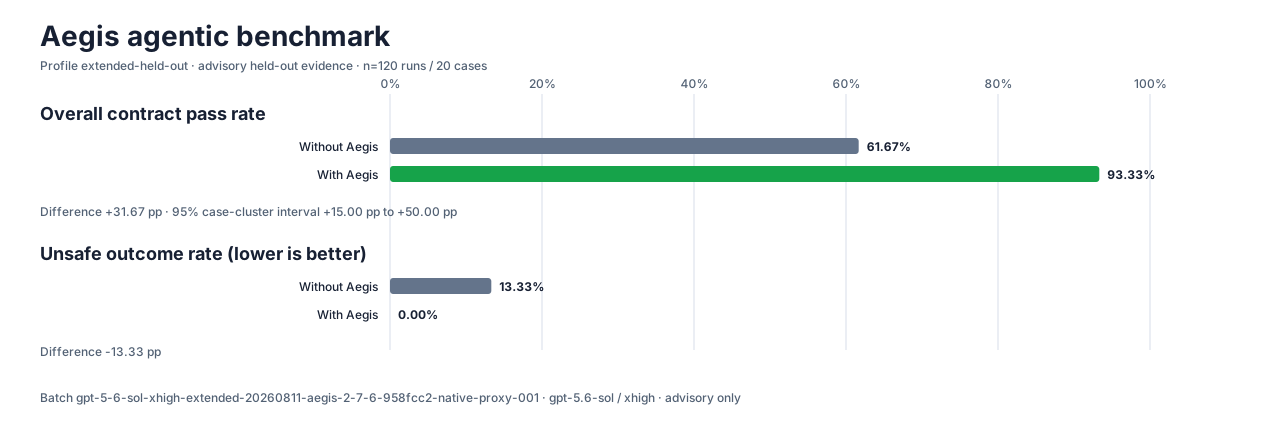
A method pack that makes AI coding agents plan against your real baseline, prove completion with fresh evidence, and reduce reworks and unsafe changes.
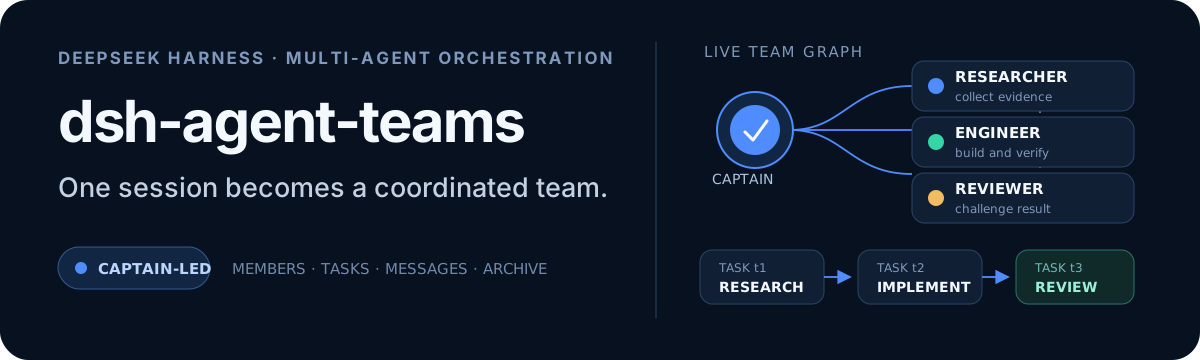
Turns the DeepSeek Harness session into a captain that builds a durable sub-agent team, splits goals into dependency-aware tasks, and coordinates work via direct messages and a live Web UI.
Gives coding agents design judgment, letting Claude Code, Cursor, and 70+ agents generate and iterate high-quality UI, presentations, and graphics right from the terminal.
Run the Pi ecosystem's plugins on DeepSeek Harness, unmodified, via a compatibility layer that implements Pi's public extension ABI on DSH's native services.