dsh-plugin-studio
Run the following command in DeepSeek Harness:
dsh plugin install Tsqurt/dsh-plugin-studio
Paste the following prompt into your AI chat to install this plugin:
Run dsh plugin install Tsqurt/dsh-plugin-studio in your DeepSeek Harness terminal (source: https://github.com/Tsqurt/dsh-plugin-studio), then restart dsh web to see the Studio button at the bottom of the sidebar.
About this plugin
The Cordis plugin runtime inside DSH is a complete black box: events fire dozens of times a second on the event bus, plugin fibers start and stop in silence, tools and skills scatter across registries and YAML files, and none of it is visible to the person who actually operates the system. dsh-plugin-studio lays all of that out across seven tabs. The Event Stream tab renders every dispatch as a scrollable line with mode badges, namespace colors, and expandable parameters down to function source. The Plugin Overview tab ships a reflection-based catalog of every registered event and service signature, an SVG relationship graph connecting events to the plugins that listen for them, and a persistent annotation layer for human-readable parameter headers. Plugin Management gives you three-partition start/stop (system, external, dynamic), nested named combos, snapshot-and-restore, and a sidebar quick-toggle button-keeping state across webUI restarts.
The developer-facing tabs remove most of the boilerplate from writing a listener plugin. You pick an event from a dropdown, parameter names and descriptions are inferred automatically, a two-level template library drops in annotated examples with official doc links, a JSON payload tester fires a single call, and a passive N-second monitoring window confirms the trigger before you push the finished package straight into the runtime. The Tool, Skill, and Preset tabs consolidate the three input surfaces that shape agent behavior into one place: create HTTP or async-code tools inline, author Markdown skills, fork an existing preset into a copy, and toggle any of them on or off with an atomic register/deregister call.
It is built for three audiences. Explorers who just connected to DSH and want to see the Cordis event model without reading source. Developers who keep writing the same listener boilerplate and want the engineer tax compressed to a few clicks. And operators managing multiple agents who need a single pane of glass for tools, skills, and presets, with snapshots to roll back and combo groups to batch-start. The entire studio runs inside DSH's dynamic-plugin sandbox, never emits events by bypassing the bus, and falls back to next() automatically when a waterfall handler throws, so the host behavior is never at risk.
Use Cases
- Trace every event dispatch on the Cordis bus in real time with expandable parameters
- Build a listener plugin by selecting events, inserting templates, and firing a JSON test
- Centralize tool, skill, and preset management across agents with snapshot and restore
Best For
- Explorers who just connected to DSH and want to understand the Cordis event model
- Developers who keep writing listener plugins and want to reduce boilerplate
- Operators managing tools, skills, and presets across multiple agents with rollback needs
Related Plugins
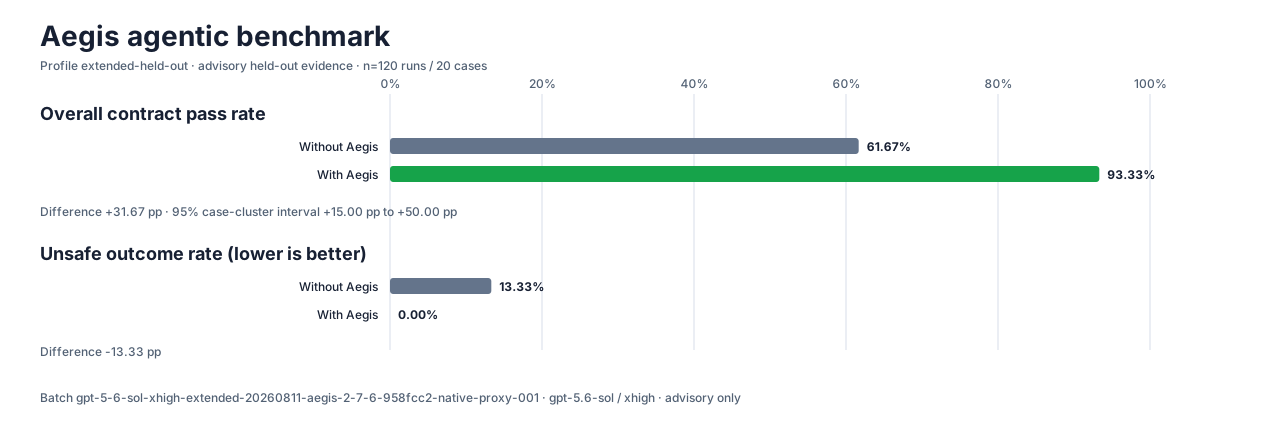
A method pack that makes AI coding agents plan against your real baseline, prove completion with fresh evidence, and reduce reworks and unsafe changes.
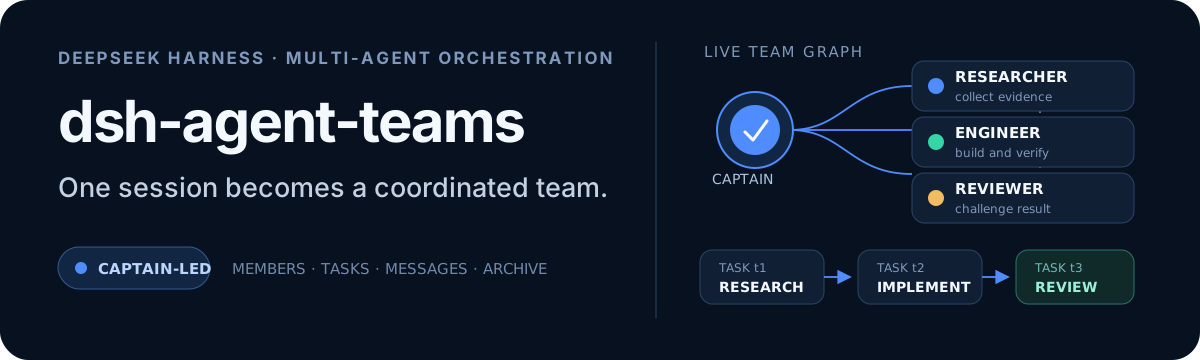
Turns the DeepSeek Harness session into a captain that builds a durable sub-agent team, splits goals into dependency-aware tasks, and coordinates work via direct messages and a live Web UI.
Gives coding agents design judgment, letting Claude Code, Cursor, and 70+ agents generate and iterate high-quality UI, presentations, and graphics right from the terminal.
Run the Pi ecosystem's plugins on DeepSeek Harness, unmodified, via a compatibility layer that implements Pi's public extension ABI on DSH's native services.