dsh-plugin-practice
Run the following command in DeepSeek Harness:
dsh plugin install Ri0n72Y/dsh-plugin-practice
Paste the following prompt into your AI chat to install this plugin:
Run dsh plugin install Ri0n72Y/dsh-plugin-practice in DeepSeek Harness to install this practice plugin; source: https://github.com/Ri0n72Y/dsh-plugin-practice
About this plugin
The DeepSeek Harness plugin system touches on lifecycle hooks, tool definition, config validation, service injection, typed events, and waterfall middleware, which can be hard to piece together from scattered docs and source code alone. dsh-plugin-practice is a minimal exercise repo that walks through these concepts in six incremental lessons, each focused on one core abstraction. From apply(ctx) to short-circuiting in ctx.waterfall(), every pattern is demonstrated in a single loadable Bundle you can inspect and test end to end.
The repo ships two patches: cordis.patch.yml for the built artifact and cordis.dev.patch.yml for loading TypeScript directly from src/. You can either deploy via the official install flow or use overlay mode for rapid iteration. The six lessons cover plugin lifecycle heartbeats, tool injection with defineTool, Schemastery-based config validation, Service Provider / Consumer wiring, loose-coupled ctx.emit / ctx.on events, and around-middleware with short-circuit wrapping, all with expected outputs for self-testing.
Best suited for developers who are new to DSH or Cordis plugin development and want a small, runnable codebase to build a solid mental model step by step. The repo tracks the current DSH development version, so API changes should be cross-referenced with official docs.
Use Cases
- Step through six lessons covering plugin lifecycle, Tool, Config, Service, Event, and waterfall middleware
- Iterate on TypeScript plugin source in overlay mode and observe runtime behavior instantly
- Deploy as a formal Bundle to a profile and verify the full install pipeline
Best For
- Developers new to the DSH plugin system who need a minimal working example
- Beginners who want a lesson-based codebase to internalize core DSH abstractions
- Engineering teams that want to verify the standard Bundle flow before building custom plugins
Related Plugins
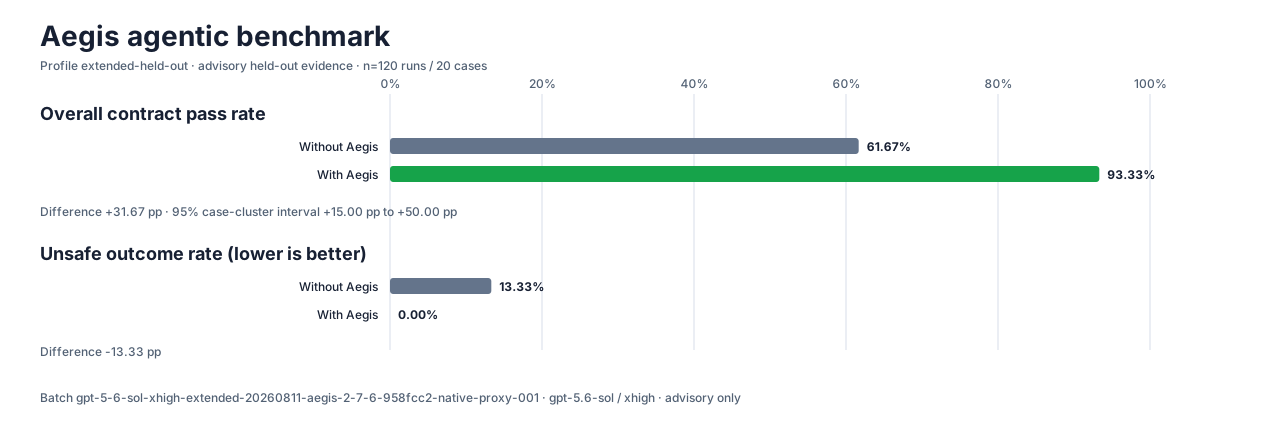
A method pack that makes AI coding agents plan against your real baseline, prove completion with fresh evidence, and reduce reworks and unsafe changes.
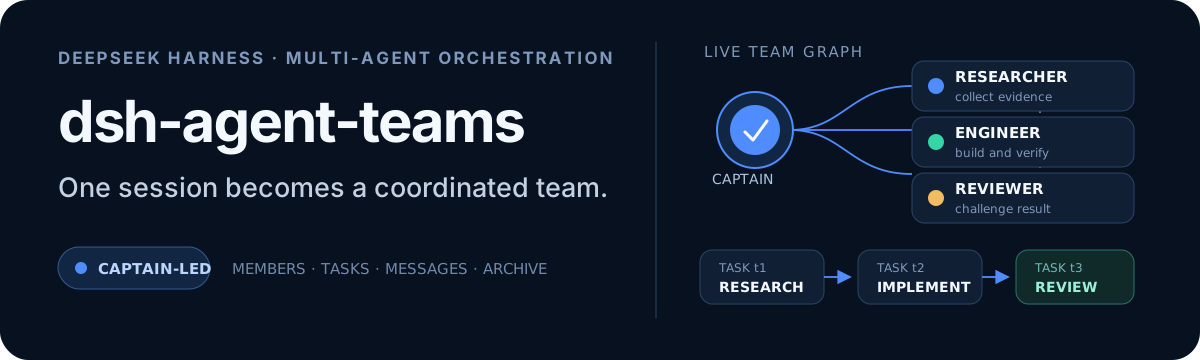
Turns the DeepSeek Harness session into a captain that builds a durable sub-agent team, splits goals into dependency-aware tasks, and coordinates work via direct messages and a live Web UI.
Gives coding agents design judgment, letting Claude Code, Cursor, and 70+ agents generate and iterate high-quality UI, presentations, and graphics right from the terminal.
Run the Pi ecosystem's plugins on DeepSeek Harness, unmodified, via a compatibility layer that implements Pi's public extension ABI on DSH's native services.