dsh-plugin-prune
Run the following command in DeepSeek Harness:
dsh plugin install Octo-o-o-o/dsh-plugin-prune
Paste the following prompt into your AI chat to install this plugin:
Run dsh plugin install Octo-o-o-o/dsh-plugin-prune to install (source: https://github.com/Octo-o-o-o/dsh-plugin-prune), then restart dsh web and open the Plugin Health tab under Settings, Plugins.
About this plugin
As your plugin list grows past twenty or thirty, it gets hard to tell which ones are actually doing work and which have been quietly idle since the day you installed them. dsh-plugin-prune exists to answer that question with data rather than gut feeling. It is a pure local observer: it registers no model tools, touches no business state, and simply listens to every tools/execute and tools/result event, tallying call counts, error rates, average latency, distinct sessions, and rendered output size across a rolling 90-day window for each tool and skill.
Once enough data has accumulated, a new Plugin Health tab under Settings, Plugins gives you a plugin overview table cross-referenced with the shipped inventory, plus a per-tool and per-skill detail view. Every row carries a machine-generated suggestion — never called, high error rate, marked useless, or active and reliable — and lets you assign your own Useful, Neutral, or Useless rating in one click. Statistics persist to a local JSON file, so counters survive restarts and accumulate across sessions.
It is built for DeepSeek Harness users who have outgrown the install-and-forget habit and want an honest, objective signal before uninstalling. Everything stays on your machine; nothing is sent anywhere.
Use Cases
- Plugin list has grown past twenty and you need a data-backed way to prune
- Want to verify how often a specific tool is actually called and its error rate
- Periodically audit plugin health to keep your Harness setup lean and fast
Best For
- DeepSeek Harness users with 20+ plugins who are unsure what to remove
- Users who prefer data-driven decisions over gut-feel cleanup
- Privacy-conscious users who want all statistics to stay on their machine
Related Plugins
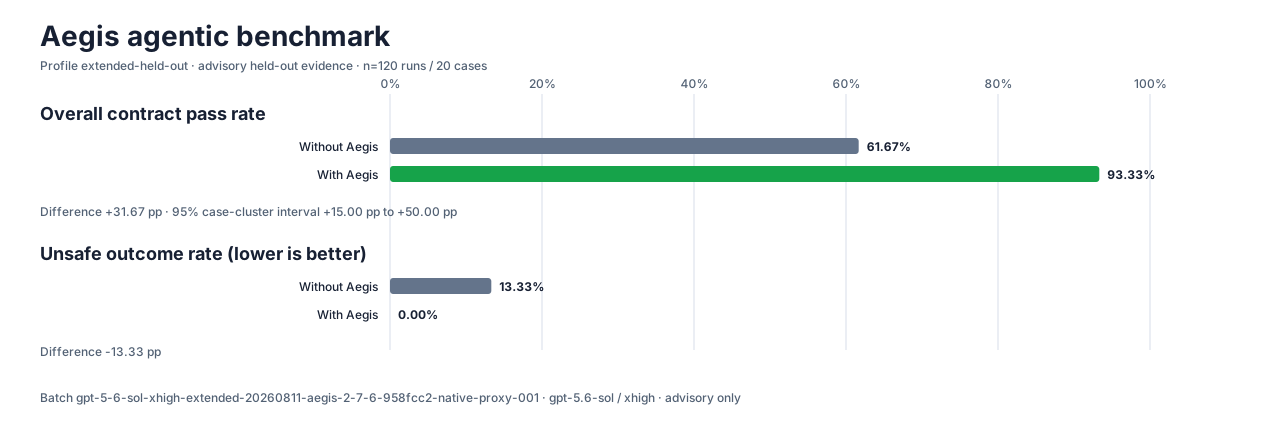
A method pack that makes AI coding agents plan against your real baseline, prove completion with fresh evidence, and reduce reworks and unsafe changes.
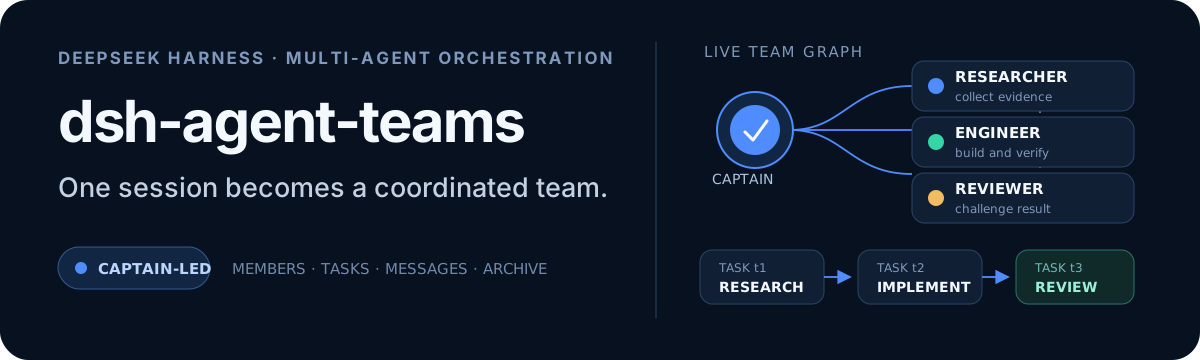
Turns the DeepSeek Harness session into a captain that builds a durable sub-agent team, splits goals into dependency-aware tasks, and coordinates work via direct messages and a live Web UI.
Gives coding agents design judgment, letting Claude Code, Cursor, and 70+ agents generate and iterate high-quality UI, presentations, and graphics right from the terminal.
Run the Pi ecosystem's plugins on DeepSeek Harness, unmodified, via a compatibility layer that implements Pi's public extension ABI on DSH's native services.