dsh-queue-merge
Run the following command in DeepSeek Harness:
dsh plugin install keyiadiannao/dsh-queue-merge
Paste the following prompt into your AI chat to install this plugin:
Run dsh plugin install keyiadiannao/dsh-queue-merge in DeepSeek Harness to install this plugin; the source repository is available at https://github.com/keyiadiannao/dsh-queue-merge.
About this plugin
The official DeepSeek Harness agent loop consumes one queued prompt per turn. When you fire off four follow-up messages while the agent is mid-task, they become four separate turns — do a bit, get corrected, redo, get corrected again — and productivity tanks with every iteration. dsh-queue-merge adds the missing third queue-consumption policy: before the formal turn begins, a single LLM call rewrites all queued messages into one consolidated prompt so the agent acts on the full intent at once.
Consolidation is not simple concatenation. Corrections override earlier statements on the same point, while unrelated requests stay as distinct items. Any batch containing non-text attachments (images, files) or non-human sources skips the merge entirely and falls back to per-message processing. The consolidation call runs before the inbox is touched, so a failure leaves the queue exactly as it was. If the user edits, deletes, or reorders the queue during synthesis, the merge aborts rather than splicing out messages that were not part of the synthesis. A provenance badge follows every consolidated bubble so the original messages remain inspectable, and the merge never invents permissions the user did not state.
If your daily agent workflow leans heavily on queued follow-ups and you want them understood as a whole rather than replayed one by one, this plugin is built for you. It complements the official QueueDock and dsh-queue-plus: those manage queue order and membership, while this plugin governs how the queue is actually consumed.
Use Cases
- You queued several follow-ups while the agent is mid-task and want them understood as one intent
- You issued multiple corrections and additions in succession and want to avoid piecemeal rework
- You batched related change requests and want the agent to act on them together
Best For
- Power users who rely on DSH queue for iterative agent sessions
- Teams running multi-step agent workflows with frequent follow-ups
- Anyone who prefers batched instructions over one-by-one replay
Related Plugins
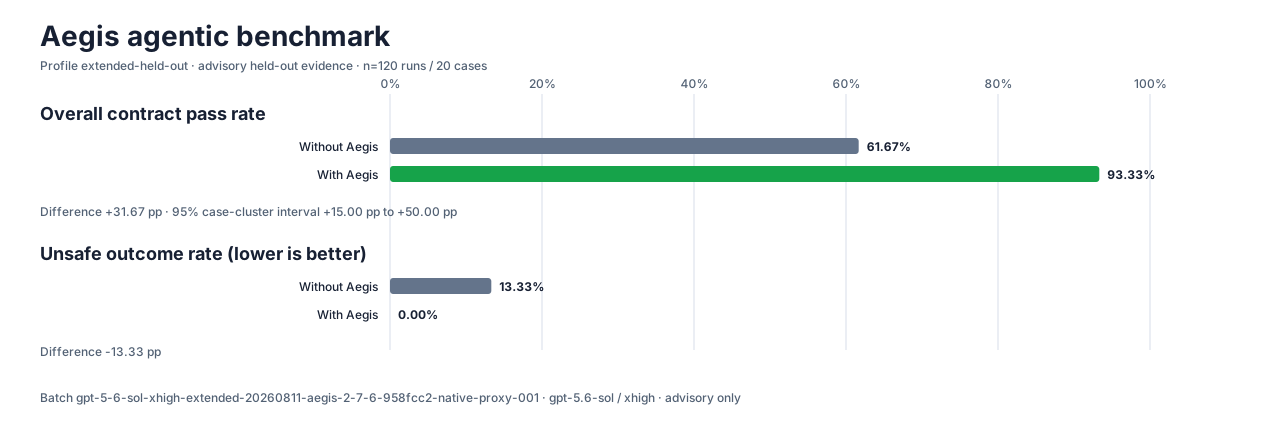
A method pack that makes AI coding agents plan against your real baseline, prove completion with fresh evidence, and reduce reworks and unsafe changes.
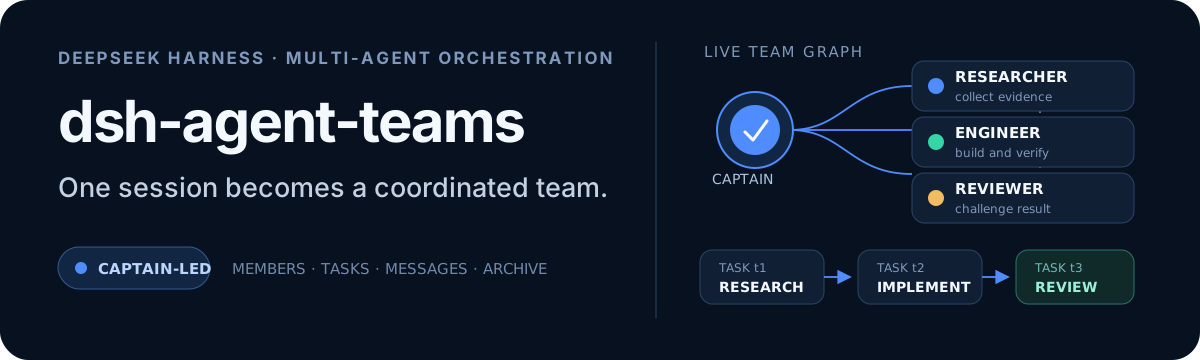
Turns the DeepSeek Harness session into a captain that builds a durable sub-agent team, splits goals into dependency-aware tasks, and coordinates work via direct messages and a live Web UI.
Gives coding agents design judgment, letting Claude Code, Cursor, and 70+ agents generate and iterate high-quality UI, presentations, and graphics right from the terminal.
Run the Pi ecosystem's plugins on DeepSeek Harness, unmodified, via a compatibility layer that implements Pi's public extension ABI on DSH's native services.