omdsh-shortcuts
Run the following command in DeepSeek Harness:
dsh plugin install omdsh-plugins/omdsh-shortcuts
Paste the following prompt into your AI chat to install this plugin:
Run dsh plugin install omdsh-plugins/omdsh-shortcuts in your terminal to install the plugin; the source repository is https://github.com/omdsh-plugins/omdsh-shortcuts .
About this plugin
In DeepSeek Harness a keystroke has to travel through three places before it becomes an action: the Electron main process, the Node runtime, and the browser page. Until now, shortcut bindings were hard-coded inside individual plugins, so remapping a single chord meant hunting through source for whichever file owned that key. omdsh-shortcuts collapses that entire chain into one document: declare which commands exist, which surface they live on, and which chord reaches them. The desktop native menu and the in-page key listener both react instantly, and edits hot-reload without a restart or a shell rebuild.
The plugin injects a shortcut service on both halves of the runtime: register, bindings(), onBindings, and chordLabel. Other plugins simply declare their commands; the chord assignment is pure configuration. Harness-native buttons such as New Session, Add Workspace, and Settings automatically get their chord appended to the tooltip on hover, so a pointer pass tells you exactly what to press. Surface-level differences—browsers keep ⌘W, ⌘T, ⌘N for themselves—are handled explicitly via the webAccelerator field. Conflicts or reserved chords are refused at mount time with a clear error rather than silently dying.
This plugin is aimed at two audiences: heavy users who run both a desktop window and a browser tab and want to move their daily workflow from mouse to keyboard; and plugin authors who want their commands to plug into a shared shortcut pipeline instead of hard-coding key names in every code path. Once it is in your profile, a single settings form in the plugin hub lets you rebind every chord, live, with no page reload.
Use Cases
- Replace mouse clicks with keyboard chords to trigger high-frequency actions like new session, panel switch, and workspace open
- Declare commands in custom plugins and join a shared shortcut pipeline instead of hard-coding key names in every code path
- Keep the same muscle memory across a desktop window and a browser tab—press one chord, both surfaces respond
Best For
- Power users running both a desktop window and a browser tab who want keyboard-driven workflows
- Plugin authors who want their commands to plug into a shared shortcut pipeline rather than scatter key bindings
- Users who need to rebind chords frequently without editing source code or restarting the shell
Related Plugins
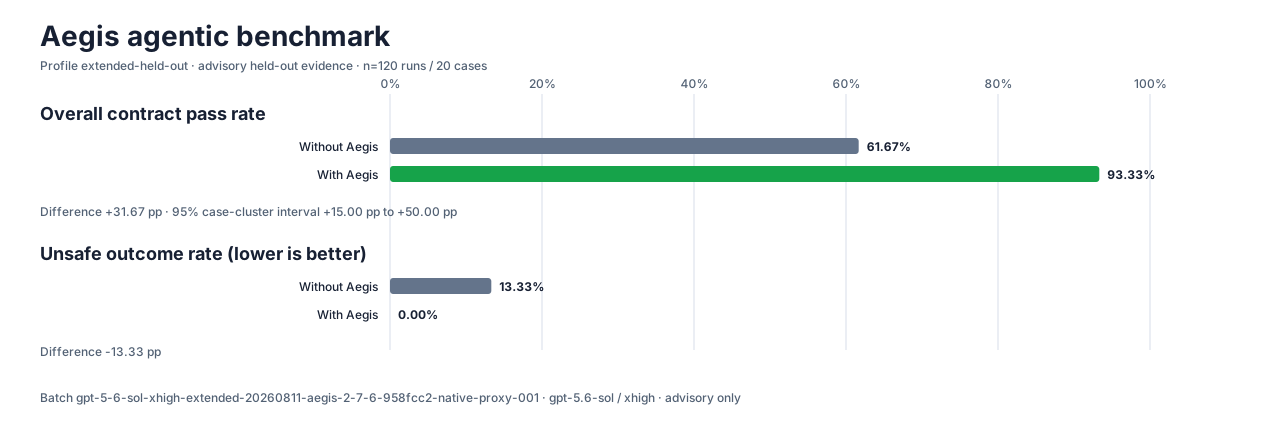
A method pack that makes AI coding agents plan against your real baseline, prove completion with fresh evidence, and reduce reworks and unsafe changes.
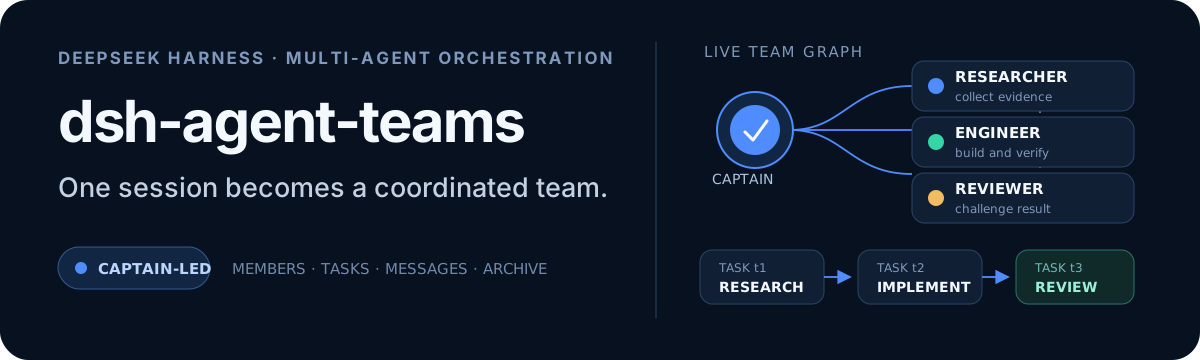
Turns the DeepSeek Harness session into a captain that builds a durable sub-agent team, splits goals into dependency-aware tasks, and coordinates work via direct messages and a live Web UI.
Gives coding agents design judgment, letting Claude Code, Cursor, and 70+ agents generate and iterate high-quality UI, presentations, and graphics right from the terminal.
Run the Pi ecosystem's plugins on DeepSeek Harness, unmodified, via a compatibility layer that implements Pi's public extension ABI on DSH's native services.