dsh-readme
Run the following command in DeepSeek Harness:
dsh plugin install uckkk/dsh-readme
Paste the following prompt into your AI chat to install this plugin:
Run dsh plugin install uckkk/dsh-readme in DeepSeek Harness to install the plugin, with source code available at https://github.com/uckkk/dsh-readme .
About this plugin
You just scaffolded a new project, open the repo page, and the README is still the three lines of placeholder text from the template. Writing it feels like staring at a blank page—what sections to include, how to list the tech stack, where the directory tree comes from. You probably skip it and move on. dsh-readme exists for exactly that moment: one command, and a solid skeleton is standing in front of you.
The approach is deliberately simple. Running entirely in local Node.js, it scans package.json, the directory tree, npm scripts, and the license file, then auto-detects the tech stack from your dependencies (React, Vue, Next.js, Vite, Express, NestJS, TypeScript, Tailwind, and more). The output is a structured README.md with a title, project description, tech stack, install steps, usage examples, a directory structure tree, and a license section. No network requests, no external services—everything happens silently on your machine. What it generates is a skeleton, not a finished document: specific feature descriptions, API references, and screenshot placeholders are left for you to flesh out afterward, saving the layout work while preserving full creative control.
It fits cleanly into a few everyday situations: a solo developer who wants a presentable first impression on a brand-new repo; a team standardizing the README starting point when bootstrapping a project so formatting debates never start; or anyone who needs to pull the structural facts out of a half-built project into one place before filling in the prose. No need to remember which sections a good README requires, no copy-pasting from yet another template—one scan, the skeleton is in place, and you can focus entirely on the content.
Use Cases
- Generate a README skeleton right after scaffolding a new project
- Auto-detect the tech stack from package.json dependencies and write it into the doc
- Pull the directory tree and npm scripts into the README in one pass
Best For
- Solo developers who want a presentable first impression on a brand-new repo
- Project leads who want to standardize README starting points across teams
- Developers who need to pull structural facts from a half-built project into one place
Related Plugins
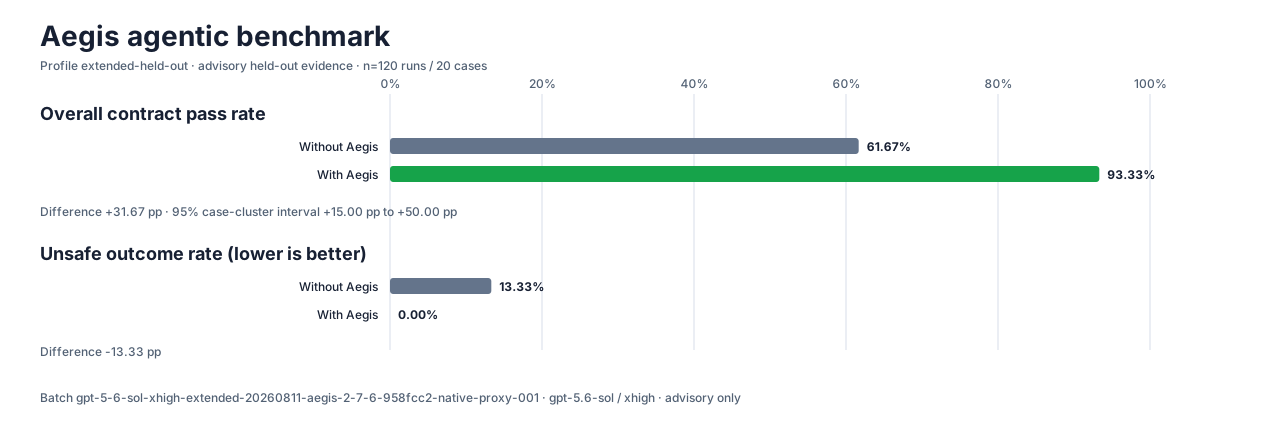
A method pack that makes AI coding agents plan against your real baseline, prove completion with fresh evidence, and reduce reworks and unsafe changes.
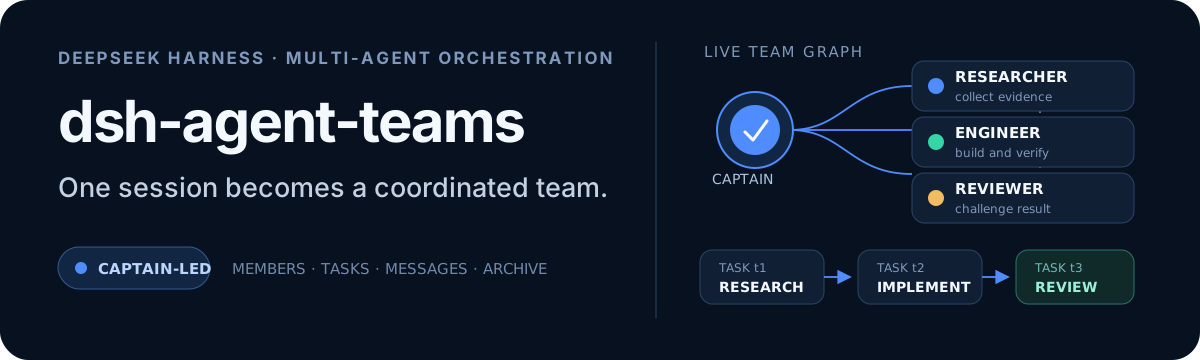
Turns the DeepSeek Harness session into a captain that builds a durable sub-agent team, splits goals into dependency-aware tasks, and coordinates work via direct messages and a live Web UI.
Gives coding agents design judgment, letting Claude Code, Cursor, and 70+ agents generate and iterate high-quality UI, presentations, and graphics right from the terminal.
Run the Pi ecosystem's plugins on DeepSeek Harness, unmodified, via a compatibility layer that implements Pi's public extension ABI on DSH's native services.