dsh-mcp-manager
Run the following command in DeepSeek Harness:
dsh plugin install zsvd/dsh-mcp-manager
Paste the following prompt into your AI chat to install this plugin:
Install this plugin by running dsh plugin install zsvd/dsh-mcp-manager in your terminal (source: https://github.com/zsvd/dsh-mcp-manager), then restart DSH Web to find the MCP Servers page under Settings.
About this plugin
Managing MCP servers in the DeepSeek Harness (DSH) Web environment used to mean hand-editing a cordis.patch.yml text file: easy to mangle the YAML, no visual feedback on whether a server actually registered its tools, and every change demanded a full process restart. dsh-mcp-manager moves the entire workflow into the Settings panel. Under Settings → MCP Servers, a straightforward form covers adding, editing, and deleting servers over stdio or streamable-http, with full support for command, args, cwd, env, url, and headers. On save, the host picks up the change via Cordis HMR and re-applies it transactionally, so dsh-mcp-client reconnects in place — no restart, no downtime. Every row carries a live status badge: green with a tool count when connected, grey with hover details when offline, plus a manual refresh button and a 30-second polling fallback.
Under the hood the writer auto-quotes reserved YAML indicators (-y, @pkg/name, etc.) so the generated patch always parses, rewrites only its own mcp-client rows, and leaves the rest of the file untouched. Concurrent edits are serialized through a single queue so nothing interleaves.
If you are running several MCP servers (file system, databases, internal APIs) inside a DSH Web profile and want a visual, zero-restart way to keep them in sync, this plugin is built for you. It introduces no separate store — everything lives in the same profile patch layer — and removes cleanly by dropping the dependency and the single patch row.
Use Cases
- Add, edit, or delete MCP servers via a form in the DSH Web settings panel
- Monitor live connection status and registered tool count per MCP server
- Apply MCP configuration changes with hot reload and zero restarts
Best For
- Developers running multiple MCP servers inside a DSH Web profile
- Users who adjust MCP configs often and want to avoid repeated restarts
- AI workflow builders who need visual confirmation that MCP tools loaded correctly
Related Plugins
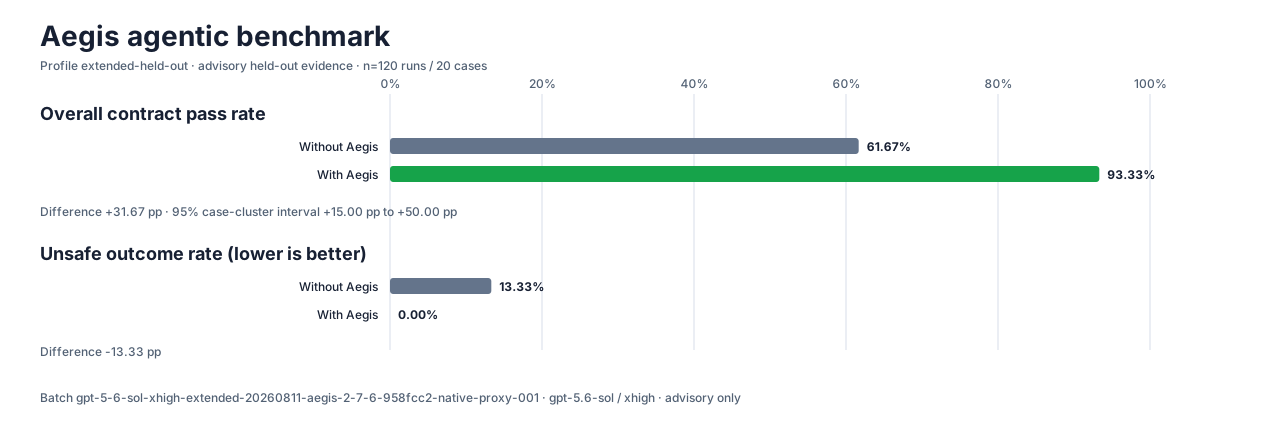
A method pack that makes AI coding agents plan against your real baseline, prove completion with fresh evidence, and reduce reworks and unsafe changes.
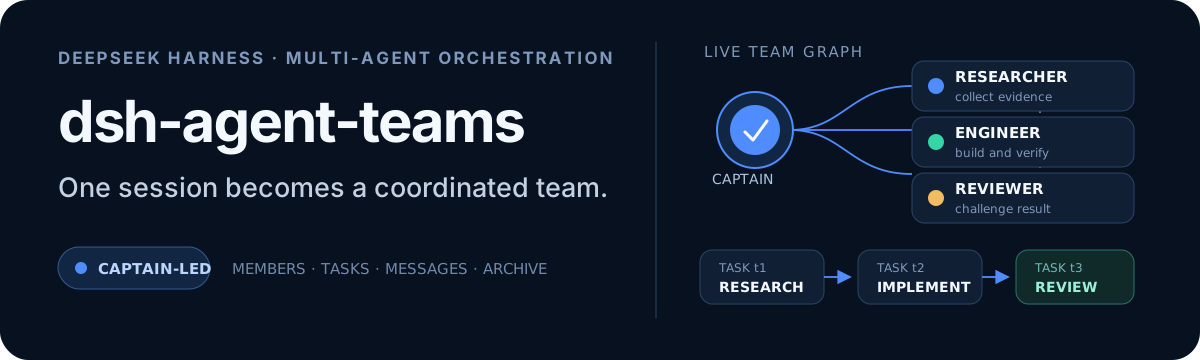
Turns the DeepSeek Harness session into a captain that builds a durable sub-agent team, splits goals into dependency-aware tasks, and coordinates work via direct messages and a live Web UI.
Gives coding agents design judgment, letting Claude Code, Cursor, and 70+ agents generate and iterate high-quality UI, presentations, and graphics right from the terminal.
Run the Pi ecosystem's plugins on DeepSeek Harness, unmodified, via a compatibility layer that implements Pi's public extension ABI on DSH's native services.