dsh-orchestrate
Run the following command in DeepSeek Harness:
dsh plugin install ConradLu2740/dsh-orchestrate
Paste the following prompt into your AI chat to install this plugin:
Run dsh plugin install ConradLu2740/dsh-orchestrate in your terminal to install the plugin. The source repository is at https://github.com/ConradLu2740/dsh-orchestrate; after installation, restart your DeepSeek Harness session to activate it.
About this plugin
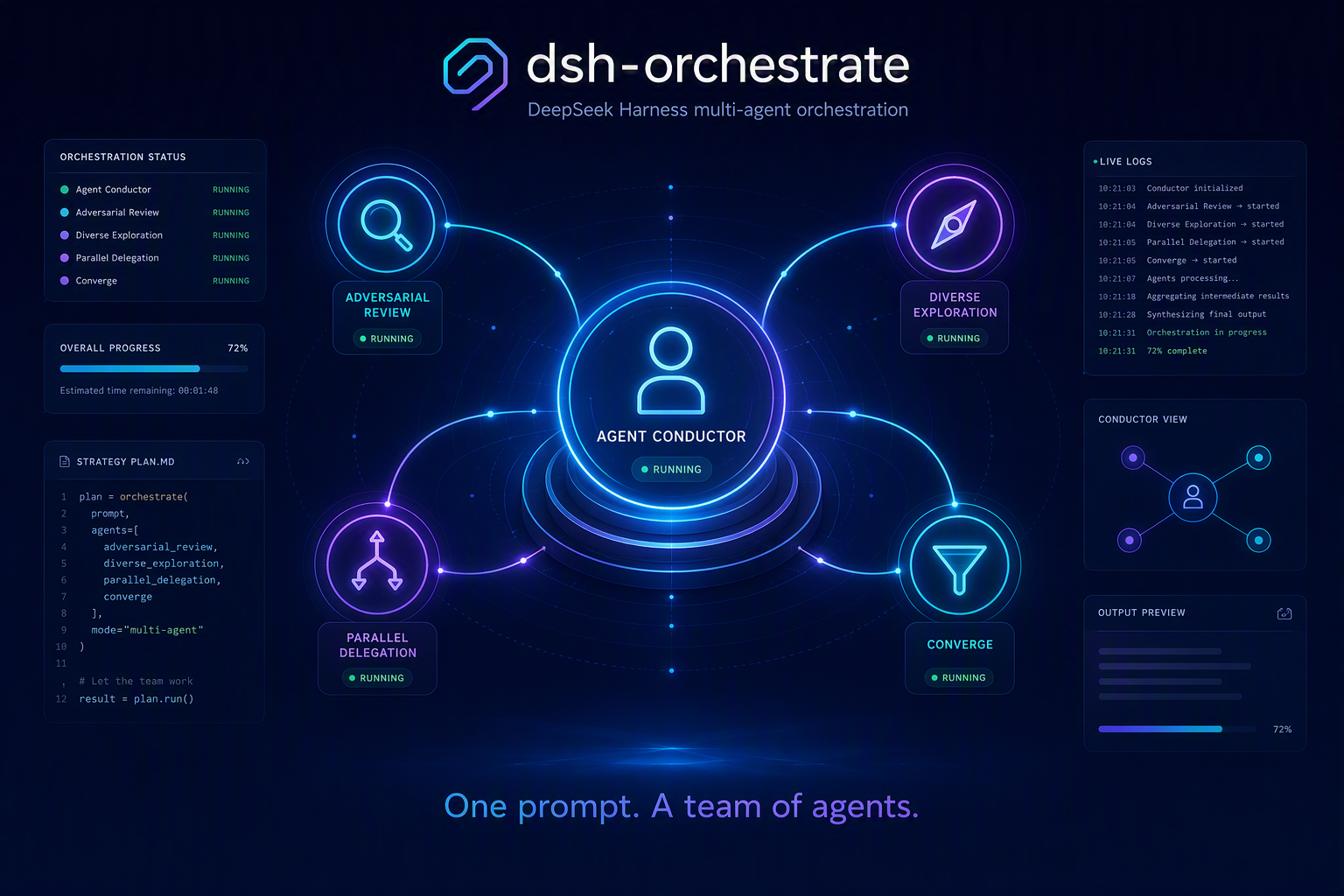
DeepSeek Harness already ships a complete subagent foundation—spawn, await, structured output—but the model itself lacks an orchestration layer that answers when to delegate, how to split, and how to converge. A single agent can only push long tasks forward serially, sees solutions through one lens, and guesses at multi-direction exploration. dsh-orchestrate adds a decision layer, a pattern layer, and a convergence layer on top of the official subagent API, enabling the root agent to proactively assemble a team of sub-agents for parallel work.
The plugin organizes collaboration around four modes: parallel delegation splits a parent task into a task-brief array and dispatches them concurrently; adversarial review spawns read-only reviewers who probe risks, assumptions, edge cases, and suggestions; diverse exploration sends researchers down independent directions with confidence-weighted findings; and background delegation returns a runId immediately and lets the agent converge all results later. Each sub-agent can assume a role (executor, reviewer, researcher, or devil) with a matching structured-output schema. The orchestration policy injection is visible only to the root agent, teaching the model when to delegate and when not to—sub-agent prompts never see it.
Built for DeepSeek Harness developers who face complex, multi-step work: splitting a large task into parallel sub-tasks, getting a second perspective on a design, or fanning out exploratory research. Ten built-in task-brief templates cover scenarios like comparative research, code review, competitive analysis, and bug triage, and an external template directory can be mounted for extension. Recursion guards, timeout backstops, soft token budgets, and well-defined failure semantics are all included out of the box.
Screenshots
Use Cases
- Splitting a complex task into parallel sub-tasks for concurrent execution
- Getting multi-perspective adversarial review to surface risks and blind spots
- Fanning out exploratory research along independent directions with confidence scores
Best For
- Developers orchestrating multi-agent workflows in DeepSeek Harness
- AI application builders handling long-task, multi-step pipelines
- Engineers seeking second-perspective review and multi-direction exploration
Related Plugins
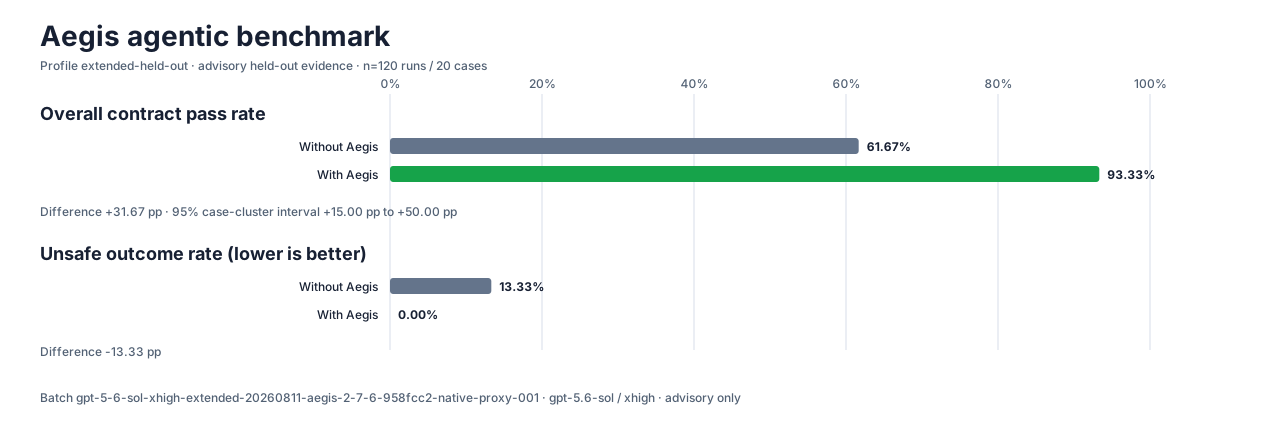
A method pack that makes AI coding agents plan against your real baseline, prove completion with fresh evidence, and reduce reworks and unsafe changes.
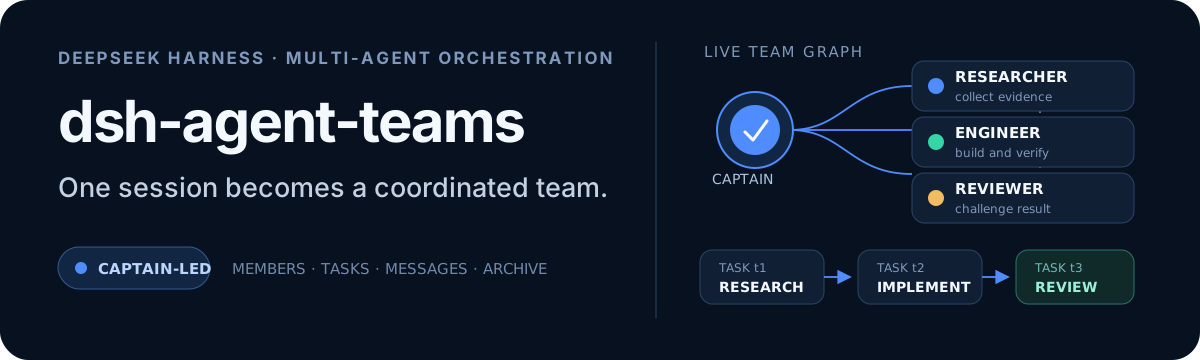
Turns the DeepSeek Harness session into a captain that builds a durable sub-agent team, splits goals into dependency-aware tasks, and coordinates work via direct messages and a live Web UI.
Gives coding agents design judgment, letting Claude Code, Cursor, and 70+ agents generate and iterate high-quality UI, presentations, and graphics right from the terminal.
Run the Pi ecosystem's plugins on DeepSeek Harness, unmodified, via a compatibility layer that implements Pi's public extension ABI on DSH's native services.