MetaBoard
Run the following command in DeepSeek Harness:
dsh plugin install SilasSolivagus/MetaBoard
Paste the following prompt into your AI chat to install this plugin:
Install it in DeepSeek Harness by running dsh plugin install SilasSolivagus/MetaBoard; the source code is available at https://github.com/SilasSolivagus/MetaBoard
About this plugin
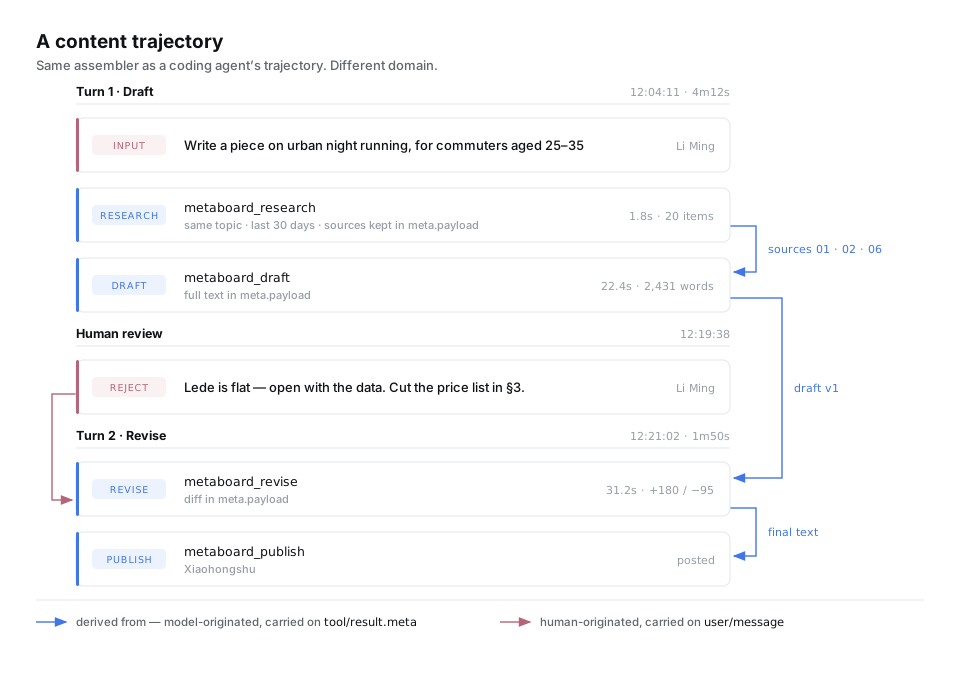
Coding agents produce something most other tools do not: a durable, inspectable record of how work actually happened. Every retrieval, tool call, and retry lands as a structured event because the executor emits it, not because someone remembered to log it. Content creation has no such record. A task board tells you a draft moved from todo to in_review, but it cannot tell you which twenty articles the outline was derived from, how long the second revision took, or what the rejection note from the editor actually said. Those are the facts you need when a piece underperforms and you want to know why.
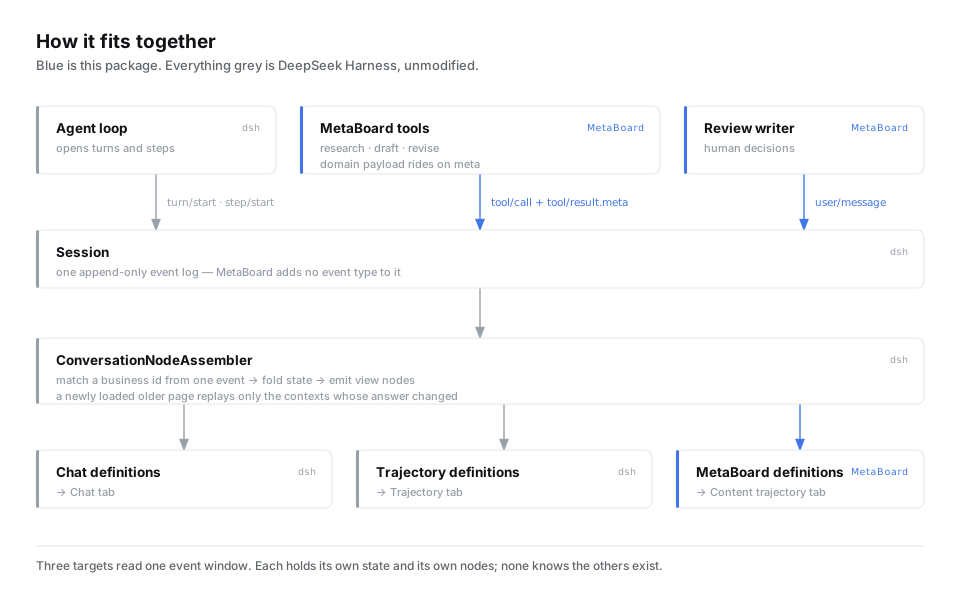
MetaBoard runs as a DeepSeek Harness (dsh) plugin and brings the agent execution-trajectory mechanism to non-coding work. It reuses the conversation node assembler in dsh, which is genuinely hard and domain-neutral, folding a raw event stream into materialized business objects and rendering them as a trajectory view. Two interfaces share the same work-item log: a CLI for human operators to create, approve, refile, comment on, and archive work items, and a set of dsh tools for agents to record research material, drafts, revisions, review decisions, and their own reports. The blue edges in the trajectory are not inferred; each tool records its source relationships on its own result, so selecting a row reveals the full payload of sources, draft text, revision notes, and elapsed time.
It is aimed at content teams, editorial workflows, and any multi-step knowledge process where intermediate artifacts matter more than the final state. Keep in mind that MetaBoard is still in its Phase 1 verification stage: the end-to-end loop and the concurrent claim-conflict path have not yet been exercised against a live runtime, so it is not ready for day-to-day use today.
Screenshots
Use Cases
- Trace the full lifecycle of an article from source research through multiple revisions to the final draft
- Prevent two concurrent sessions from writing to the same work item via the claim mechanism
- Review an editorial rejection note alongside the exact revision it triggered and how long it took
Best For
- Content teams that need an auditable process where intermediate artifacts matter more than the final output
- Developers building agent workflows on DeepSeek Harness (dsh)
- Knowledge workers who value traceability over dashboard status alone
Related Plugins
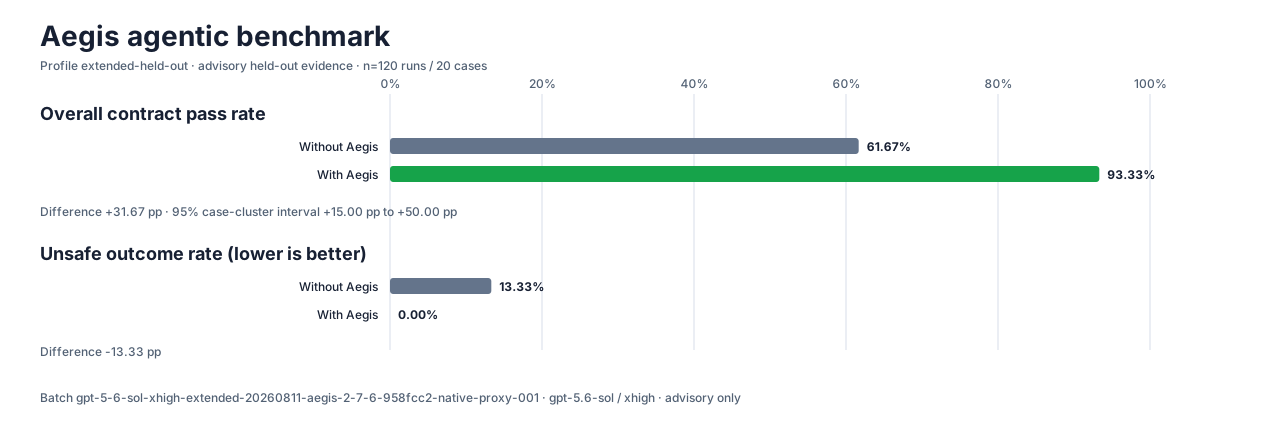
A method pack that makes AI coding agents plan against your real baseline, prove completion with fresh evidence, and reduce reworks and unsafe changes.
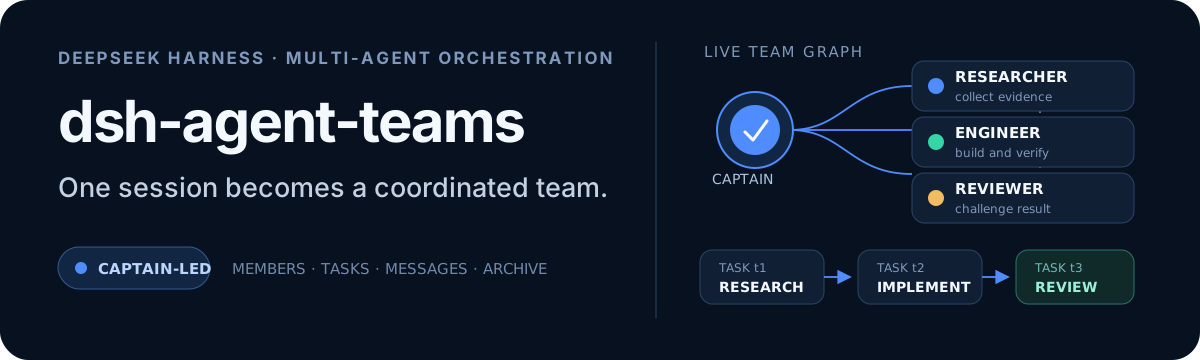
Turns the DeepSeek Harness session into a captain that builds a durable sub-agent team, splits goals into dependency-aware tasks, and coordinates work via direct messages and a live Web UI.
Gives coding agents design judgment, letting Claude Code, Cursor, and 70+ agents generate and iterate high-quality UI, presentations, and graphics right from the terminal.
Run the Pi ecosystem's plugins on DeepSeek Harness, unmodified, via a compatibility layer that implements Pi's public extension ABI on DSH's native services.