dsh-devices
Run the following command in DeepSeek Harness:
dsh plugin install polaris-smart/dsh-devices
Paste the following prompt into your AI chat to install this plugin:
To install the dsh-devices plugin in DeepSeek Harness, run the command `dsh plugin install polaris-smart/dsh-devices` with the source code at https://github.com/polaris-smart/dsh-devices.
About this plugin
In distributed device management, discovering and collaborating between devices often requires complex configurations or core code modifications, increasing operational overhead. The dsh-devices plugin solves this by offering a pure plugin installation that turns your devices into a collaborative fleet without any core changes. Once installed, tools like auto-discovery, pairing, and remote execution are automatically registered in dsh sessions, allowing any agent to call them directly, greatly simplifying multi-device workflows.
The plugin's core capabilities include automatic LAN discovery via mDNS or cross-network connections through SSH. Users can easily pair devices, execute commands remotely, transfer files, and monitor device status. All operations are handled through intuitive tools, with error messages providing clear next-step guidance to ensure smooth operation even under network constraints.
dsh-devices is ideal for users who manage multiple devices, such as development teams, system administrators, or IoT enthusiasts. It supports macOS, Linux, and Windows platforms, efficiently handling both LAN device collaboration and remote management across networks. Designed to be stateless and lightweight, the plugin leaves no traces upon uninstallation, making it perfect for modern multi-device collaboration scenarios.
Use Cases
- Automatically discover devices on a LAN to quickly form a collaborative fleet.
- Remotely execute commands on another device for maintenance management.
- Transfer files across platforms and monitor device status to boost productivity.
Best For
- Development teams or testers who need to manage multiple devices.
- System administrators responsible for cross-platform server maintenance.
- IoT enthusiasts building smart home or experimental networks.
Related Plugins
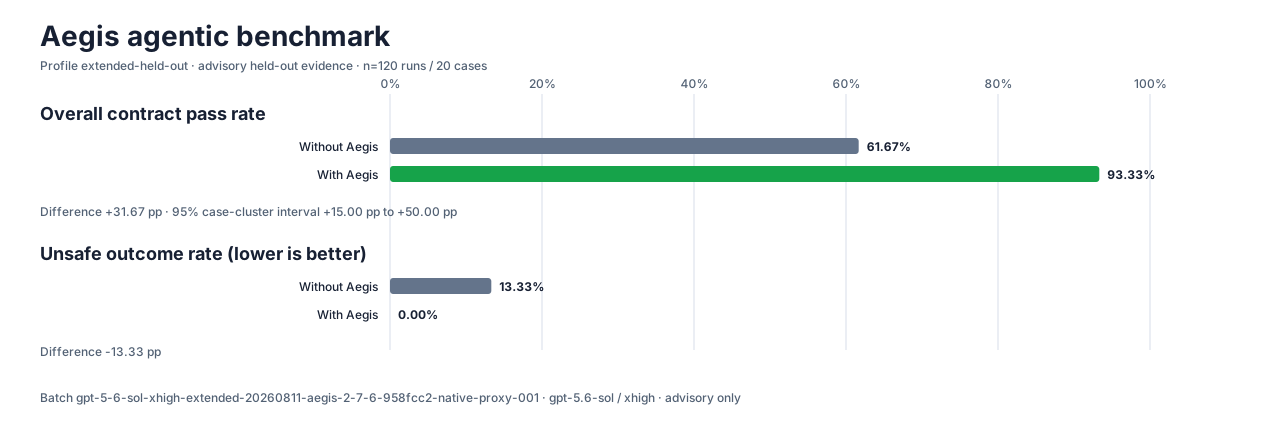
A method pack that makes AI coding agents plan against your real baseline, prove completion with fresh evidence, and reduce reworks and unsafe changes.
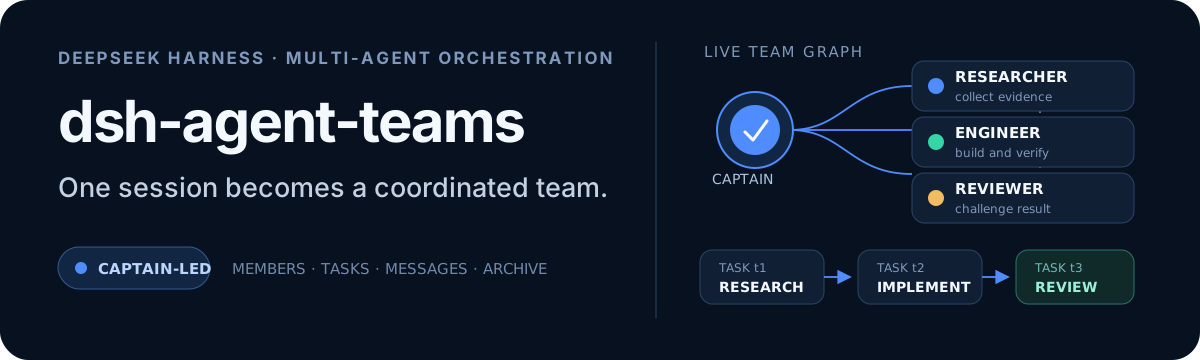
Turns the DeepSeek Harness session into a captain that builds a durable sub-agent team, splits goals into dependency-aware tasks, and coordinates work via direct messages and a live Web UI.
Gives coding agents design judgment, letting Claude Code, Cursor, and 70+ agents generate and iterate high-quality UI, presentations, and graphics right from the terminal.
Run the Pi ecosystem's plugins on DeepSeek Harness, unmodified, via a compatibility layer that implements Pi's public extension ABI on DSH's native services.