dsh-pet-alone
Run the following command in DeepSeek Harness:
dsh plugin install uckkk/dsh-pet-alone
Paste the following prompt into your AI chat to install this plugin:
Run dsh plugin install uckkk/dsh-pet-alone in your terminal to install the plugin; the full source repository is at https://github.com/uckkk/dsh-pet-alone .
About this plugin
Every time a pet owner packs a bag for travel, arranging boarding is one of the most tedious side-tasks: comparing prices, reading reviews, checking whether the facility matches the pets size and temperament, then factoring in the trip length. dsh-pet-alone wraps this decision into a single lightweight tool node that AI workflow agents can call directly, so users no longer have to search and compare on their own.
The core tool, pet_alone, takes travel parameters and returns a structured boarding-plan recommendation entirely on the local machine. The implementation is pure Node with zero network calls, which means it responds instantly whether you run it in an offline sandbox or behind a corporate proxy, and it sidesteps any risk of sending personal data to a third-party endpoint.
It is well suited for developers building conversational agents that need to suggest pet-boarding options on the fly, or for mid-to-back-office workflow projects that want to avoid external API dependencies, keep deployments simple, and run in air-gapped environments. The MIT license lets you embed, fork, and ship it inside commercial products without restriction.
Use Cases
- Calling the tool inside a conversational agent to return a boarding plan from user parameters
- Running recommendation logic in a corporate intranet or offline environment without external APIs
- Adding a locally executable boarding-decision step to a travel-planning workflow
Best For
- Developers building conversational AI agents
- Workflow project maintainers who want zero network dependencies and simple deployment
- Teams that need to run tools in isolated or controlled networks
Related Plugins
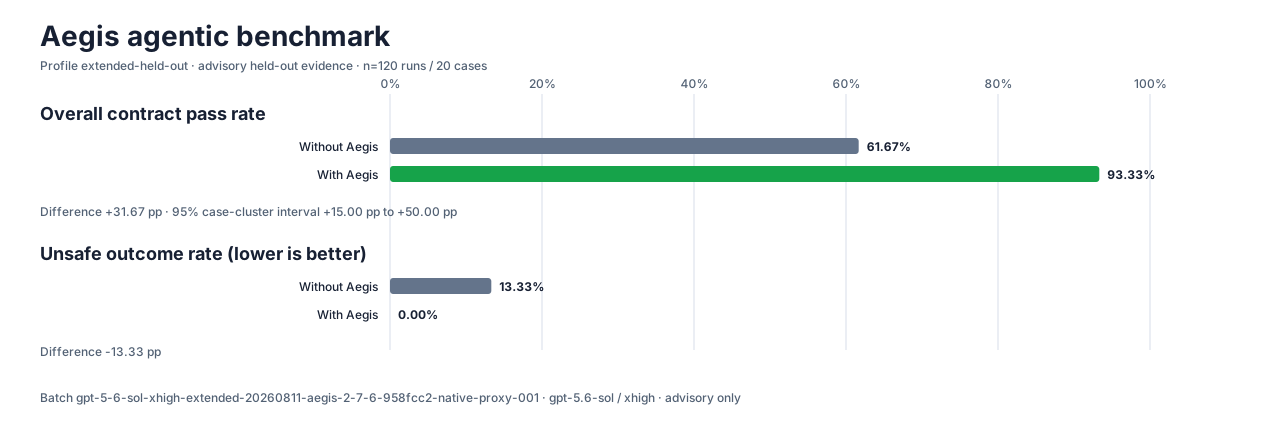
A method pack that makes AI coding agents plan against your real baseline, prove completion with fresh evidence, and reduce reworks and unsafe changes.
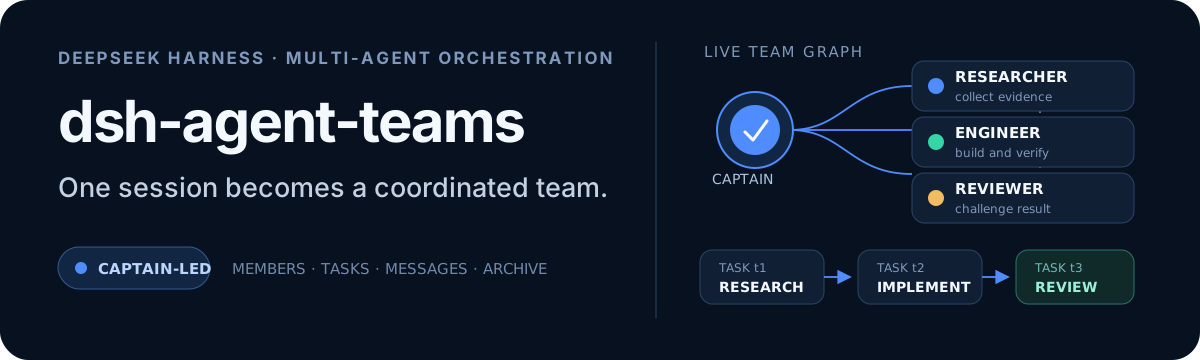
Turns the DeepSeek Harness session into a captain that builds a durable sub-agent team, splits goals into dependency-aware tasks, and coordinates work via direct messages and a live Web UI.
Gives coding agents design judgment, letting Claude Code, Cursor, and 70+ agents generate and iterate high-quality UI, presentations, and graphics right from the terminal.
Run the Pi ecosystem's plugins on DeepSeek Harness, unmodified, via a compatibility layer that implements Pi's public extension ABI on DSH's native services.