dsh-runbook-ops
Run the following command in DeepSeek Harness:
dsh plugin install chenjieya/dsh-runbook-ops
Paste the following prompt into your AI chat to install this plugin:
Run dsh plugin install chenjieya/dsh-runbook-ops inside DeepSeek Harness to install; the plugin source repository is https://github.com/chenjieya/dsh-runbook-ops
About this plugin
Team processes for development, testing, release, and operations tend to live scattered across wikis, meeting notes, and tribal knowledge. When a model working inside a Harness session needs to follow a documented procedure, it has no structured source to lean on. dsh-runbook-ops pulls that scattered knowledge into structured YAML runbooks under .dsh/runbooks in the workspace, giving every step a verifiable, reusable, and auditable home.
The plugin exposes three tools: runbook_list enumerates the runbooks available in the current project, runbook_read loads and validates a specific runbook, and runbook_start expands a validated runbook into step-by-step execution guidance for the model. By design it does not execute shell commands directly; command invocation, approval, and logging remain with the tools and governance Harness already provides, keeping a clean boundary between model flexibility and team security policy. Reads are scoped to the current session workspace by default, with a configurable maxBytes cap and an optional allowAbsoluteRoot toggle for broader path access.
If your team already works in DeepSeek Harness and wants to turn SOPs test checklists, release checklists, incident runbooks into structured, auditable guidance the model can follow instead of re-wrapping prompts every time, this plugin is built for exactly that. It suits platform teams, SREs, and any engineering group that benefits from codifying process knowledge into executable assets.
Use Cases
- A team writes its release checklist as a YAML runbook and the model generates step-by-step execution guidance
- An SRE structures an incident response process into a runbook file and invokes it directly inside a Harness session
- An engineering team codifies test and deploy workflows into reusable structured docs instead of re-wrapping prompts every time
Best For
- Platform and infrastructure teams working inside DeepSeek Harness
- SREs and ops engineers who want to migrate SOPs from wikis into structured files the model can follow
- Engineering teams that need the model to strictly adhere to established internal workflows
Related Plugins
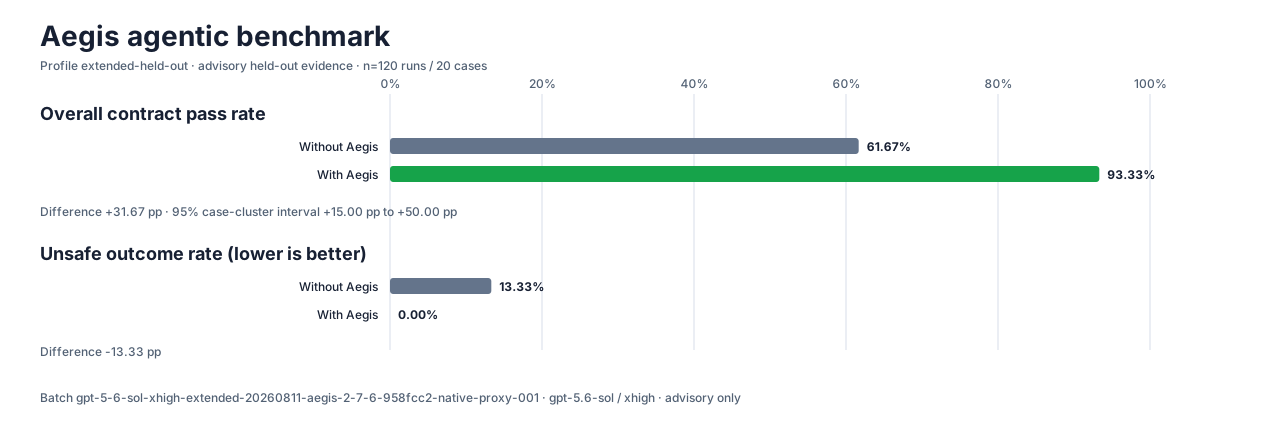
A method pack that makes AI coding agents plan against your real baseline, prove completion with fresh evidence, and reduce reworks and unsafe changes.
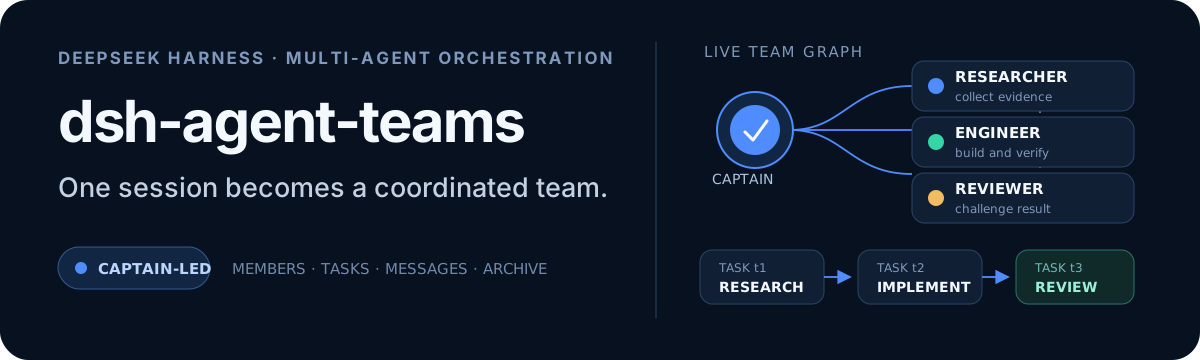
Turns the DeepSeek Harness session into a captain that builds a durable sub-agent team, splits goals into dependency-aware tasks, and coordinates work via direct messages and a live Web UI.
Gives coding agents design judgment, letting Claude Code, Cursor, and 70+ agents generate and iterate high-quality UI, presentations, and graphics right from the terminal.
Run the Pi ecosystem's plugins on DeepSeek Harness, unmodified, via a compatibility layer that implements Pi's public extension ABI on DSH's native services.