dsh-route-fence-linter
Run the following command in DeepSeek Harness:
dsh plugin install Vladimir-Kryshchenko/dsh-route-fence-linter
Paste the following prompt into your AI chat to install this plugin:
Install it in DeepSeek Harness by running dsh plugin install Vladimir-Kryshchenko/dsh-route-fence-linter; the full source is available at https://github.com/Vladimir-Kryshchenko/dsh-route-fence-linter
About this plugin
Every webServer route registered by a Harness plugin is dispatched by longest-prefix match ahead of the host /api gateway, making each plugin author solely responsible for browser-trust verification. In practice, many plugins either ship no fence at all or compare Origin before pinning the Host, creating a DNS-rebinding window where an attacker who controls both headers can pass the check and execute state-changing operations.
dsh-route-fence-linter performs static source analysis over a plugin package's published files, grading each route handler against the canonical fence shape: pin the Host header to loopback or a configured trusted authority first, refuse cross-site fetch markers second, and compare Origin only last. The linter tracks register() calls across file boundaries, resolving inline objects, factory invocations, array spreads, and bare identifiers to the module where handlers are actually defined, then scores each handler independently—a single unfenced handler fails the entire registration. It also audits registerFallback for a wider attack surface and flags the DNS-rebinding-bypassable pattern where Origin equals Host but Host is never pinned to loopback.
It is designed for plugin developers performing pre-submission self-checks, security teams auditing installed plugin fleets, and CI pipelines needing a deterministic gate via exit codes 0, 1, or 2. For marketplace operators, it converts the previously manual, line-by-line fence review into a repeatable static check.
Use Cases
- Pre-submission check that webServer route fences follow the Host-pin-first ordering
- CI gate using exit codes 0/1/2 to block non-compliant plugins before release
- Fleet-wide audit of installed plugins for missing DNS-rebinding-bypassable trust fences
Best For
- Developers building or maintaining Harness plugins
- Security teams responsible for plugin compliance audits
- Marketplace operators reviewing plugin trust posture
Related Plugins
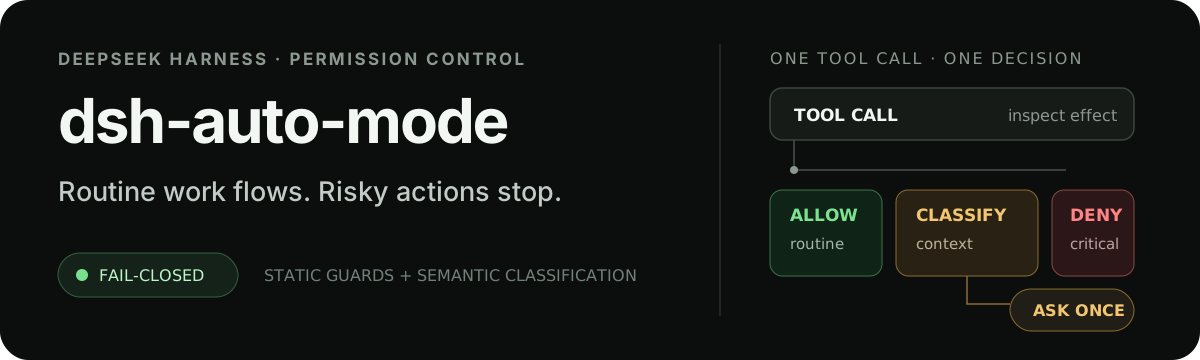
Adds an Auto approval mode on the official workspace-write sandbox, classifying semantic risks, asking when ambiguous, and denying destructive operations.

Undo/rollback system for DSH: config & plugin snapshots, one-click undo/redo/restore, message-level revert, secret masking, safe mode, and offline WebUI/GUI/CLI rescue tools for when DSH won't start.
Packages all 87 SKILL.md files from upstream reverse-skill as a DeepSeek Harness plugin that auto-registers them for authorized reverse engineering, penetration testing, and security research.
Dockyard DSH is a native DeepSeek Harness plugin that unifies official OAuth/client sessions for Codex, Antigravity, Grok, Claude, and Cursor, providing account pool, model catalog, and quota status.