dsh-server-admin
Run the following command in DeepSeek Harness:
dsh plugin install sunnywangzi/dsh-server-admin
Paste the following prompt into your AI chat to install this plugin:
Run dsh plugin install sunnywangzi/dsh-server-admin in DeepSeek Harness to install this plugin; the source is hosted at https://github.com/sunnywangzi/dsh-server-admin . Restart DSH after installation to activate.
About this plugin
Running a DSH Web server in production means a familiar loop: restart the process, flip the hosting mode, install a plugin, check resource usage — each time reaching for a terminal. dsh-server-admin moves all of that into a single settings page inside the DSH Web UI, so you manage the server from your browser without opening a shell.
The panel organises its capabilities into six cards. Runtime Status auto-refreshes every two seconds with PID, CPU, memory, version, and disk metrics. Online Control restarts or stops DSH with one click, automatically selecting between systemctl and screen-based methods. The systemd Keep-alive card migrates DSH from a temporary screen session into a proper system service with crash recovery in three seconds, boot-time auto-start, a full unit-file preview before anything is written, and one-click rollback to screen. Online Plugin Install echoes live package-manager output so you can watch the install in real time. Active Sessions lists running conversations in a collapsible card, and the Command Terminal provides a root-level shell with real-time output capped at 64 KB. Every destructive action is guarded by a five-second countdown you can cancel to prevent accidental execution.
This plugin suits administrators and full-stack developers who keep DSH Web on a remote server and prefer managing it through the web interface over a terminal, or anyone who has just deployed DSH and wants to graduate from a throwaway screen session to a systemd-managed service. It runs with full root privileges and is intended for admins with direct server responsibility, not for exposing to untrusted users.
Use Cases
- Manage a remote DSH Web server entirely from the browser without SSH
- Migrate DSH from a screen session to systemd for boot auto-start and crash recovery
- Install plugins, monitor runtime metrics, and run server commands from a single panel
Best For
- Administrators deploying DSH Web on remote servers
- Full-stack developers who prefer a web panel over terminal-based ops
- Self-hosting users relying on systemd keep-alive, process monitoring, and plugin management
Related Plugins
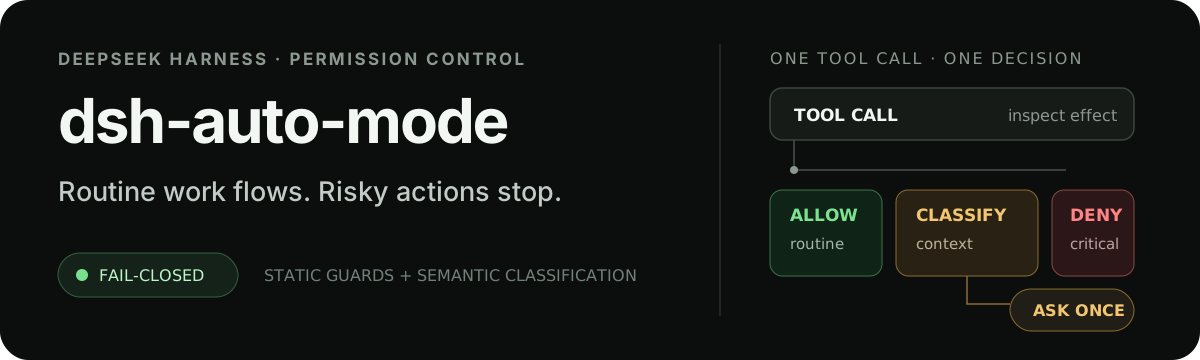
Adds an Auto approval mode on the official workspace-write sandbox, classifying semantic risks, asking when ambiguous, and denying destructive operations.

Undo/rollback system for DSH: config & plugin snapshots, one-click undo/redo/restore, message-level revert, secret masking, safe mode, and offline WebUI/GUI/CLI rescue tools for when DSH won't start.
Packages all 87 SKILL.md files from upstream reverse-skill as a DeepSeek Harness plugin that auto-registers them for authorized reverse engineering, penetration testing, and security research.
Dockyard DSH is a native DeepSeek Harness plugin that unifies official OAuth/client sessions for Codex, Antigravity, Grok, Claude, and Cursor, providing account pool, model catalog, and quota status.