dsh-intent-network
Run the following command in DeepSeek Harness:
dsh plugin install helibeiqi/dsh-intent-network
Paste the following prompt into your AI chat to install this plugin:
Run dsh plugin install helibeiqi/dsh-intent-network in your DeepSeek Harness to install this plugin; the repository is hosted at https://github.com/helibeiqi/dsh-intent-network.
About this plugin
In the DSH ecosystem, turning a vague one-sentence user request into a multi-step tool invocation chain often means hand-writing JSON, hard-coding branches, and debugging by guesswork. dsh-intent-network reframes that pipeline as a structured intent graph: nodes are DSH-registered tools (including external MCP tools bridged via adapters), edges encode conditional branches, dependencies, and fallback paths, and semantics are drawn from CDP metadata. The graph is editable, auditable, and every execution is traced to disk, so you can always pinpoint which node fired and why a particular edge was taken.
On the execution side, the plugin ships a built-in planner (rule, LLM, or hybrid strategies, defaulting to zero LLM overhead), parallel and loop-limit controls, AbortSignal-based mid-run cancellation, and a critical safety mechanism: when a node is tagged by CDP metadata with irreversible side-effects or an advisor role, execution halts and returns ConfirmationRequired, waiting for explicit human approval before proceeding—no silent pass-through. Fallback paths ensure that a single node failure does not crash the whole graph; execution simply follows a pre-defined degradation chain.
It works best as the orchestration layer in a DSH workflow: you have already described tool semantics with dsh-cdp-metadata and pulled in external MCP tools via dsh-cordis-universal-adapter, and what you are missing is something to wire them into an executable, observable, rollback-friendly graph. That is exactly what intent-network provides. The three plugins are orthogonal, do not override each other's configuration, and can be installed together. Keep in mind that the M1 release does not yet include automatic learning (trace collection only), the planner's LLM mode depends on the host supplying ctx.llm, and the plugin does not implement a sandbox—tool side-effects remain the responsibility of the host environment and the tools themselves.
Use Cases
- Chain data analysis, causal inference, and visualization into a single editable intent graph for end-to-end orchestration
- Enforce human-in-the-loop confirmation at irreversible nodes so no destructive action runs silently
- Automatically degrade along a pre-defined fallback chain when a node fails, keeping the full graph alive
Best For
- Developers building agent workflows in the DSH plugin ecosystem who need multi-tool orchestration
- DSH integrators already running CDP metadata and MCP adapters but missing an orchestration layer
- Enterprise agent pipeline teams that require auditable, rollback-safe, and cancellable executions
Related Plugins
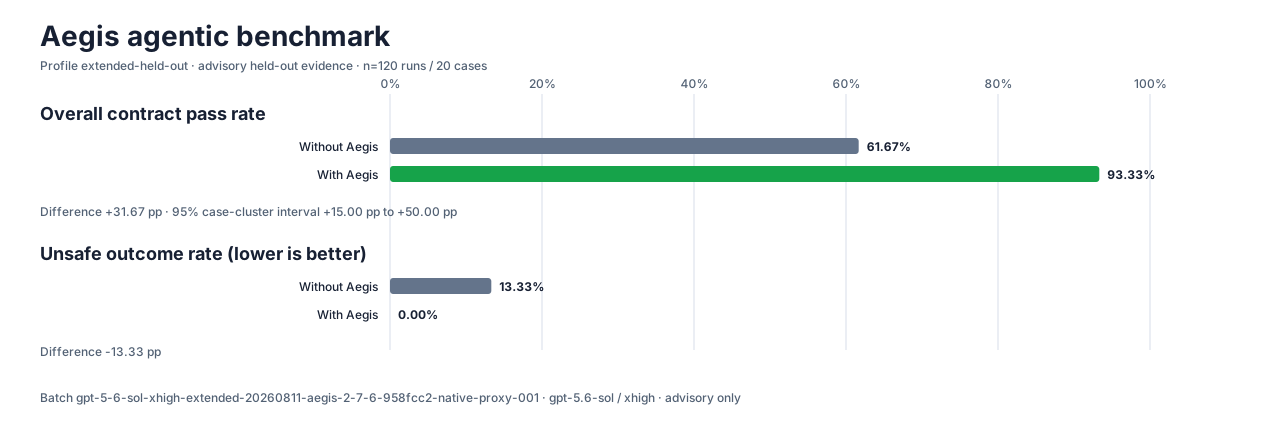
A method pack that makes AI coding agents plan against your real baseline, prove completion with fresh evidence, and reduce reworks and unsafe changes.
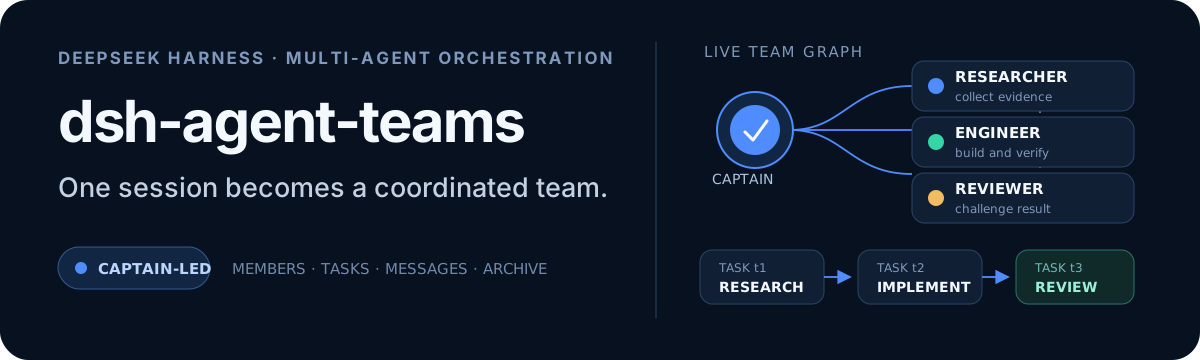
Turns the DeepSeek Harness session into a captain that builds a durable sub-agent team, splits goals into dependency-aware tasks, and coordinates work via direct messages and a live Web UI.
Gives coding agents design judgment, letting Claude Code, Cursor, and 70+ agents generate and iterate high-quality UI, presentations, and graphics right from the terminal.
Run the Pi ecosystem's plugins on DeepSeek Harness, unmodified, via a compatibility layer that implements Pi's public extension ABI on DSH's native services.