dsh-path-anonymizer
Run the following command in DeepSeek Harness:
dsh plugin install yzhangjy/dsh-path-anonymizer
Paste the following prompt into your AI chat to install this plugin:
Run dsh plugin install yzhangjy/dsh-path-anonymizer in your terminal; the source repository is available at https://github.com/yzhangjy/dsh-path-anonymizer for reference once installed in DeepSeek Harness.
About this plugin
Paste a path like ~/Documents or /etc into a chat and it sails straight into the model context untouched. dsh-path-anonymizer steps in right before the model request, scans each user message with regexes, and swaps every workspace-external path for a numbered placeholder such as [PATH_n]. A confirmation dialog then lets you choose to send the placeholders, restore the real paths, or cancel the request entirely, with a remember option so the same choice sticks for the rest of the session.
Detection is broad, covering Unix absolute paths, Windows drive paths, tilde home shortcuts, dot-slash and dot-dot relative paths, WSL mounts, and environment-variable references, while URLs, shell redirects, and system directories are excluded by default to keep false positives low. Paths inside the agent working directory are left as-is since the model can already read and write there without extra risk. The plugin redacts message text only; it does not intercept tool calls or act as a sandbox, so its scope is message-level redaction rather than security isolation.
It suits developers who routinely reference local files, configs, or project paths in conversations and want an extra checkpoint before those paths leave the machine, particularly in shared terminals, remote collaboration setups, or multi-project workflows where a stray path in context is a real privacy concern.
Use Cases
- Automatically replaces local paths like ~/Documents or /etc with placeholders in agent chats to prevent leakage
- Prevents sensitive file paths from entering model context in shared or remote collaboration environments
- Stops absolute paths from other projects from accidentally reaching the model during multi-project work
- Quickly confirm before sending whether real paths are allowed to leave the local context
Best For
- Developers who frequently paste local file paths into agent conversations
- Teams using shared or remote dev environments who care about path privacy
- Engineers managing multiple project directories who want to prevent cross-project path leakage
Related Plugins
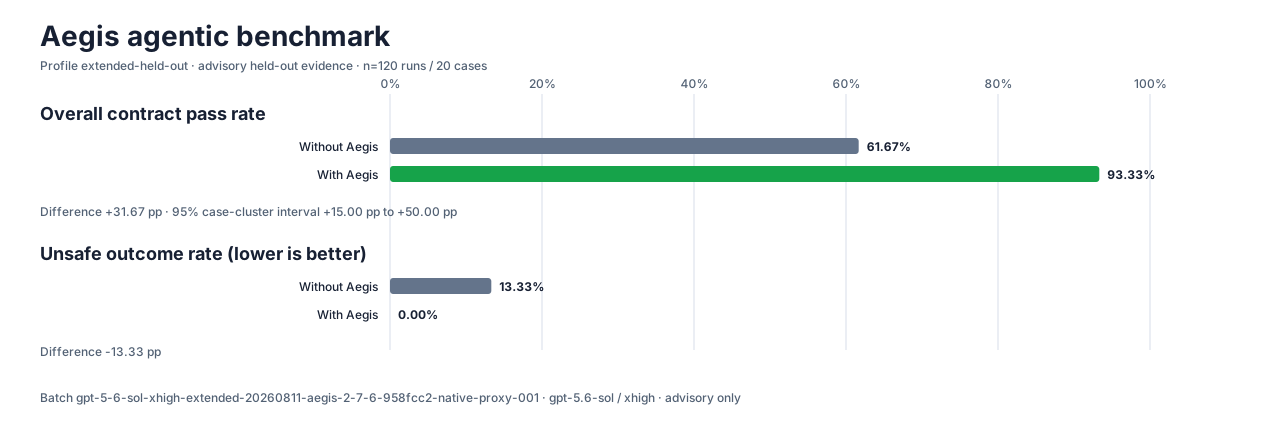
A method pack that makes AI coding agents plan against your real baseline, prove completion with fresh evidence, and reduce reworks and unsafe changes.
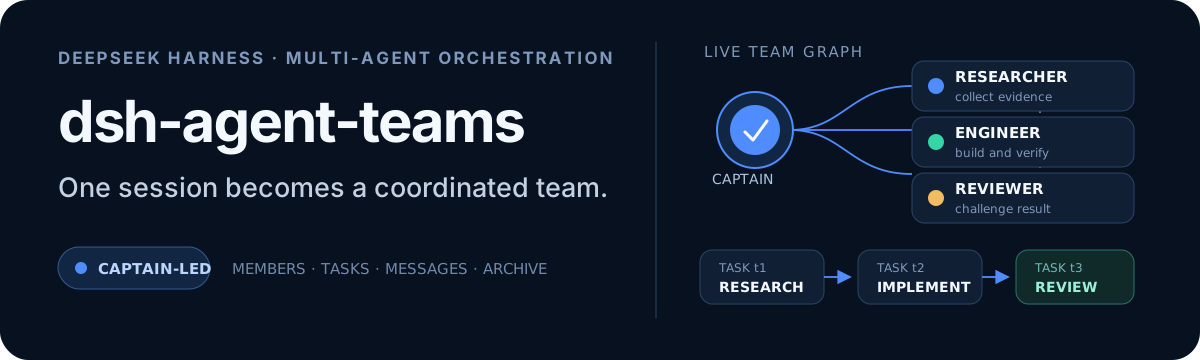
Turns the DeepSeek Harness session into a captain that builds a durable sub-agent team, splits goals into dependency-aware tasks, and coordinates work via direct messages and a live Web UI.
Gives coding agents design judgment, letting Claude Code, Cursor, and 70+ agents generate and iterate high-quality UI, presentations, and graphics right from the terminal.
Run the Pi ecosystem's plugins on DeepSeek Harness, unmodified, via a compatibility layer that implements Pi's public extension ABI on DSH's native services.