dsh-fs-deny-policy
Run the following command in DeepSeek Harness:
dsh plugin install vladlearns/dsh-fs-deny-policy
Paste the following prompt into your AI chat to install this plugin:
Run dsh plugin install vladlearns/dsh-fs-deny-policy in your terminal to install the plugin; the source is available at https://github.com/vladlearns/dsh-fs-deny-policy
About this plugin
DeepSeek Harness sandboxes can block the model from writing, yet every sandbox mode still permits reading. That means a directory like ~/.ssh, a license folder, or any other sensitive path left in the working area is fully exposed to reads, searches, and even shell-command snooping. dsh-fs-deny-policy closes that gap: you list a handful of deny roots in your profile configuration, and from then on every tool call—file reads, writes, glob/grep searches, bash or PowerShell commands—is denied the moment its resolved path lands inside one of those roots. The model also receives the list at the start of the session, so it stops burning turns bumping into invisible walls.
Under the hood the plugin hooks into the pre-execute stage of every tool call. It extracts the paths a call is about to touch (file_path for file tools, the search root for glob/grep, anything path-shaped inside shell command text), resolves them against the session working directory, follows symlinks, and normalises Windows casing differences. It can fence reads, searches, writes, and shell commands independently, and you can loosen or tighten each category with fenceReads, fenceShell, and fenceContentSearch. One caveat: the shell check inspects command text for path-like tokens rather than executing the command, so indirections such as variable expansion, command substitution, or redirections can slip past. Treat it as a net, not a wall, and pair it with the sandbox rather than replacing it.
It fits teams and individual developers who share a working directory or run CI jobs where the model must stay out of specific folders. If you only need write protection, turn off the read-side fence. If you need a hard guarantee, layer it on top of the sandbox as a second line of defence.
Use Cases
- Blocking model reads and searches from sensitive paths like ~/.ssh or license folders in a shared workspace
- Restricting the set of directories the model can reach in a multi-user Harness deployment
- Preventing the model from probing key files or build artefact paths inside shell commands during CI/CD runs
Best For
- Team developers who need fine-grained control over which directories the model may touch
- Solo developers running DeepSeek Harness in shared or multi-project workspaces
- Ops and security engineers who want a hard read-side deny layer on top of the built-in sandbox
Related Plugins
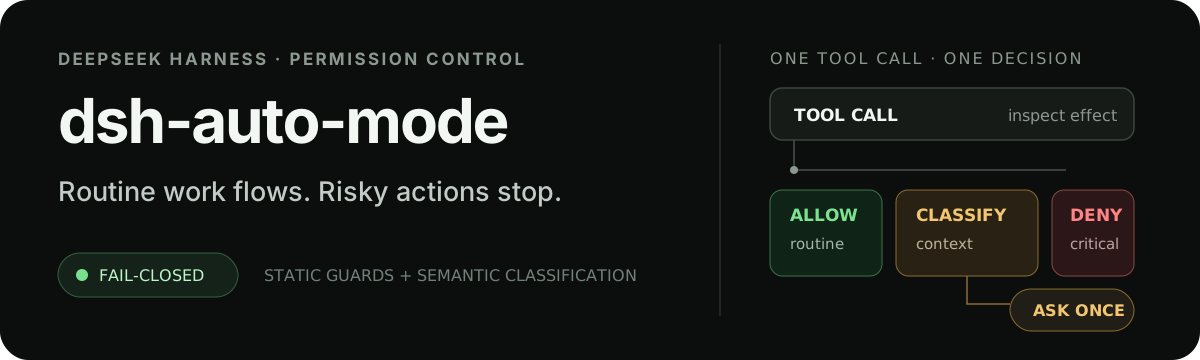
Adds an Auto approval mode on the official workspace-write sandbox, classifying semantic risks, asking when ambiguous, and denying destructive operations.

Undo/rollback system for DSH: config & plugin snapshots, one-click undo/redo/restore, message-level revert, secret masking, safe mode, and offline WebUI/GUI/CLI rescue tools for when DSH won't start.
Packages all 87 SKILL.md files from upstream reverse-skill as a DeepSeek Harness plugin that auto-registers them for authorized reverse engineering, penetration testing, and security research.
Dockyard DSH is a native DeepSeek Harness plugin that unifies official OAuth/client sessions for Codex, Antigravity, Grok, Claude, and Cursor, providing account pool, model catalog, and quota status.