dsh-shipcheck
Run the following command in DeepSeek Harness:
dsh plugin install guo6x/dsh-shipcheck
Paste the following prompt into your AI chat to install this plugin:
Run dsh plugin install guo6x/dsh-shipcheck in DeepSeek Harness to install this plugin; the source repository is https://github.com/guo6x/dsh-shipcheck
About this plugin
Frontend readiness has too often come down to an agent replying looks good in a chat window. A gut feeling without evidence expires the instant something changes.
dsh-shipcheck hands the verdict back to a real browser. Through dsh-pilot it opens the actual page and runs deterministic checks: page availability, visible body and primary heading, missing image alt text and unnamed controls, horizontal overflow at the captured viewport, required and forbidden text, required CSS selectors, structural regression against a named baseline, and runtime signals such as console errors and 4xx-5xx requests. Every run produces a screenshot and a JSON report; every failure carries a concrete evidence path. Ship single-page inspection with shipcheck_run, a release gate of up to 20 routes in one browser session with shipcheck_matrix (sequential, per-route reports, aggregated summary), or a bounded user journey of up to 30 real steps with shipcheck_flow (step screenshots, redacted inputs, stop at first failure). Baselines are written only by the explicit shipcheck_baseline tool; a normal run never mutates a stored snapshot.
No API key, cloud dashboard, or automatic project writes required. It fits frontend teams wiring agent workflows into their delivery pipeline: matrix the core routes before a release, flow the critical login-to-checkout path after each iteration, and layer dsh-palate design judgment on top in a future phase. Evidence first, opinions second.
Use Cases
- Gate a release by running deterministic checks across core routes, archiving screenshots and JSON reports per route
- Script the login-to-checkout journey as a flow with step screenshots, redacted inputs, and stop-at-first-failure semantics
- Snapshot a healthy page as a named baseline, then auto-detect structural drift on every subsequent run with evidence paths
Best For
- Frontend teams wiring agent workflows into their CI pipeline
- Delivery leads who need reproducible, auditable frontend acceptance flows
- Developers who want agents to verify with a real browser instead of just reporting looks fine
Related Plugins
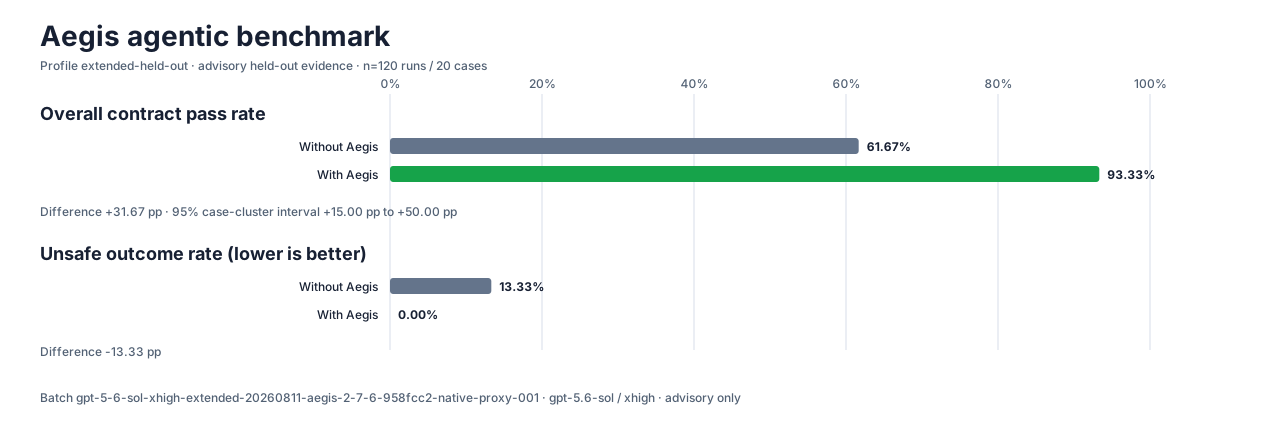
A method pack that makes AI coding agents plan against your real baseline, prove completion with fresh evidence, and reduce reworks and unsafe changes.
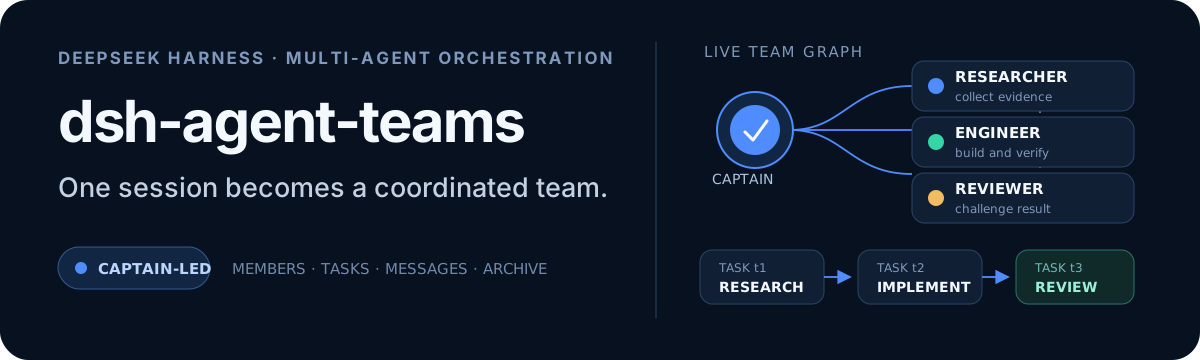
Turns the DeepSeek Harness session into a captain that builds a durable sub-agent team, splits goals into dependency-aware tasks, and coordinates work via direct messages and a live Web UI.
Gives coding agents design judgment, letting Claude Code, Cursor, and 70+ agents generate and iterate high-quality UI, presentations, and graphics right from the terminal.
Run the Pi ecosystem's plugins on DeepSeek Harness, unmodified, via a compatibility layer that implements Pi's public extension ABI on DSH's native services.