dsh-oauth-api
Run the following command in DeepSeek Harness:
dsh plugin install hahaha-taotao/dsh-oauth-api
Paste the following prompt into your AI chat to install this plugin:
Run dsh plugin install hahaha-taotao/dsh-oauth-api in DeepSeek Harness to install this plugin; the source is hosted at https://github.com/hahaha-taotao/dsh-oauth-api .
About this plugin
Juggling API keys for Grok, ChatGPT Codex, Claude Code, and Kimi Code across multiple AI services is tedious and error-prone. dsh-oauth-api, an out-of-tree community plugin for DeepSeek Harness, adds an OAuth login section to Settings so a single browser authorization is all you need—no manual key entry, no juggling of credentials.
The plugin supports four OAuth flows: Device Code for xAI, OpenAI Codex, and Kimi, and a PKCE paste-code#state flow for Claude Code. A successful login never silently changes your default model; you simply select the matching group in the model picker such as xai-oauth, codex-oauth, claude-oauth, or kimi-oauth. All tokens are stored exclusively in local JSON files under $DSH_HOME/oauth/, with nothing sent to any remote store.
This plugin is a good fit if you already run DeepSeek Harness, want OAuth-based access to the four services above, and prefer that credentials stay on your local machine only. Keep in mind it is a community-maintained out-of-tree plugin, not an official DeepSeek product. xAI login requires the api:access scope; if inference complains about a missing scope, simply log in once more.
Use Cases
- Authorize via browser once to connect Grok, Codex, Claude Code, and Kimi Code without manual API key entry
- Switch between multiple AI services by simply selecting the matching OAuth group in the model picker
- Keep all credentials in local JSON files instead of scattering keys across configuration files
Best For
- Developers already running DeepSeek Harness who want additional model sources
- Engineers who need unified credential management across multiple AI services to reduce key maintenance overhead
- Users who prefer fully local credential storage and do not want keys passing through cloud services
Related Plugins
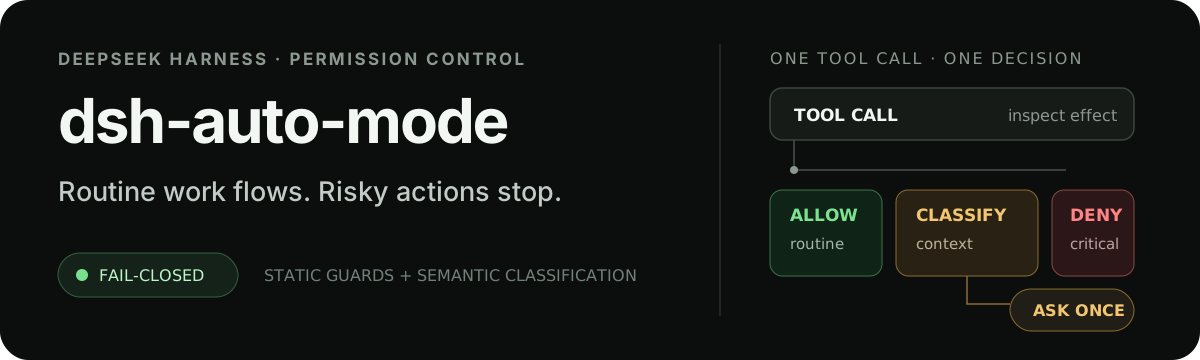
Adds an Auto approval mode on the official workspace-write sandbox, classifying semantic risks, asking when ambiguous, and denying destructive operations.

Undo/rollback system for DSH: config & plugin snapshots, one-click undo/redo/restore, message-level revert, secret masking, safe mode, and offline WebUI/GUI/CLI rescue tools for when DSH won't start.
Packages all 87 SKILL.md files from upstream reverse-skill as a DeepSeek Harness plugin that auto-registers them for authorized reverse engineering, penetration testing, and security research.
Dockyard DSH is a native DeepSeek Harness plugin that unifies official OAuth/client sessions for Codex, Antigravity, Grok, Claude, and Cursor, providing account pool, model catalog, and quota status.