dsh-codex-import
Run the following command in DeepSeek Harness:
dsh plugin install QinXi-ai/dsh-codex-import
Paste the following prompt into your AI chat to install this plugin:
Install this plugin in DeepSeek Harness by running dsh plugin install QinXi-ai/dsh-codex-import; the full source code is available at https://github.com/QinXi-ai/dsh-codex-import
About this plugin
Many developers have built up Codex configurations, hooks, Skills, and AGENTS.md instruction files over time and may want to move to DeepSeek Harness (DSH). The hard part is figuring out which pieces are directly compatible, which need rework, and which simply will not work—all without risking credential leaks, accidental hook execution, or breaking the permission model. dsh-codex-import exists to answer that "what actually fits?" question before you commit to a migration.
It is a strictly read-only compatibility scanner that walks your user-level and project-level config.toml files, hooks.json, standalone Skill directories, and standard AGENTS.md / AGENTS.override.md files, then classifies every item as READY, DISCOVERED, NEEDS_REVIEW, SKIPPED_UNSUPPORTED, or UNSUPPORTED with a brief reason. It also identifies which of the five synchronous command-hook types (PreToolUse, PostToolUse, SessionStart, UserPromptSubmit, Stop) the current DSH hooks-codex bridge can actually run. Throughout the scan, nothing is written to disk, no profile is modified, no hooks are executed, and no chat history is touched. The output deliberately contains only categories, statuses, counts, and generic reasons—never config values, command bodies, Skill text, or absolute paths.
It is best suited for individual developers or small teams evaluating a Codex-to-DSH transition: run one scan, get a structured compatibility list, and decide your next steps with confidence. If you maintain both toolchains side by side, it also serves as a practical difference memo, flagging which Skills need rewriting and which hooks are temporarily unsupported, so you can plan around security-semantic gaps instead of discovering them mid-migration.
Use Cases
- Scan local configs, hooks, and Skills in one pass before committing to a Codex-to-DSH migration
- produce a structured gap list during a dual-toolchain transition to flag items needing rework
- audit team-level Codex Skills and hooks for migration readiness and surface security-semantic conflicts early
Best For
- Individual developers or small teams evaluating a Codex-to-DSH migration path
- engineers running dual agent toolchains who need a fast compatibility check
- engineering leads with strict requirements around credential isolation and permission-model safety
Related Plugins
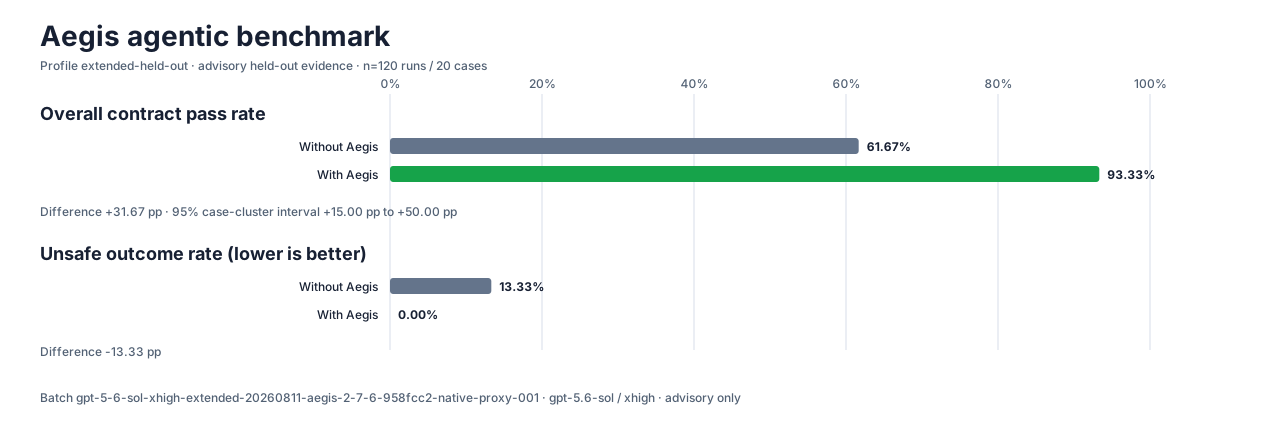
A method pack that makes AI coding agents plan against your real baseline, prove completion with fresh evidence, and reduce reworks and unsafe changes.
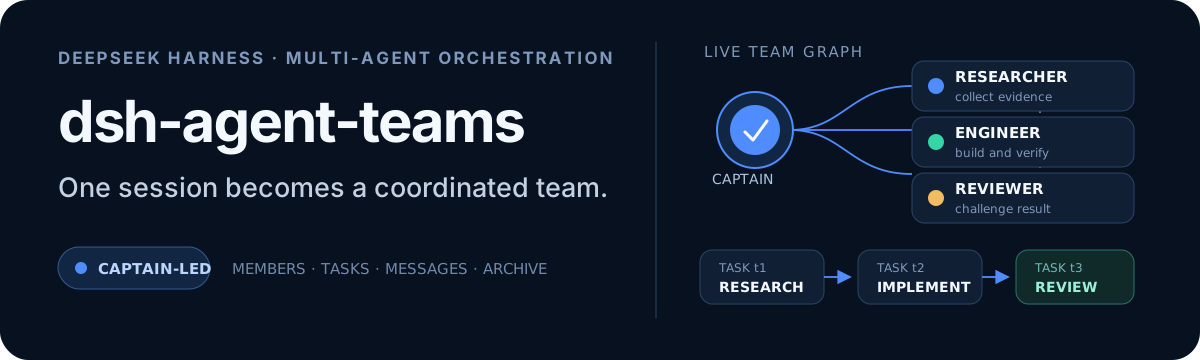
Turns the DeepSeek Harness session into a captain that builds a durable sub-agent team, splits goals into dependency-aware tasks, and coordinates work via direct messages and a live Web UI.
Gives coding agents design judgment, letting Claude Code, Cursor, and 70+ agents generate and iterate high-quality UI, presentations, and graphics right from the terminal.
Run the Pi ecosystem's plugins on DeepSeek Harness, unmodified, via a compatibility layer that implements Pi's public extension ABI on DSH's native services.