dsh-plugins
Run the following command in DeepSeek Harness:
dsh plugin install ZenMux/dsh-plugins
Paste the following prompt into your AI chat to install this plugin:
Run dsh plugin install ZenMux/dsh-plugins inside your DeepSeek Harness session to install; the complete source code is hosted at https://github.com/ZenMux/dsh-plugins
About this plugin
Wiring a long tail of third-party text models into DeepSeek Harness used to be a manual chore: paste an API key into settings.yaml, hand-roll a provider block, and guess whether a model belongs on the Anthropic or the OpenAI channel. dsh-plugins collapses all of that into one browser OAuth flow. Tokens refresh in the background, no secret ever lands in your config, and a small set of slash commands covers status checks, catalog refresh, and clean logout.
The bundled catalog ships 150 searchable text models, each auto-routed at request time. 126 of them ride the Anthropic Messages protocol with prompt-cache controls ON, meaning the first eligible call can create a cache and subsequent calls that share the same prefix will report cache reads. The remaining 24 OpenAI-only models are sent to Chat Completions. Every inference request carries the active DSH session identifier in the x-zenmux-session-id header for upstream tracing. The catalog is a release snapshot pulled from ZenMux official endpoints, and one refresh command refreshes the listing while preserving your OAuth credentials and any unrelated provider settings.
Designed for Agent-heavy teams that need to mix Claude-class and GPT-class models inside a single DSH workflow, want prompt-cache hit rates to matter, and would rather not keep a growing list of API keys in plaintext config files.
Use Cases
- Orchestrate Claude and GPT-class models side by side in a single DSH workflow without juggling multiple API keys
- Leverage Anthropic prompt-cache to cut inference cost on requests that share a common prefix
- Refresh the ZenMux model catalog with one command and instant access to the latest available models
Best For
- Agent-heavy R&D teams that must mix multiple proprietary LLMs in a single pipeline
- AIOps engineers who track prompt-cache hit rates and per-token inference cost
- Platform engineers who want to replace manual API-key management with a one-click OAuth flow
Related Plugins
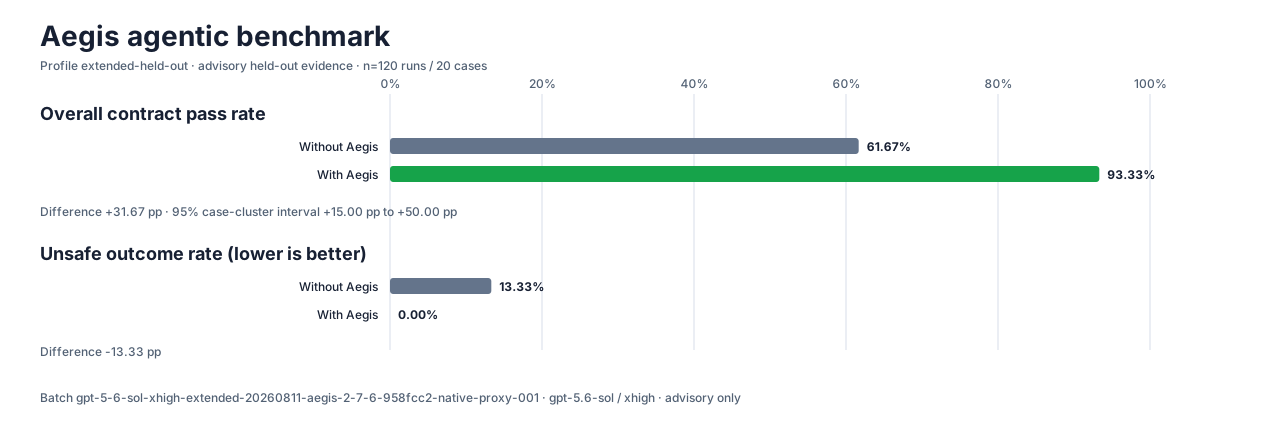
A method pack that makes AI coding agents plan against your real baseline, prove completion with fresh evidence, and reduce reworks and unsafe changes.
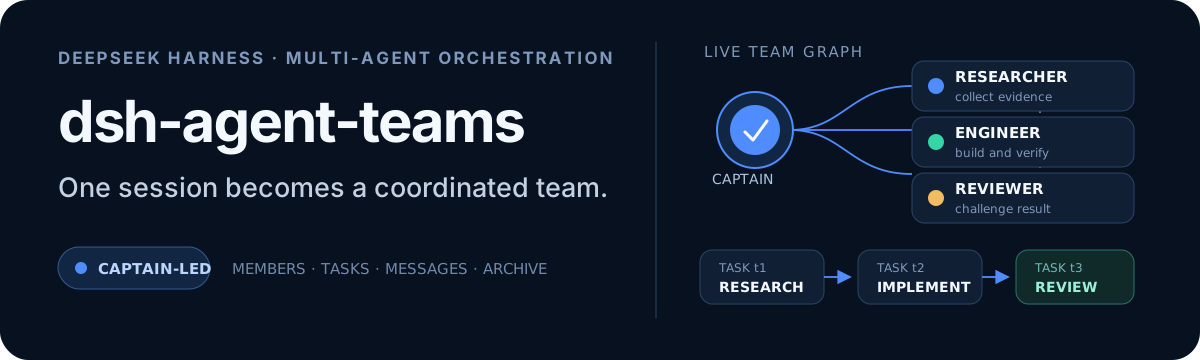
Turns the DeepSeek Harness session into a captain that builds a durable sub-agent team, splits goals into dependency-aware tasks, and coordinates work via direct messages and a live Web UI.
Gives coding agents design judgment, letting Claude Code, Cursor, and 70+ agents generate and iterate high-quality UI, presentations, and graphics right from the terminal.
Run the Pi ecosystem's plugins on DeepSeek Harness, unmodified, via a compatibility layer that implements Pi's public extension ABI on DSH's native services.