dsh-skill-lord-serf
Run the following command in DeepSeek Harness:
dsh plugin install ttxl314/dsh-skill-lord-serf
Paste the following prompt into your AI chat to install this plugin:
Run dsh plugin install ttxl314/dsh-skill-lord-serf to install this plugin in DeepSeek Harness; the full source is at https://github.com/ttxl314/dsh-skill-lord-serf
About this plugin
The most common pain point in multi-agent collaboration is that task state scatters across chat messages: planning, execution, and acceptance each speak their own language, making it impossible to trace or replay events after the fact. dsh-skill-lord-serf ports the Lord-Serf orchestration protocol (v0.5) into DeepSeek Harness and anchors all authoritative state in plain files: TASKS.md for the global task list, TASKS/ for task packages, REVIEWS/ and BLOCKERS/ for review and blocker records. Chat becomes a notification channel only, so every dispatch, execution, and acceptance is auditable on disk.
Two roles drive the workflow. The Lord acts as orchestrator, decomposing requirements into JSON-Schema-validated task packages, dispatching a Serf through the subagent tool, and making review decisions based on the Serf's structured report (REVIEW, BLOCKED, or CHANGE_REQUEST). The Serf acts as executor, working strictly within the task-package boundary, fanning out disjoint sub-steps via subagents when needed, self-validating outputs, and concluding with a schema-checked report. Protocol field names, status vocabulary, and report paths match upstream v0.5 exactly, so task packages and reports remain interoperable across platforms.
This plugin suits developers or small teams building structured multi-agent pipelines in DeepSeek Harness. If you want auditable task planning, clearly bounded execution, and a repeatable acceptance loop without maintaining a separate state service, the two skill files slot directly into a DSH session and you can run a complete dispatch-to-acceptance cycle with no extra infrastructure.
Use Cases
- Break complex projects into task packages and dispatch subagent executors
- Audit and trace multi-agent collaboration through file-level records
- Run a full plan-execute-accept loop without a dedicated state service
Best For
- Developers building structured multi-agent pipelines in DeepSeek Harness
- Engineers needing auditable and reproducible multi-agent task dispatch
- Architects who want orchestration logic persisted in files rather than chat context
Related Plugins
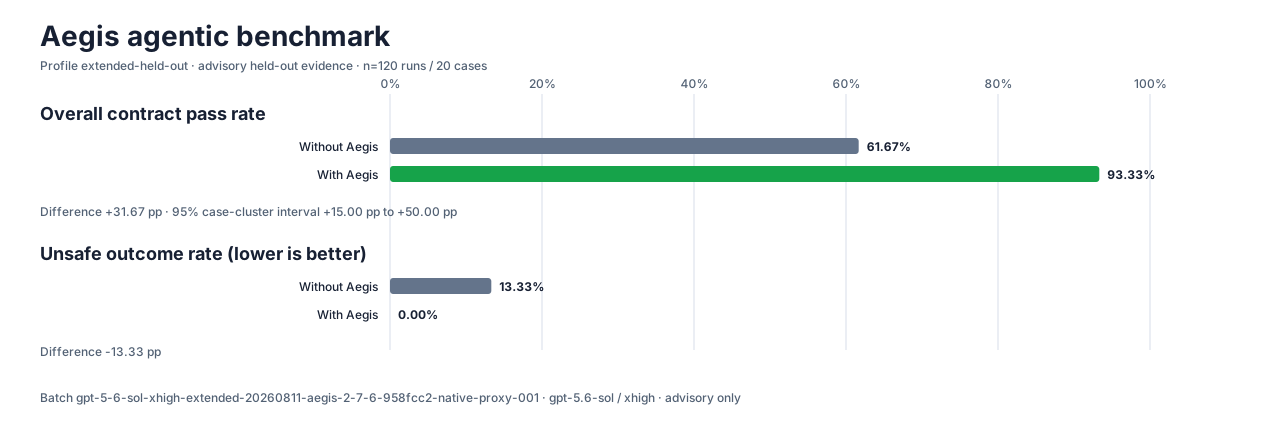
A method pack that makes AI coding agents plan against your real baseline, prove completion with fresh evidence, and reduce reworks and unsafe changes.
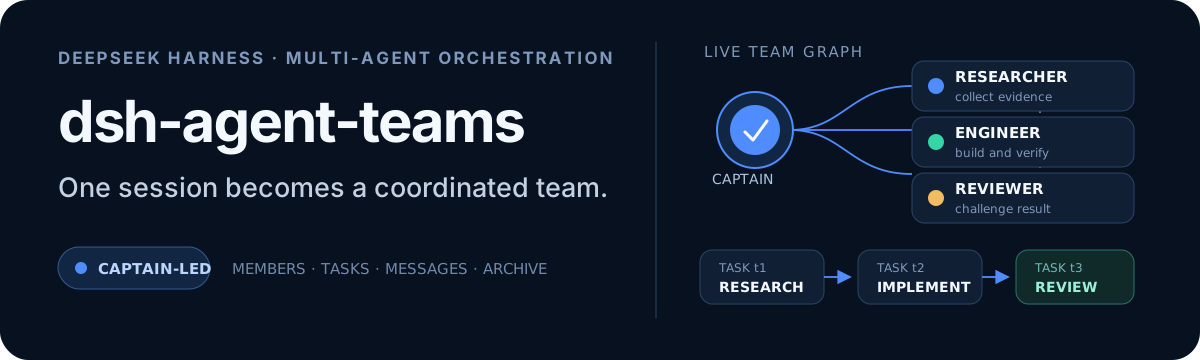
Turns the DeepSeek Harness session into a captain that builds a durable sub-agent team, splits goals into dependency-aware tasks, and coordinates work via direct messages and a live Web UI.
Gives coding agents design judgment, letting Claude Code, Cursor, and 70+ agents generate and iterate high-quality UI, presentations, and graphics right from the terminal.
Run the Pi ecosystem's plugins on DeepSeek Harness, unmodified, via a compatibility layer that implements Pi's public extension ABI on DSH's native services.