dsh-claude-code
Run the following command in DeepSeek Harness:
dsh plugin install Yuki-takuya-kun/dsh-claude-code
Paste the following prompt into your AI chat to install this plugin:
Run dsh plugin install Yuki-takuya-kun/dsh-claude-code in the DeepSeek Harness terminal to install; source code is available at https://github.com/Yuki-takuya-kun/dsh-claude-code .
About this plugin
DSH binds DeepSeek as its sole session engine. If you want Claude Code to drive a particular turn while every other preset keeps DeepSeek, without bouncing between two terminals, dsh-claude-code registers a claude-code engine under dsh-engine-switch. The preset acts as a routing key: select it and the turn goes to Claude Code, select any other and DeepSeek handles it, with zero main-loop rewrites.
Beyond switching, the plugin writes Claude Code token usage and model context windows straight into DSH session logs so the interface shows context occupancy at a glance. The permission model is bridged through the canUseTool callback: in-scope writes pass silently, out-of-scope actions trigger approval, and AskUserQuestion is answered via DSH built-in choice UI, keeping every interaction inside one window. Session IDs persist side-channel for seamless resume, and sub-agents always route to DeepSeek regardless of the main-session engine.
Built for engineers who live in DSH day-to-day and want a single window with two engine paths, and for developers comparing Claude Code toolchains against DeepSeek sub-agents without context-switching between terminals.
Use Cases
- Switch between Claude Code and DeepSeek per preset inside one DSH session
- Monitor Claude Code token usage and context-window occupancy natively in the DSH UI
- Bridge Claude Code permission callbacks into DSH sandbox policy without leaving the interface
Best For
- DSH power users who want multiple engines behind one interface
- Developers benchmarking Claude Code toolchains against DeepSeek sub-agents
- Teams that rely on DSH for audit logs and approvals and refuse terminal-hopping
Related Plugins
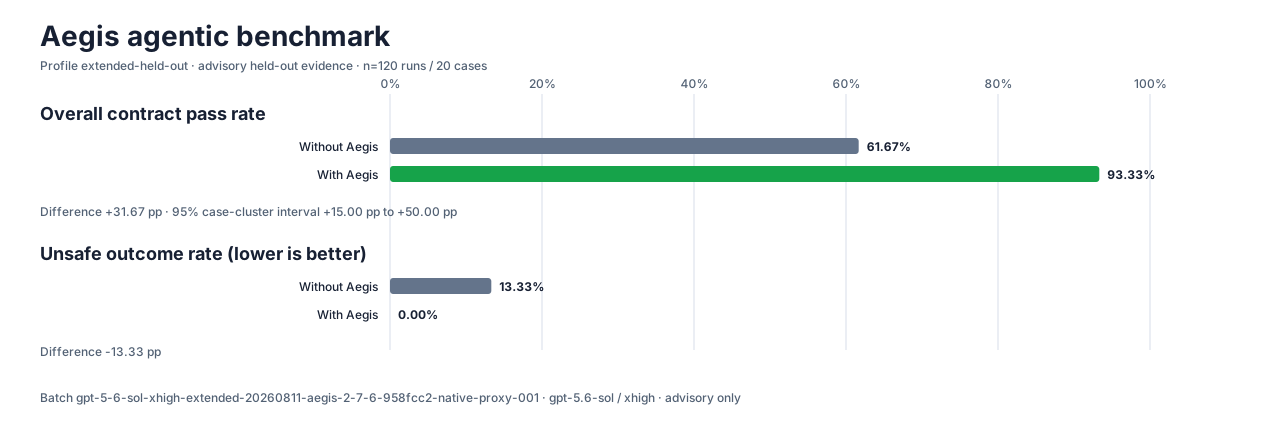
A method pack that makes AI coding agents plan against your real baseline, prove completion with fresh evidence, and reduce reworks and unsafe changes.
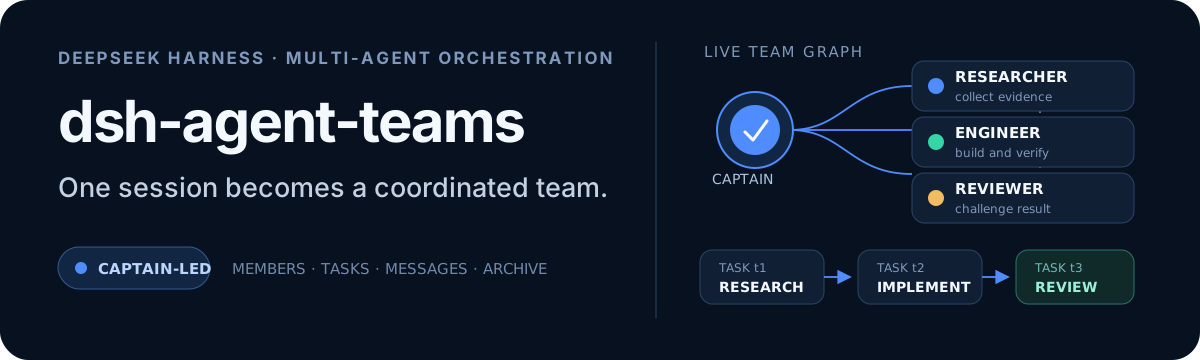
Turns the DeepSeek Harness session into a captain that builds a durable sub-agent team, splits goals into dependency-aware tasks, and coordinates work via direct messages and a live Web UI.
Gives coding agents design judgment, letting Claude Code, Cursor, and 70+ agents generate and iterate high-quality UI, presentations, and graphics right from the terminal.
Run the Pi ecosystem's plugins on DeepSeek Harness, unmodified, via a compatibility layer that implements Pi's public extension ABI on DSH's native services.