dsh-agent-run-logger
Run the following command in DeepSeek Harness:
dsh plugin install bluefateludi/dsh-agent-run-logger
Paste the following prompt into your AI chat to install this plugin:
Run dsh plugin install bluefateludi/dsh-agent-run-logger in DeepSeek Harness to install the plugin; source code is at https://github.com/bluefateludi/dsh-agent-run-logger
About this plugin
Once an agent workflow is running, it is hard to tell at a glance which step consumed the most milliseconds, which tool call dragged the overall pace, or at which stage tokens were heavily used. Those details are scattered across the Session event stream.
dsh-agent-run-logger turns each Session's events into compact local JSONL timing records covering run, step, llm (including first_token), and tool start/end, plus trace.gap markers. Every Session writes to its own file and drains independently; the event path never blocks on disk I/O, and queue overfalls are reported as a gap. The bundled read-only viewer binds to 127.0.0.1 and presents a timing waterfall, Session lineage, token usage, gaps, and truncated-value hints, with sub-agent Sessions navigated via parentSessionId. Content capture is off by default; when explicitly enabled, credential-like values are redacted first, then each value is truncated to its configured UTF-8 byte limit to keep sensitive data from being persisted.
It suits developers who want to diagnose agent workflow latency and resource consumption locally without introducing a database, OpenTelemetry, or a remote exporter. Keep in mind: trace files are a diagnostic aid, not a replacement for the canonical DeepSeek Harness Session log.
Use Cases
- Identify which tool call takes the longest in an agent workflow
- Inspect step timing waterfalls across concurrent Sessions
- Check token usage distribution and trace gap anomalies
Best For
- Developers diagnosing agent workflow latency locally with minimal dependencies
- Teams that want per-step, tool, and LLM timing without introducing OpenTelemetry
- Engineers who need a quick view of multi-session lineage and timelines
Related Plugins
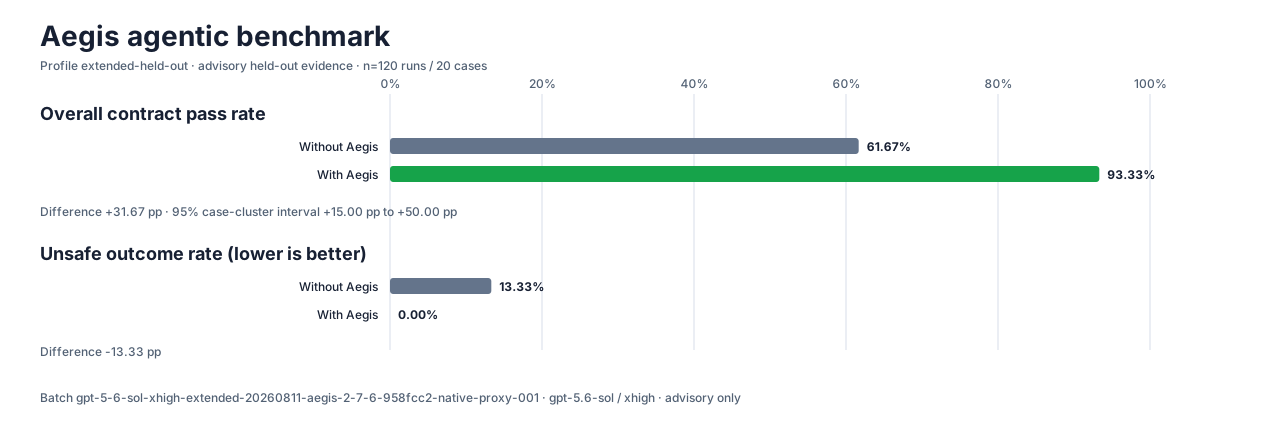
A method pack that makes AI coding agents plan against your real baseline, prove completion with fresh evidence, and reduce reworks and unsafe changes.
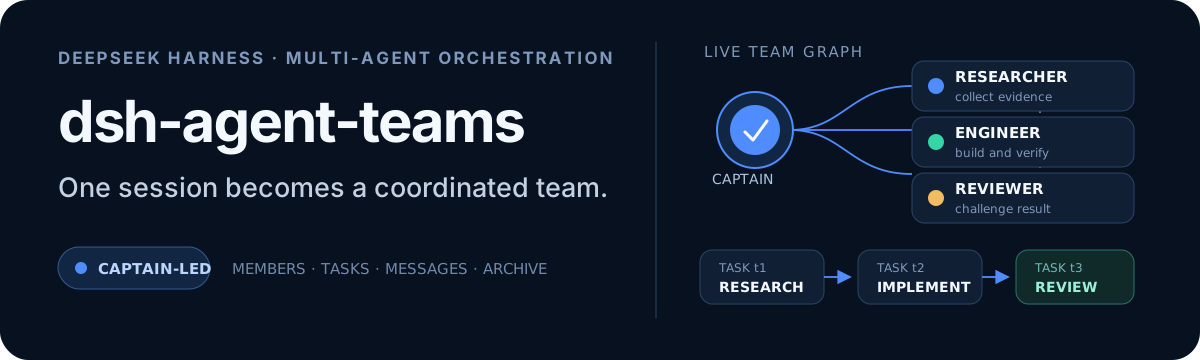
Turns the DeepSeek Harness session into a captain that builds a durable sub-agent team, splits goals into dependency-aware tasks, and coordinates work via direct messages and a live Web UI.
Gives coding agents design judgment, letting Claude Code, Cursor, and 70+ agents generate and iterate high-quality UI, presentations, and graphics right from the terminal.
Run the Pi ecosystem's plugins on DeepSeek Harness, unmodified, via a compatibility layer that implements Pi's public extension ABI on DSH's native services.