dsh-changelog
Run the following command in DeepSeek Harness:
dsh plugin install GongYuanCaiJi/dsh-changelog
Paste the following prompt into your AI chat to install this plugin:
Run the following command in your terminal to install the plugin (source repository: https://github.com/GongYuanCaiJi/dsh-changelog ): dsh plugin install GongYuanCaiJi/dsh-changelog. The prepare script will automatically build the dist directory during installation.
About this plugin
Every release forces you to dig through git logs, PR lists, and commit messages to piece together notes that actually read well—while quietly risking that a stray internal link, commit hash, or private URL slips into the public file. dsh-changelog turns that chore into a single command: /release-notes inspects GitHub releases, PRs, and commits, applies a clear source-priority fallback (public summary, context, release body, PR title, commit message), and writes clean, publish-ready copy. /unreleased lets you audit merged PRs since the last tag without creating any tags, branches, or files, so you can confirm scope before you actually ship. Equally important, the public copy and the source audit are strictly separated: PR numbers, commit hashes, internal notes, and private URLs land only in audit files under .dsh/tmp/ and never bleed into what gets published.
It is equally well suited to teams that want their release notes to match a specific product voice. /setup-release-notes-style generates a repo-specific style profile so every release reads in the right tone, cadence, and register for your target audience instead of feeling like a generic template. If you maintain an open-source project or internal platform with real commit history and ship on a regular cadence, and you want to stop treating every release like a manual copywriting session, this plugin is built for you.
Use Cases
- Generate publish-ready release copy with one command before shipping
- Audit merged PRs since the last tag without creating tags or files
- Create a repo-specific voice profile for release notes
Best For
- Open-source maintainers shipping on a regular cadence
- Teams maintaining internal platforms with real commit history
- Engineers who care about keeping sensitive details out of public copy
Related Plugins
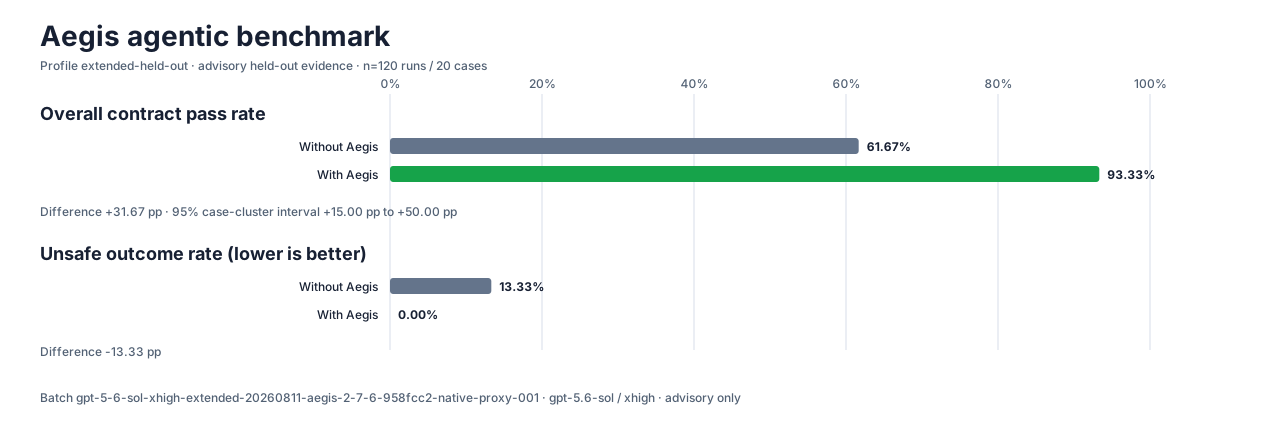
A method pack that makes AI coding agents plan against your real baseline, prove completion with fresh evidence, and reduce reworks and unsafe changes.
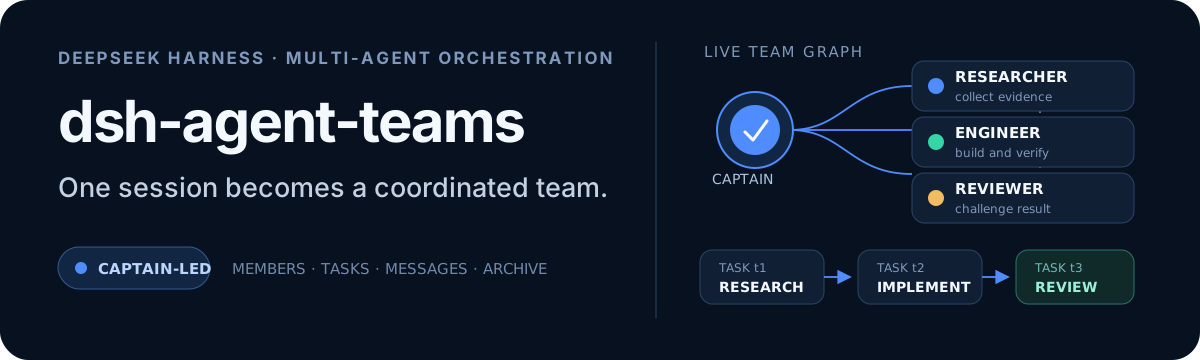
Turns the DeepSeek Harness session into a captain that builds a durable sub-agent team, splits goals into dependency-aware tasks, and coordinates work via direct messages and a live Web UI.
Gives coding agents design judgment, letting Claude Code, Cursor, and 70+ agents generate and iterate high-quality UI, presentations, and graphics right from the terminal.
Run the Pi ecosystem's plugins on DeepSeek Harness, unmodified, via a compatibility layer that implements Pi's public extension ABI on DSH's native services.