dsh-authorize-app
Run the following command in DeepSeek Harness:
dsh plugin install extension-hunter/dsh-authorize-app
Paste the following prompt into your AI chat to install this plugin:
Install dsh-authorize-app (source: https://github.com/extension-hunter/dsh-authorize-app) in DeepSeek Harness by running dsh plugin install extension-hunter/dsh-authorize-app, then restart dsh web and refresh the page to see the Connected Apps section in Settings.
About this plugin
In the DSH plugin ecosystem, plugins live in isolation and users have no single entry point to see which apps are currently active. dsh-authorize-app adds a Connected Apps section to the Settings panel (order 25, after Agent Presets), acting as a central showcase where every DSH plugin can surface itself to the end user.
The mechanism is deliberately minimal: the plugin declares a child slot of kind list, and any other plugin simply calls ctx.slots.inject() in its client half to register a card. No central registry, no network transport, no cross-plugin imports, and install order is irrelevant. The platform renders the slot; the plugin just draws a card row or returns null to stay hidden. The entire contract is one sentence: declare the slot, inject the card, the platform renders.
For DSH users, Settings → Connected Apps provides a single, glanceable list of all registered apps without hunting through individual plugin directories. For plugin developers, it is a zero-cost, zero-coupling exposure point: declare a locale namespace, implement a small card component, and call inject. No host-side logic or runtime dependencies are required on the developer side.
Use Cases
- Users open the Settings panel and see all registered DSH apps in one place
- Plugin developers register a card for their app without modifying platform code
- Multiple plugins coexist without each claiming its own Settings entry
Best For
- End users who want a centralized view of installed DSH apps
- Developers adding a user-visible entry point to their DSH plugin
- Architects building multi-plugin DSH platforms needing a unified app discovery mechanism
Related Plugins
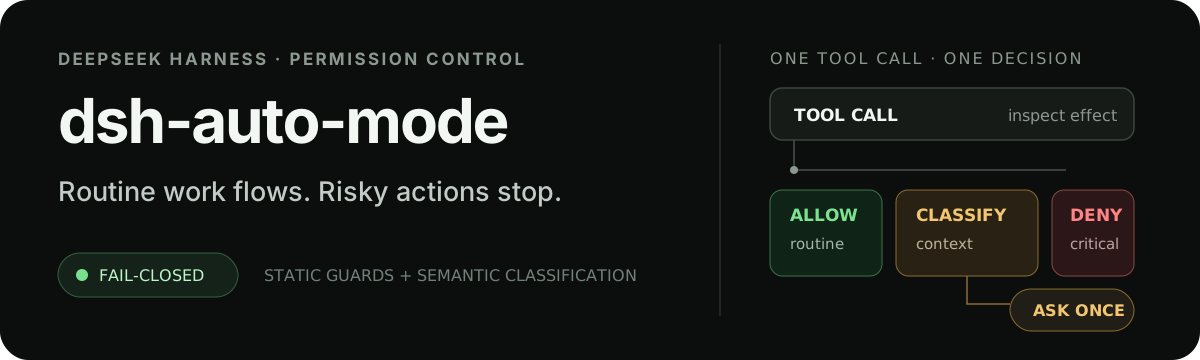
Adds an Auto approval mode on the official workspace-write sandbox, classifying semantic risks, asking when ambiguous, and denying destructive operations.

Undo/rollback system for DSH: config & plugin snapshots, one-click undo/redo/restore, message-level revert, secret masking, safe mode, and offline WebUI/GUI/CLI rescue tools for when DSH won't start.
Packages all 87 SKILL.md files from upstream reverse-skill as a DeepSeek Harness plugin that auto-registers them for authorized reverse engineering, penetration testing, and security research.
Dockyard DSH is a native DeepSeek Harness plugin that unifies official OAuth/client sessions for Codex, Antigravity, Grok, Claude, and Cursor, providing account pool, model catalog, and quota status.