dsh-preset-scaffold
Run the following command in DeepSeek Harness:
dsh plugin install duyanta123/dsh-preset-scaffold
Paste the following prompt into your AI chat to install this plugin:
Run dsh plugin install duyanta123/dsh-preset-scaffold inside your DeepSeek Harness session; the full source is at https://github.com/duyanta123/dsh-preset-scaffold .
About this plugin
Setting up a brand-new project from scratch—picking the directory layout, writing build configs, installing dependencies, verifying the server starts—is a recurring tax on every developer, and results vary wildly from person to person. dsh-preset-scaffold turns that process into a single sentence: just describe your tech stack and project type, and the agent walks through requirement confirmation, architecture planning, skeleton generation, dependency installation, and launch verification end to end.
Core capabilities include a built-in project-architect persona with explicit decision rules, output contracts, and hard constraints; six ready-to-run starter templates covering Node-TypeScript, React+Vite, Python FastAPI, Go, Spring Boot, and Monorepo; and four engineering skills that codify a strict initialization runbook, a template-usage guide, directory-structure best practices, and configuration standards. The toolset spans file I/O, shell, background jobs, sub-agents, and plan mode, letting the agent close the loop from file creation to a running service after user approval.
Ideal for full-stack engineers who spin up new projects frequently, team members who need a consistent onboarding baseline, or anyone who wants to keep engineering standards without the manual scaffolding overhead. Once installed, simply start a new session, pick the preset, and describe your project in one sentence.
Use Cases
- Scaffold a full React+TypeScript SPA in one pass and verify it boots
- Bootstrap a Python FastAPI REST service and run an end-to-end smoke test
- Initialize a Monorepo layout with shared tooling and a unified build pipeline
Best For
- Full-stack engineers who spin up new projects frequently
- New team members who need a consistent project baseline and structure
- Solo developers who want to minimize manual scaffolding overhead
Related Plugins
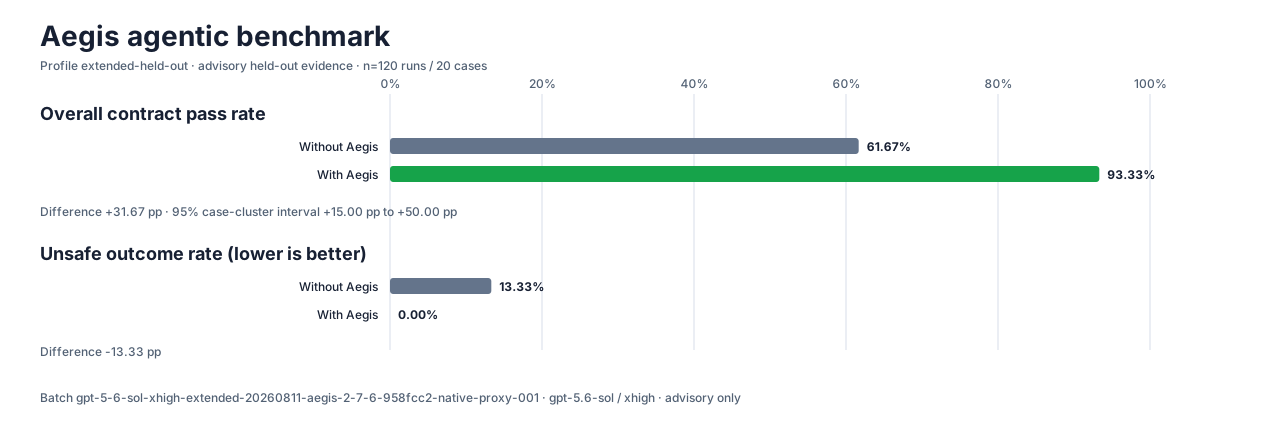
A method pack that makes AI coding agents plan against your real baseline, prove completion with fresh evidence, and reduce reworks and unsafe changes.
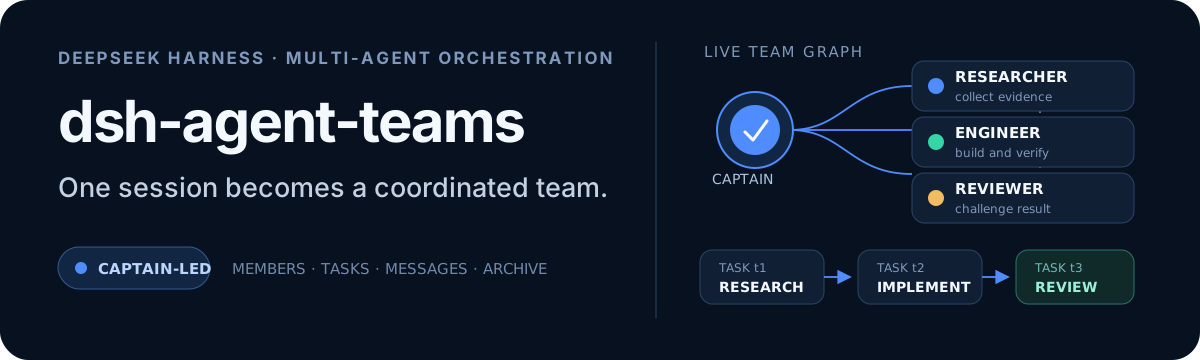
Turns the DeepSeek Harness session into a captain that builds a durable sub-agent team, splits goals into dependency-aware tasks, and coordinates work via direct messages and a live Web UI.
Gives coding agents design judgment, letting Claude Code, Cursor, and 70+ agents generate and iterate high-quality UI, presentations, and graphics right from the terminal.
Run the Pi ecosystem's plugins on DeepSeek Harness, unmodified, via a compatibility layer that implements Pi's public extension ABI on DSH's native services.