dsh-sync
Run the following command in DeepSeek Harness:
dsh plugin install ZhenHuangLab/dsh-sync
Paste the following prompt into your AI chat to install this plugin:
Run dsh plugin install ZhenHuangLab/dsh-sync to install this plugin in DeepSeek Harness; the source code is available at https://github.com/ZhenHuangLab/dsh-sync
About this plugin
Keeping DeepSeek Harness settings aligned across multiple machines usually meant pushing the entire DSH home directory into Git — credentials, machine-specific endpoints, local plugin dependencies all traveling together. That workflow is both a security risk and an audit nightmare. dsh-sync solves one problem: sync exactly what you choose, and keep everything else local.
Its core capabilities include fine-grained selection by settings namespace, profile, patch, and preset directory; automatic stripping of known secret fields and user-defined local-only paths before anything is written to Git; per-line review where you can skip an added line or keep a removed local line; explicit confirmation gates separating executable changes (profile patches, plugin manifests, user presets) from ordinary settings; conflict resolution at the line or file level; and automatic backup with one-click repair if an apply is interrupted. The sync repository stays fully isolated from live files — fetch never overwrites, push is fast-forward only.
It is built for developers and platform teams running DeepSeek Harness on two or more machines, CI nodes, or shared environments who want configuration that is traceable, reviewable, and reversible — without a single credential or machine-specific value ever landing in a repository.
Use Cases
- Sync Harness settings and profiles across dev machines while keeping credentials and endpoints local
- Review a teammate’s pushed config changes line by line before applying them to your machine
- Share a user preset directory so new members pull the full plugin setup in one step
Best For
- Developers running DeepSeek Harness on two or more machines
- Ops teams that share Harness config without exposing credentials
- Platform engineers who want auditable and reversible configuration changes
Related Plugins
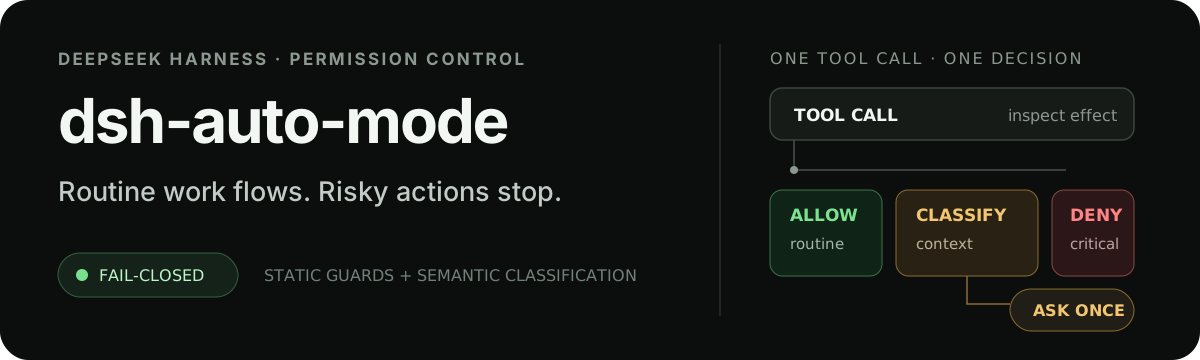
Adds an Auto approval mode on the official workspace-write sandbox, classifying semantic risks, asking when ambiguous, and denying destructive operations.

Undo/rollback system for DSH: config & plugin snapshots, one-click undo/redo/restore, message-level revert, secret masking, safe mode, and offline WebUI/GUI/CLI rescue tools for when DSH won't start.
Packages all 87 SKILL.md files from upstream reverse-skill as a DeepSeek Harness plugin that auto-registers them for authorized reverse engineering, penetration testing, and security research.
Dockyard DSH is a native DeepSeek Harness plugin that unifies official OAuth/client sessions for Codex, Antigravity, Grok, Claude, and Cursor, providing account pool, model catalog, and quota status.