DSH
Run the following command in DeepSeek Harness:
dsh plugin install Sean-Gao/DSH
Paste the following prompt into your AI chat to install this plugin:
Run dsh plugin install Sean-Gao/DSH in DeepSeek Harness to install the plugin, available at https://github.com/Sean-Gao/DSH; restart the web app afterwards and open Settings to see the key-info panel.
About this plugin
When juggling multiple DSH profiles and plugin loaders, diagnostic details are scattered: environment versions in the terminal, profile layer stacks in config files, loader states buried in logs, and model adapter registrations hidden in the browser runtime. The DSH Key-Info plugin consolidates all of this-OS and architecture, Node and dsh versions, bundle layers and dependency lists, per-loader status with aggregate counts, active sessions and registered model adapters, and a full list of failed/suspended/disabled entries-into a single Chinese-language panel on the Settings page.
Behind the panel the plugin also exposes a /dsh-key-info HTTP endpoint that returns structured JSON, ready for curl, health-check scripts, or CI pipelines without having to spin up the web UI every time. It mounts automatically as a profile patch layer via dsh.bundle, and the browser side is discovered at runtime by ClientModuleRegistry-no extra configuration needed.
Well suited for developers switching between multiple profiles daily, SREs who need to pinpoint a stuck loader fast, and small teams that want a unified DSH troubleshooting entry point in their monitoring stack.
Use Cases
- Quickly verify whether a loader is suspended or failed after switching profiles
- Feed DSH environment snapshots into CI health-check scripts via the JSON endpoint
- Review bundle layers, active sessions, and model adapter registration at a glance during troubleshooting
Best For
- Developers maintaining multiple DSH profiles day to day
- Ops or SRE engineers who need to pinpoint failing loaders rapidly
- Tech leads in small teams seeking a unified DSH troubleshooting entry point
Related Plugins
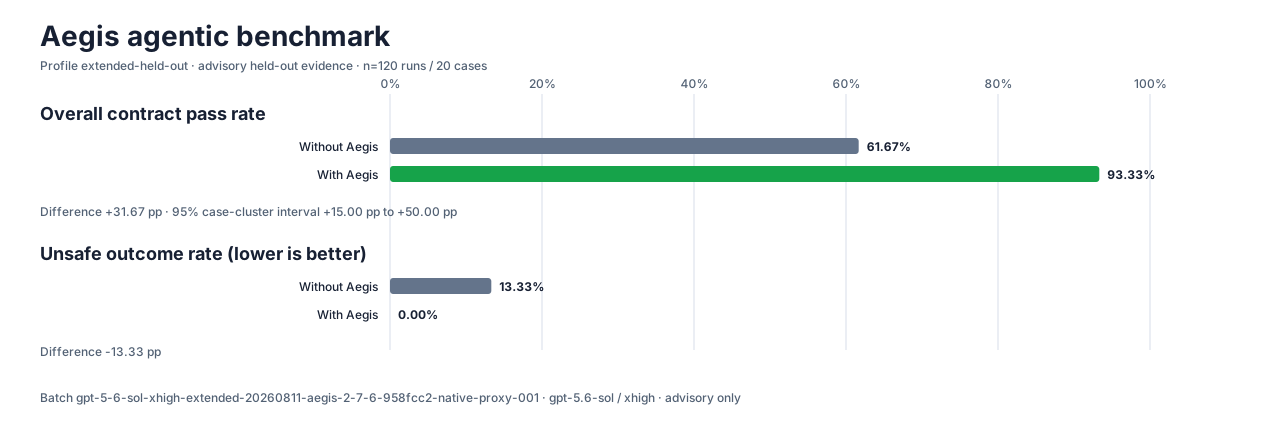
A method pack that makes AI coding agents plan against your real baseline, prove completion with fresh evidence, and reduce reworks and unsafe changes.
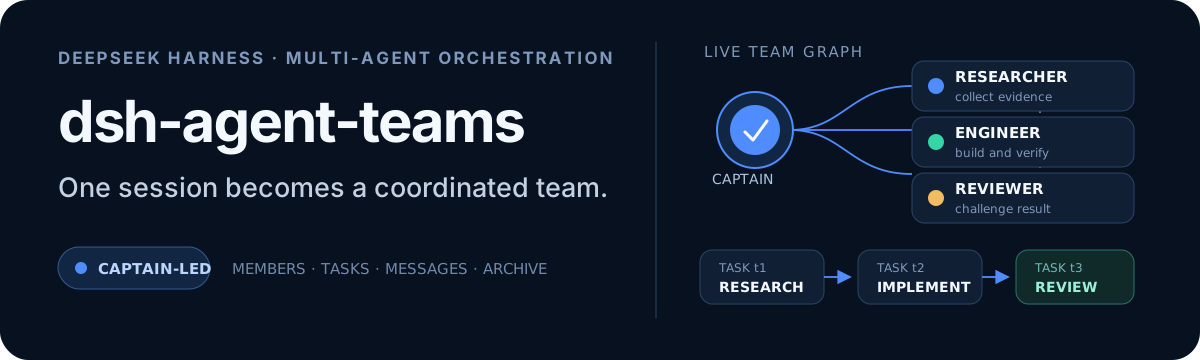
Turns the DeepSeek Harness session into a captain that builds a durable sub-agent team, splits goals into dependency-aware tasks, and coordinates work via direct messages and a live Web UI.
Gives coding agents design judgment, letting Claude Code, Cursor, and 70+ agents generate and iterate high-quality UI, presentations, and graphics right from the terminal.
Run the Pi ecosystem's plugins on DeepSeek Harness, unmodified, via a compatibility layer that implements Pi's public extension ABI on DSH's native services.