dsh-plugin-loud-failure
Run the following command in DeepSeek Harness:
dsh plugin install Rhymer-Lcy/dsh-plugin-loud-failure
Paste the following prompt into your AI chat to install this plugin:
Install it in DeepSeek Harness by running dsh plugin install Rhymer-Lcy/dsh-plugin-loud-failure; the source repository is at https://github.com/Rhymer-Lcy/dsh-plugin-loud-failure .
About this plugin
A tool call can exit 0 and still have failed. pandoc drops a glyph with only a warning line; a pipe scours a Python traceback out of the visible window; a semicoloned chain hides command not found behind the next command's exit status; NumPy prints a RuntimeWarning and hands back an array full of NaN. The model reads "success," but the mistake has already traveled downstream.\n\nloud-failure is a single tools/post-execute waterfall listener. It does not modify any tool or loop. After every tool execution it matches the returned text against a regex rule table; on a hit it either blocks the result (converting it to an isError whose content leads with the explanation and preserves the original output) or attaches a short notice that lands in the model's next request. Thirteen built-in rules cover real-world signatures: pandoc missing characters, Python tracebacks, shell command-not-found, NumPy runtime warnings, PowerShell NativeCommandError, Unicode replacement characters, and more. Every rule can be overridden or extended from your profile configuration.\n\nBuilt for developers whose DeepSeek Harness sessions call shell, pandoc, or Python tools frequently. The plugin is intentionally small: 87 automated tests cover rule merging, compilation, filters, excerpt bounds, and clean unmount. A broken rule table is rejected at boot, so a misconfiguration fails fast rather than on the first tool call.
Use Cases
- A tool exits 0 but silently fails: pandoc drops glyphs, a pipe hides a traceback, a semicolon chain masks command-not-found
- Intercepting or flagging suspicious tool output without modifying the tool or the call loop
- Preventing the model from treating an upstream silent error as success and propagating it into downstream steps
Best For
- Developers whose Harness sessions call shell, pandoc, or Python tools frequently
- Agent builders concerned about the model amplifying silent failures into downstream errors
- Harness administrators who want a lightweight post-execution safety check layer
Related Plugins
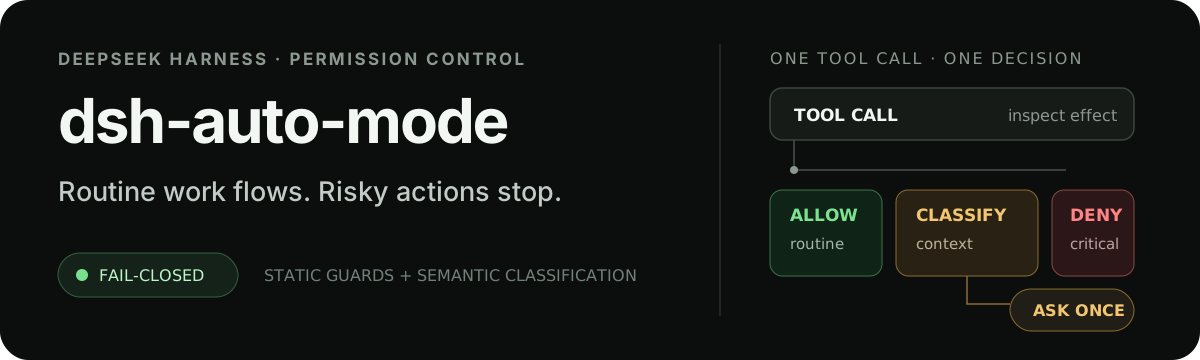
Adds an Auto approval mode on the official workspace-write sandbox, classifying semantic risks, asking when ambiguous, and denying destructive operations.

Undo/rollback system for DSH: config & plugin snapshots, one-click undo/redo/restore, message-level revert, secret masking, safe mode, and offline WebUI/GUI/CLI rescue tools for when DSH won't start.
Packages all 87 SKILL.md files from upstream reverse-skill as a DeepSeek Harness plugin that auto-registers them for authorized reverse engineering, penetration testing, and security research.
Dockyard DSH is a native DeepSeek Harness plugin that unifies official OAuth/client sessions for Codex, Antigravity, Grok, Claude, and Cursor, providing account pool, model catalog, and quota status.