dsh-requirements-alignment
Run the following command in DeepSeek Harness:
dsh plugin install jiezeng2004-design/dsh-requirements-alignment
Paste the following prompt into your AI chat to install this plugin:
In DeepSeek Harness, simply run dsh plugin install jiezeng2004-design/dsh-requirements-alignment in the terminal to complete the installation, and consult the official repository at https://github.com/jiezeng2004-design/dsh-requirements-alignment for comprehensive usage instructions.
About this plugin
Long-running autonomous agents frequently drift from their original intent as they navigate complex, multi-step workflows. dsh-requirements-alignment addresses this runtime divergence by bridging the gap left by traditional pre-execution planning tools. Operating on the principle that you define the direction while the agent handles the engineering, it ensures continuous alignment throughout the entire execution lifecycle.
At its core, the plugin constructs a durable requirement baseline capturing goals, protected constraints, and settled user decisions. It silently monitors agent actions and only intervenes when a proposed step threatens to materially shift the task trajectory. A drift candidate is surfaced for your explicit approval, logging your choice before seamlessly updating the baseline. All state persists securely in a dedicated sidecar store, surviving session resumes, forks, and system compactions. With flexible Auto, Manual, and Off modes alongside granular session-level controls, you dictate exactly how much oversight is applied at any given time.
Built for AI engineers, workflow automation specialists, and teams deploying production-grade intelligent agents, this tool eliminates the friction of constant manual supervision. It empowers developers to run extended, unattended agent processes with confidence, knowing that critical business boundaries and user intents remain intact without interrupting computational flow or risking silent scope creep.
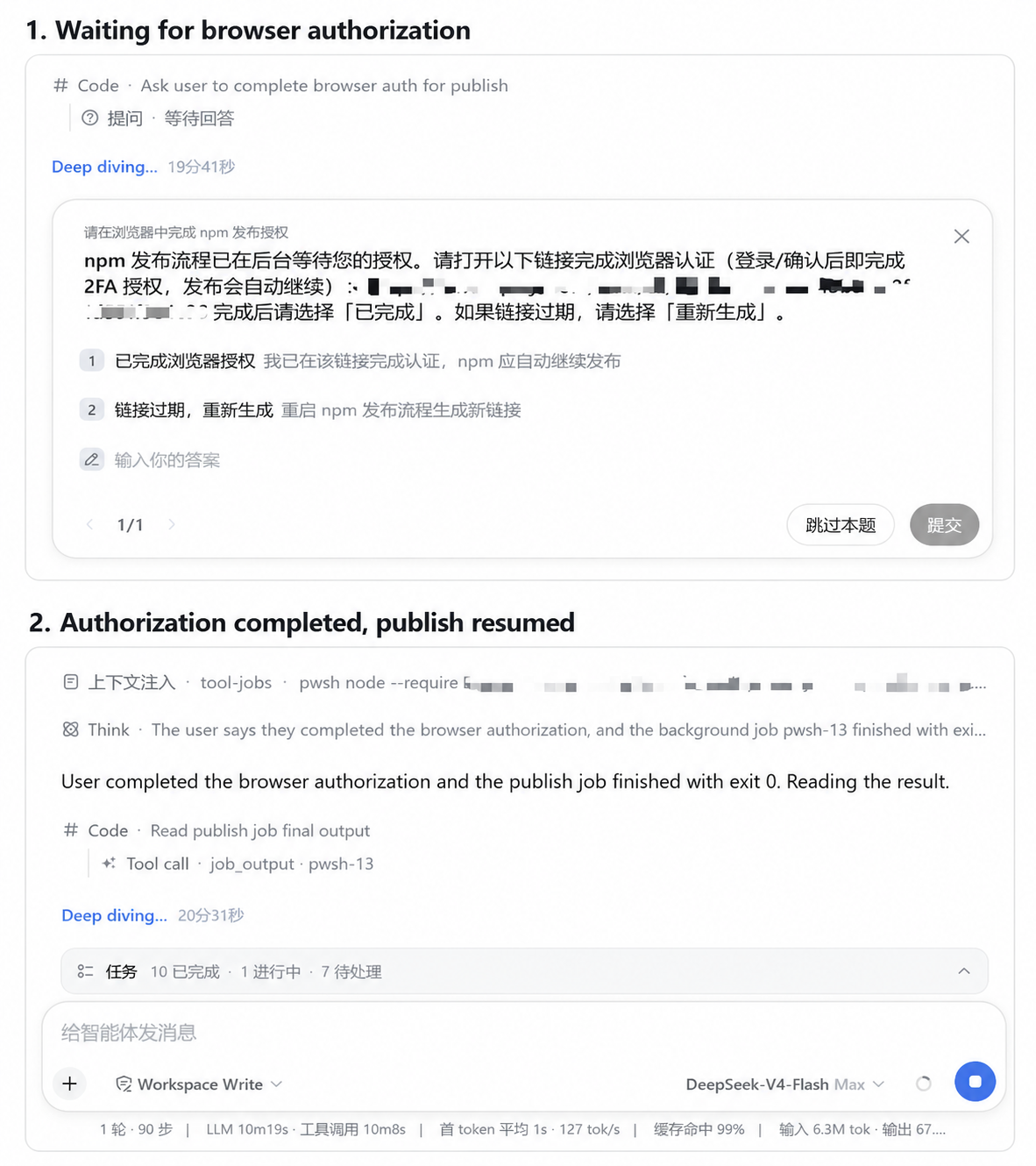
Screenshots
Use Cases
- Long-running multi-turn agent tasks gradually diverge from their original requirements during execution.
- Automated pipelines require mid-execution human confirmation for critical architectural or scope changes.
- Multiple concurrent sessions run independent intelligent agents needing granular, per-session intervention control.
Best For
- Engineering developers responsible for building and maintaining complex AI agent workflows.
- Operations teams prioritizing reliability and requiring precise control over agent behavioral boundaries.
- Technical leaders seeking to preserve core user intent while minimizing interruptions during automated runs.
Related Plugins
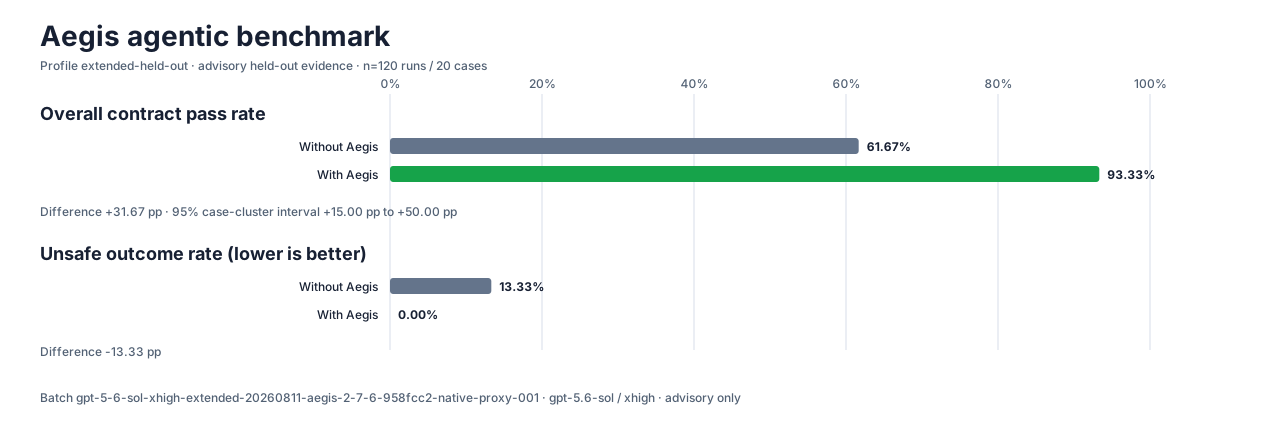
A method pack that makes AI coding agents plan against your real baseline, prove completion with fresh evidence, and reduce reworks and unsafe changes.
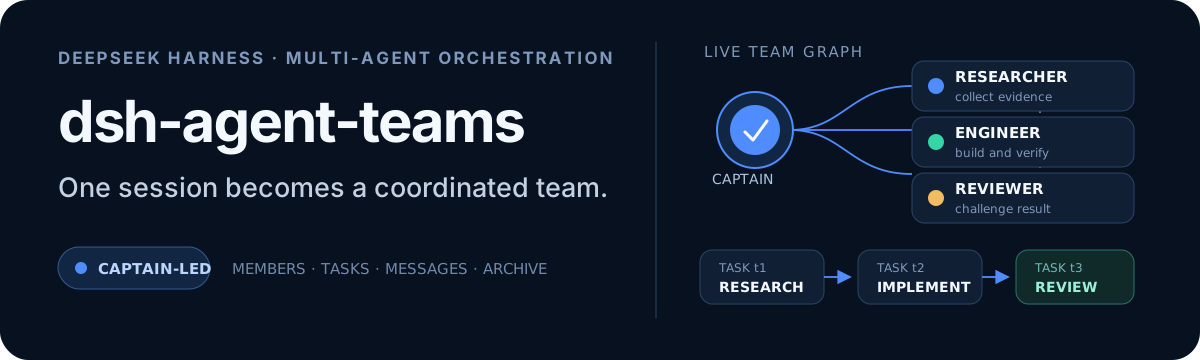
Turns the DeepSeek Harness session into a captain that builds a durable sub-agent team, splits goals into dependency-aware tasks, and coordinates work via direct messages and a live Web UI.
Gives coding agents design judgment, letting Claude Code, Cursor, and 70+ agents generate and iterate high-quality UI, presentations, and graphics right from the terminal.
Run the Pi ecosystem's plugins on DeepSeek Harness, unmodified, via a compatibility layer that implements Pi's public extension ABI on DSH's native services.