dsh-admin
Run the following command in DeepSeek Harness:
dsh plugin install xiaokang6/dsh-admin
Paste the following prompt into your AI chat to install this plugin:
Run dsh plugin install xiaokang6/dsh-admin inside DeepSeek Harness to install this plugin; the project source is available at https://github.com/xiaokang6/dsh-admin
About this plugin
Day-to-day upkeep of a DeepSeek Harness Web GUI deployment—restarting the service, checking for updates, upgrading the Harness itself—normally means hopping into a terminal and chaining together a fragile sequence of commands. A restart, in particular, has to respect systemd cgroup isolation and sweep orphan processes off port :3080; get it wrong and zombie daemons linger. dsh-admin folds all of that into the Web GUI: a small status button sits in the session header, opening a floating management panel, and a full DSH Admin page lives under Settings, so every routine action is one or two clicks away without leaving the browser.
Three capabilities do the heavy lifting. Manual restart fires a backend priority ladder: first a systemd-run transient unit that executes the complete stop → clear :3080 orphans → clean start → health-check script inside an isolated cgroup; if unavailable it falls back through dsh-plugin-op, plain systemctl, and finally a socket-pid kill-and-relaunch, guaranteeing the service is never inadvertently torn down by its own unit. Automatic version checking compares the locally installed @deepseek-ai/dsh against the npm latest tag on page load and every six hours thereafter, respecting semver precedence (stable over release candidate), and surfaces the result as a green, yellow, or red dot so you always know at a glance whether you are current. The one-click update button appears only when a newer version exists, running the global npm install and auto-restarting the service in a single step so the new build is live immediately.
Built for operators running DeepSeek Harness globally via npm on a Linux + systemd host—people who would rather not memorize terminal incantations for every routine maintenance task and want restarts to be safe, health-verified, and reachable entirely from the browser.
Use Cases
- Restart the Harness Web GUI service from the browser with automatic cgroup-isolated orphan cleanup and health verification
- Detect outdated versions against npm latest and apply a global update plus auto-restart in a single click
- Handle all routine maintenance from the header panel or settings page without switching to a terminal
Best For
- Operations engineers running DeepSeek Harness via global npm install on Linux + systemd
- Small teams that want zero-terminal, verifiable daily maintenance workflows
- Engineers who need unified lifecycle management—restart, update, status—for their Harness deployments
Related Plugins
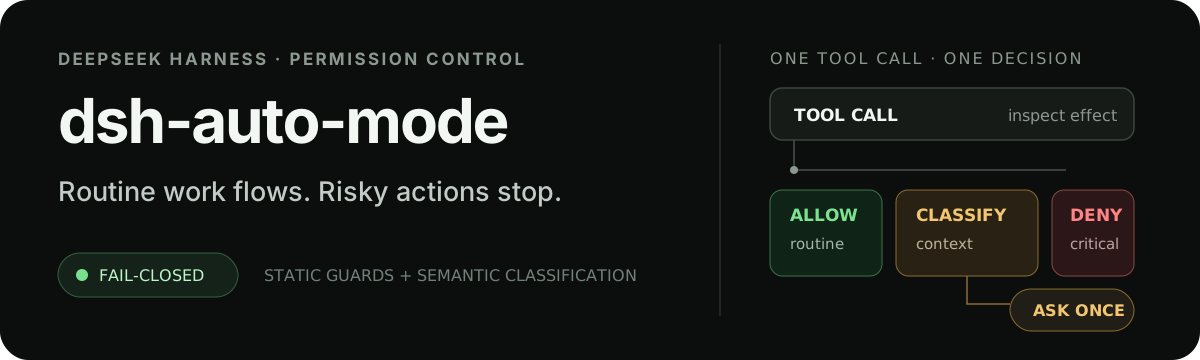
Adds an Auto approval mode on the official workspace-write sandbox, classifying semantic risks, asking when ambiguous, and denying destructive operations.

Undo/rollback system for DSH: config & plugin snapshots, one-click undo/redo/restore, message-level revert, secret masking, safe mode, and offline WebUI/GUI/CLI rescue tools for when DSH won't start.
Packages all 87 SKILL.md files from upstream reverse-skill as a DeepSeek Harness plugin that auto-registers them for authorized reverse engineering, penetration testing, and security research.
Dockyard DSH is a native DeepSeek Harness plugin that unifies official OAuth/client sessions for Codex, Antigravity, Grok, Claude, and Cursor, providing account pool, model catalog, and quota status.