arch-doc
Run the following command in DeepSeek Harness:
dsh plugin install duyanta123/arch-doc
Paste the following prompt into your AI chat to install this plugin:
Run dsh plugin install duyanta123/arch-doc in the DeepSeek Harness terminal to install this plugin; the source repository is available at https://github.com/duyanta123/arch-doc
About this plugin
Picking up an unfamiliar repository is usually a guessing game: which directory is the core module, who depends on whom, where the entry point lives, and how to actually run the thing—the answers often hide half-pages deep in a stale README or exist only in a teammate's head. arch-doc turns that into a one-line prompt. Give it a repo path and it auto-detects the project type, language, and build system, then produces a structured architecture document covering module responsibilities, internal and external dependencies (with a Mermaid diagram), entry-point identification across CLI, Web, Worker, Scheduler, and Library surfaces, and the full run cycle from install and dev to build, test, and deploy.
The output is deliberately practical: a well-scaffolded ARCHITECTURE.md generated from a consistent template, a machine-readable architecture.json for downstream tooling, and a standalone module-dependencies.mmd file you can drop straight into docs or a PR description. If no Node runtime is available it gracefully falls back to shell-based probing, so the workflow never dead-ends.
It is a good fit for developers onboarding into a new codebase, tech leads who need to backfill architecture notes, and any DSH user who wants a reliable auto-read-the-architecture step in their agent pipeline.
Use Cases
- Onboarding into a new codebase and understanding module relationships at a glance
- Backfilling stale technical documentation with accurate architecture notes
- Auto-inserting an architecture analysis step into an agent workflow
Best For
- Developers onboarding into an unfamiliar codebase
- Tech leads who need to backfill or refresh architecture notes
- Developers building pipelines with DSH agent workflows
Related Plugins
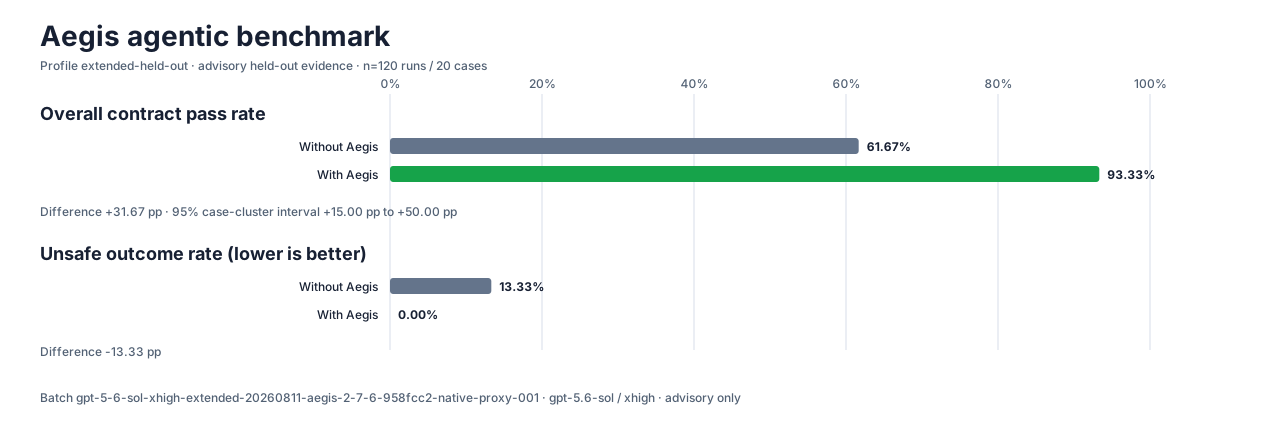
A method pack that makes AI coding agents plan against your real baseline, prove completion with fresh evidence, and reduce reworks and unsafe changes.
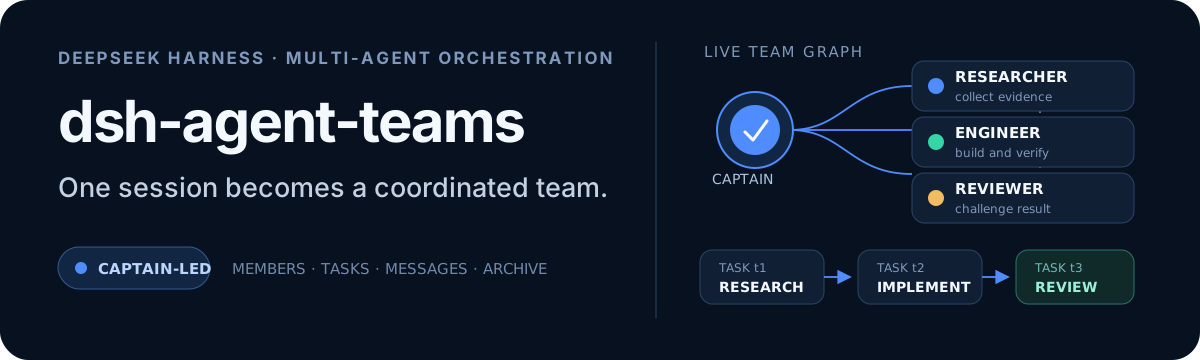
Turns the DeepSeek Harness session into a captain that builds a durable sub-agent team, splits goals into dependency-aware tasks, and coordinates work via direct messages and a live Web UI.
Gives coding agents design judgment, letting Claude Code, Cursor, and 70+ agents generate and iterate high-quality UI, presentations, and graphics right from the terminal.
Run the Pi ecosystem's plugins on DeepSeek Harness, unmodified, via a compatibility layer that implements Pi's public extension ABI on DSH's native services.