dsh-safety-net
Run the following command in DeepSeek Harness:
dsh plugin install Asuna486-desuwa/dsh-safety-net
Paste the following prompt into your AI chat to install this plugin:
Run dsh plugin install Asuna486-desuwa/dsh-safety-net within DeepSeek Harness to install this plugin (source: https://github.com/Asuna486-desuwa/dsh-safety-net)
About this plugin
When a DSH agent runs autonomously, a single misdirected write can silently overwrite profile manifests, session state, or plugin data under ~/.dsh and leave the entire harness unstartable. dsh-safety-net makes that outcome impossible by default: waterfall listeners on fs/write-intent and fs/edit-intent hard-block any mutation targeting DSH critical paths and raise a FS_POLICY_DENIED error that the agent cannot work around by retrying.
Before every refused mutation, the original file is snapshotted into a local backup store, so the worst-case scenario is one restore command away from being undone. Five /safety-net-* slash commands—status, backup, restore, repair, and approve—form a CLI recovery channel that keeps working even after the GUI has gone down, letting you list backups, restore individual snapshots by id, get step-by-step repair instructions, or grant a one-time write bypass to a protected path. Strict mode is on by default, declaring a read-only sandbox baseline and warning when the host sandbox default is wider than necessary.
If you run autonomous agents on DSH and want a guardrail that stays invisible during normal operation but catches the harness before a single bad edit becomes an unrecoverable outage, this plugin is that seatbelt: silent until you need it, and one command away from undoing the damage when you do.
Use Cases
- Prevent autonomous agents from corrupting DSH critical state files
- Run CLI recovery commands after the GUI has gone down
- Auto-snapshot protected files before any blocked write or edit
Best For
- DSH users running autonomous agents
- Teams needing production-grade security guardrails
- Platform developers focused on runtime state integrity
Related Plugins
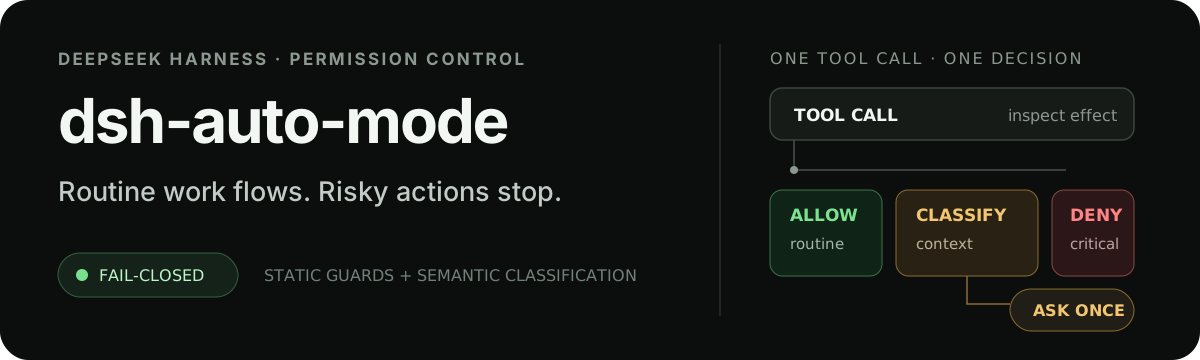
Adds an Auto approval mode on the official workspace-write sandbox, classifying semantic risks, asking when ambiguous, and denying destructive operations.

Undo/rollback system for DSH: config & plugin snapshots, one-click undo/redo/restore, message-level revert, secret masking, safe mode, and offline WebUI/GUI/CLI rescue tools for when DSH won't start.
Packages all 87 SKILL.md files from upstream reverse-skill as a DeepSeek Harness plugin that auto-registers them for authorized reverse engineering, penetration testing, and security research.
Dockyard DSH is a native DeepSeek Harness plugin that unifies official OAuth/client sessions for Codex, Antigravity, Grok, Claude, and Cursor, providing account pool, model catalog, and quota status.