dsh-plugin-boundary
Run the following command in DeepSeek Harness:
dsh plugin install KoanJan/dsh-plugin-boundary
Paste the following prompt into your AI chat to install this plugin:
Run dsh plugin install KoanJan/dsh-plugin-boundary to install this plugin, restart DSH, and the skill will appear in the skill catalog of new sessions; source at https://github.com/KoanJan/dsh-plugin-boundary
About this plugin
The most underrated step in DSH plugin development is not the first line of code but a simple feasibility check: which data channels are officially supported, which are undocumented workarounds that happen to work, and which are architecturally impossible. That knowledge is scattered across source code, issue threads, and community experience with no single reliable reference at hand. This plugin packages those boundary conclusions into one loadable skill so you can run a quick sanity check before you start coding.
Registered via ctx.skills.registerProvider, the skill covers four core areas: the full landscape of client-to-host data channels, official API filesystem limits, lifecycle differences between dynamic and bundle plugins, and the hard rules that govern the install, effect, and debug phases. Structurally it is a SKILL.md (purpose, load timing, usage points) plus a set of rules/*.md files (the rule bodies), organized for quick, on-demand lookup.
If you are about to write or modify a DSH plugin, loading this skill first to walk through the boundaries can save you from shipping code that relies on undocumented behavior. Note that the conclusions were verified against DSH 0.1.0-rc.6, so re-checking critical rules after a DSH upgrade is strongly recommended.
Use Cases
- Verifying data channel and API support before writing a DSH plugin
- Checking filesystem limits and lifecycle rules when modifying an existing plugin
- Diagnosing install, effect, or debug phase failures
Best For
- Developers new to DSH plugin development
- Teams that need consistent boundary knowledge across projects
- Technical writers maintaining DSH platform docs or training materials
Related Plugins
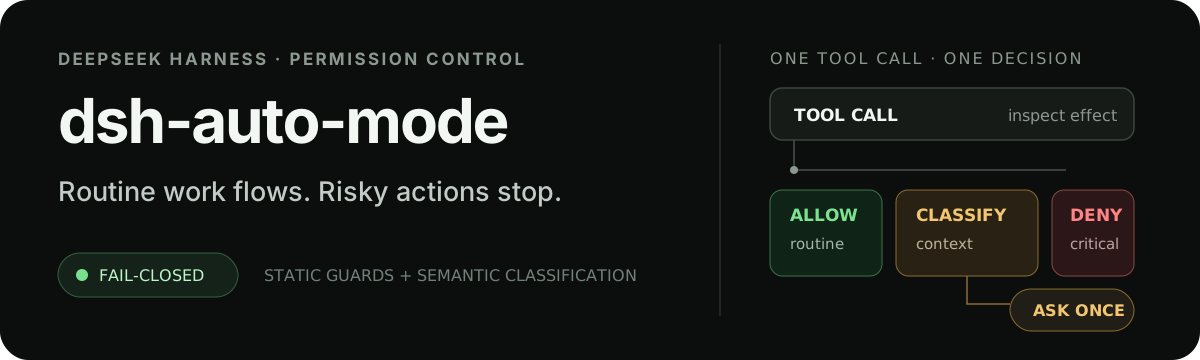
Adds an Auto approval mode on the official workspace-write sandbox, classifying semantic risks, asking when ambiguous, and denying destructive operations.

Undo/rollback system for DSH: config & plugin snapshots, one-click undo/redo/restore, message-level revert, secret masking, safe mode, and offline WebUI/GUI/CLI rescue tools for when DSH won't start.
Packages all 87 SKILL.md files from upstream reverse-skill as a DeepSeek Harness plugin that auto-registers them for authorized reverse engineering, penetration testing, and security research.
Dockyard DSH is a native DeepSeek Harness plugin that unifies official OAuth/client sessions for Codex, Antigravity, Grok, Claude, and Cursor, providing account pool, model catalog, and quota status.