dsh-gpt-compat
Run the following command in DeepSeek Harness:
dsh plugin install YaoaY/dsh-gpt-compat
Paste the following prompt into your AI chat to install this plugin:
Run dsh plugin install YaoaY/dsh-gpt-compat inside a DeepSeek Harness session to install this plugin; the full source repository is available at https://github.com/YaoaY/dsh-gpt-compat .
About this plugin
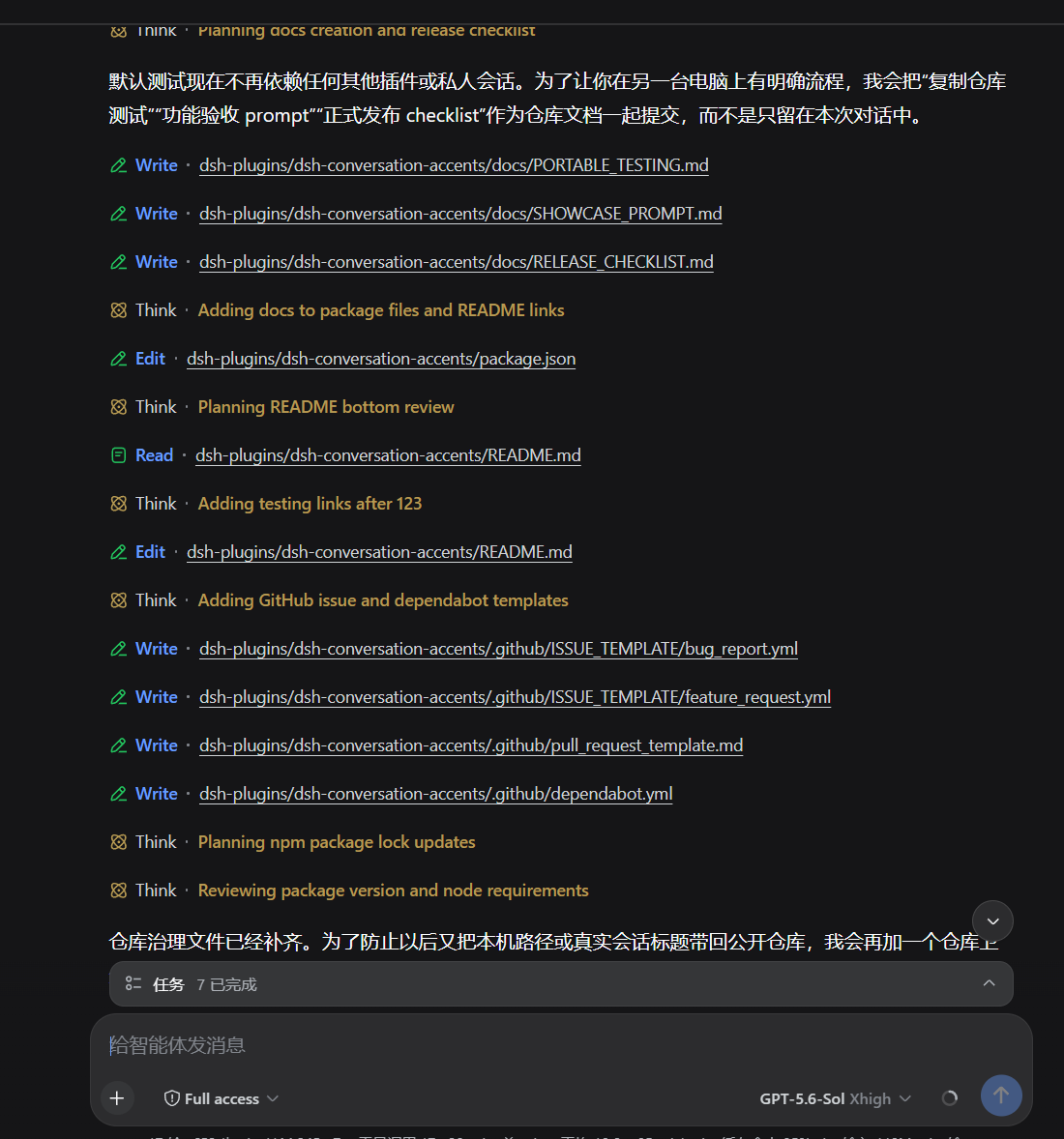
When driving a DeepSeek Harness (DSH) profile with GPT or Codex-class models, a subtle but persistent issue often shows up: these models tend to attach sandbox escalation parameters (sandbox_permissions and justification) even during routine write operations. To the DSH sandbox engine each of those fields reads as a privilege-escalation request, so the same operation gets denied over and over and tool calls fall into a retry loop.
dsh-gpt-compat addresses exactly that gap with a precise, fail-closed approach. It strips the two escalation fields only when it can prove the request is redundant, meaning the requested permissions are no wider than the current session policy, so the tool simply executes under the existing policy. Genuine escalation requests that carry a non-empty justification are left untouched and continue through DSH's native approval flow. Isolated fields, empty-justification escalations, unknown patterns, and policy-parse failures are all preserved for the DSH core to validate or reject. Configuration is minimal: declare the provider list and the tool-name list you want covered.
If your DSH profile connects to GPT, Codex, or similar providers that habitually emit escalation parameters, and you are repeatedly hitting sandbox rejections caused by those redundant fields, this plugin removes the "looks-like-escalation-is-actually-redundant" noise while keeping the security boundary intact.
Screenshots
Use Cases
- GPT or Codex models attached to a DSH profile keep triggering sandbox rejections by appending escalation parameters on routine writes
- You need to strip redundant escalation fields without widening the sandbox boundary so tools run under the current session policy
- In a multi-provider deployment you want the compat logic scoped to specific providers and tools only
Best For
- Developers connecting GPT, Codex, or similar escalation-emitting models to a DeepSeek Harness profile
- DSH administrators managing sandbox policies across multiple providers and tools
- Teams that require fail-closed behavior and refuse to let a plugin bypass the native approval flow
Related Plugins
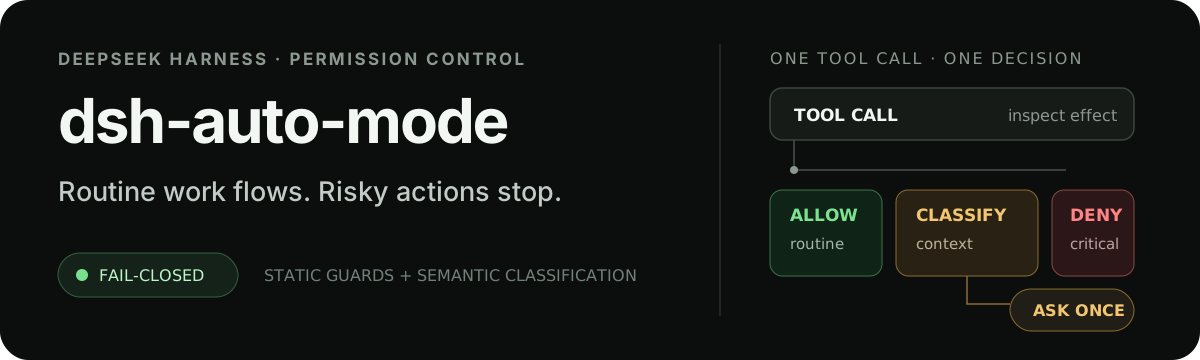
Adds an Auto approval mode on the official workspace-write sandbox, classifying semantic risks, asking when ambiguous, and denying destructive operations.

Undo/rollback system for DSH: config & plugin snapshots, one-click undo/redo/restore, message-level revert, secret masking, safe mode, and offline WebUI/GUI/CLI rescue tools for when DSH won't start.
Packages all 87 SKILL.md files from upstream reverse-skill as a DeepSeek Harness plugin that auto-registers them for authorized reverse engineering, penetration testing, and security research.
Dockyard DSH is a native DeepSeek Harness plugin that unifies official OAuth/client sessions for Codex, Antigravity, Grok, Claude, and Cursor, providing account pool, model catalog, and quota status.