dsh-db-migration
Run the following command in DeepSeek Harness:
dsh plugin install satan9394/dsh-db-migration
Paste the following prompt into your AI chat to install this plugin:
Run dsh plugin install satan9394/dsh-db-migration in DeepSeek Harness to install this plugin; the source code is available at https://github.com/satan9394/dsh-db-migration .
About this plugin
In an agent workflow, database schema changes and data migrations are often isolated steps that sit outside both reasoning and tool invocation, yet they block the critical path. dsh-db-migration integrates database migration tasks as first-class workflow nodes inside the DeepSeek Harness orchestration system, making each migration step schedulable, chainable, and trackable instead of relying on ad-hoc scripts or external systems.
As an agent-workflow plugin, dsh-db-migration treats migration as a structured orchestration concern. It supports declaring migration prerequisites, execution order, and rollback policies within the workflow definition, so that when the agent needs to change a schema it follows a controlled and auditable path. For multi-step, multi-table projects this structured approach meaningfully reduces the chance of errors.
The plugin is best suited for teams building production-grade agent workflows on DeepSeek Harness whose pipeline involves database schema evolution or data migration. Whether it is a one-time table creation or a periodic data model sync, dsh-db-migration keeps the migration step manageable and traceable.
Use Cases
- Executing ordered schema changes across multiple tables within an agent workflow
- Requiring auditable and rollback-capable migration steps before a production release
- Chaining database migration with reasoning and tool calls into a single pipeline
Best For
- Developers building production-grade agent workflows on DeepSeek Harness
- Teams whose pipeline involves database schema evolution or data migration
- Engineering leads who want to move migration steps out of ad-hoc scripts
Related Plugins
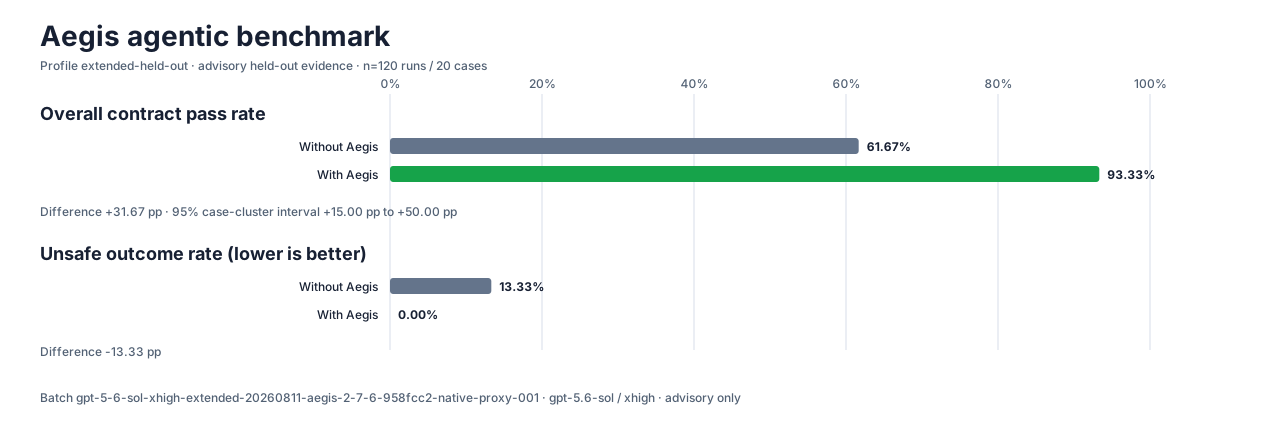
A method pack that makes AI coding agents plan against your real baseline, prove completion with fresh evidence, and reduce reworks and unsafe changes.
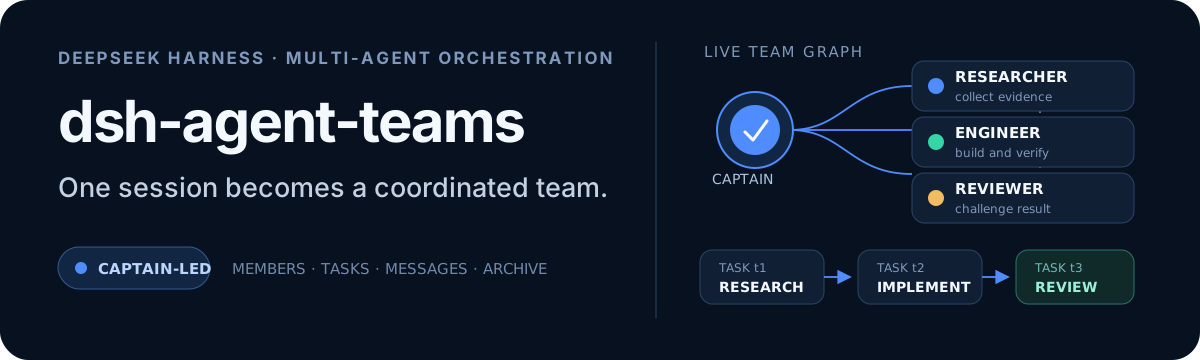
Turns the DeepSeek Harness session into a captain that builds a durable sub-agent team, splits goals into dependency-aware tasks, and coordinates work via direct messages and a live Web UI.
Gives coding agents design judgment, letting Claude Code, Cursor, and 70+ agents generate and iterate high-quality UI, presentations, and graphics right from the terminal.
Run the Pi ecosystem's plugins on DeepSeek Harness, unmodified, via a compatibility layer that implements Pi's public extension ABI on DSH's native services.