dsh-anti-slip
Run the following command in DeepSeek Harness:
dsh plugin install uckkk/dsh-anti-slip
Paste the following prompt into your AI chat to install this plugin:
Run dsh plugin install uckkk/dsh-anti-slip in the DeepSeek Harness terminal to install the plugin; source code is available at https://github.com/uckkk/dsh-anti-slip.
About this plugin
Slip resistance is one of the most overlooked yet critical safety concerns in age-friendly renovations. Decision-makers often lack a structured reference and resort to scattered experience or ad-hoc lookups. dsh-anti-slip addresses this by condensing anti-slip guidance into a single, direct tool call, so safety assessment no longer requires external searches or fragmented documentation.
At its core, the plugin registers an anti_slip tool that, when invoked, returns targeted anti-slip modification suggestions tailored to elderly-friendly environments. The implementation is written entirely in Node.js with zero network dependencies, meaning it runs reliably in offline, intranet, or restricted-network settings without any external requests or third-party services.
It is well suited for senior-care facility managers, age-friendly space designers, safety-assessment professionals, and consultants who need to quickly outline slip-prevention priorities during early-stage planning. No complex setup is required; install the plugin and call the tool directly within your session, keeping your focus on the renovation details that truly affect resident safety.
Use Cases
- Prioritizing slip-prevention measures during early age-friendly renovation planning
- Generating quick rectification suggestions after safety patrols in senior-care facilities
- Conducting internal safety assessments in offline or intranet environments
Best For
- Safety managers of senior-care facilities and age-friendly spaces
- Designers working on residential spaces for the elderly
- Consultants who need to complete safety assessments in offline environments
Related Plugins
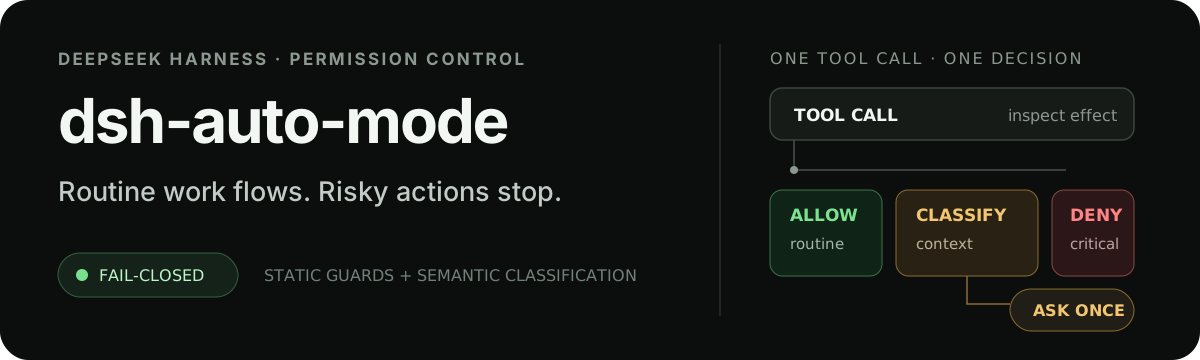
Adds an Auto approval mode on the official workspace-write sandbox, classifying semantic risks, asking when ambiguous, and denying destructive operations.

Undo/rollback system for DSH: config & plugin snapshots, one-click undo/redo/restore, message-level revert, secret masking, safe mode, and offline WebUI/GUI/CLI rescue tools for when DSH won't start.
Packages all 87 SKILL.md files from upstream reverse-skill as a DeepSeek Harness plugin that auto-registers them for authorized reverse engineering, penetration testing, and security research.
Dockyard DSH is a native DeepSeek Harness plugin that unifies official OAuth/client sessions for Codex, Antigravity, Grok, Claude, and Cursor, providing account pool, model catalog, and quota status.