dsh-custom-subagents
Run the following command in DeepSeek Harness:
dsh plugin install ktdhhc/dsh-custom-subagents
Paste the following prompt into your AI chat to install this plugin:
Run dsh plugin install ktdhhc/dsh-custom-subagents in your terminal to install the plugin (source: https://github.com/ktdhhc/dsh-custom-subagents ); restart dsh web after installation to activate it.
About this plugin
In daily DeepSeek Harness workflows, delegating tasks like code review, documentation writing, or web research happens constantly, yet each round is improvised through free-form prompts — no fixed role definition, no explicit tool boundary, and no guard against sub-agent chains spiraling out of control. dsh-custom-subagents turns those recurring specialist roles into a single saved definition. You fill in a name, system prompt, model, and tool set through a short form in Settings > Sub Agents, and from then on the main agent can summon that specialist on demand via delegate_agent. No coding required, and no need to understand DSH internals.
Three core capabilities stand out. First, clear tool boundaries: check off read, write/edit, Shell, web_search, or skill — what you check is exactly what the sub-agent receives, and it can never exceed the existing tool set of the parent agent. Second, nesting protection: native DSH sub-agents have no default depth cap, so a single task can spiral into layers of nested agents and burn through context and time. This plugin adds two layers of defense — a global Disable Nested Delegation toggle and a hard 3-level depth ceiling that always applies, rejecting any delegation chain beyond level three outright. Third, safety and isolation: editing or deleting a definition only affects future delegations, running instances are untouched, and the DSH sandboxing, approval, and security mechanisms remain unaffected by custom prompts.
It suits two audiences well: teams or individuals who delegate to the same specialist roles (code reviewer, doc writer, research agent) every day and want to define each one once and reuse it repeatedly; and security-conscious power users who want a least-privilege tool whitelist plus a hard depth fence without touching source code. Everything is configured through the DSH settings UI — up and running in minutes.
Use Cases
- Delegate expert tasks such as code review, doc writing, and web research
- Prevent unbounded sub-agent nesting that burns tokens and context
- Configure per-role tool whitelists and inheritance policies
Best For
- Developers and teams who delegate the same specialist roles daily
- Power users who care about token costs and tool-security boundaries
- DSH users who want zero-code sub-agent workflow setup
Related Plugins
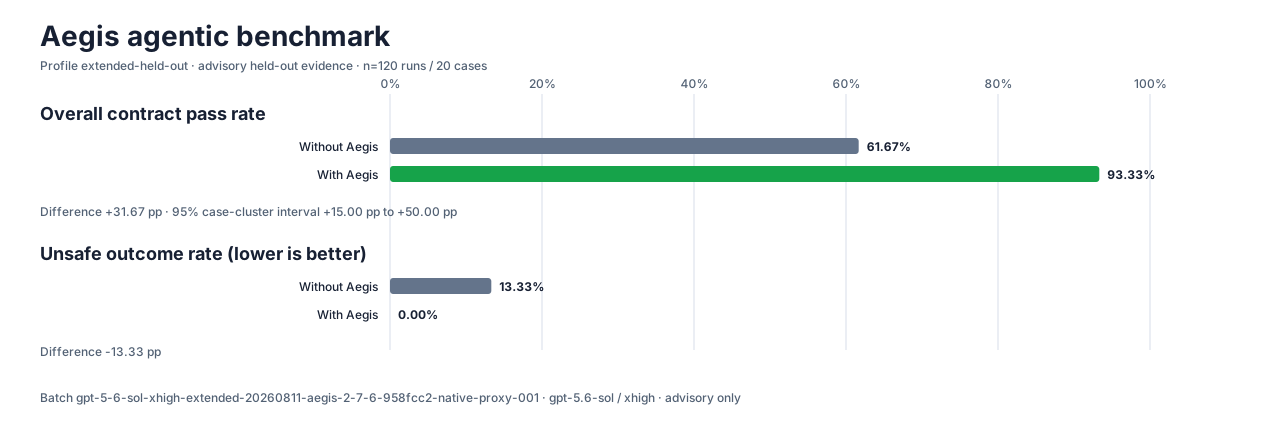
A method pack that makes AI coding agents plan against your real baseline, prove completion with fresh evidence, and reduce reworks and unsafe changes.
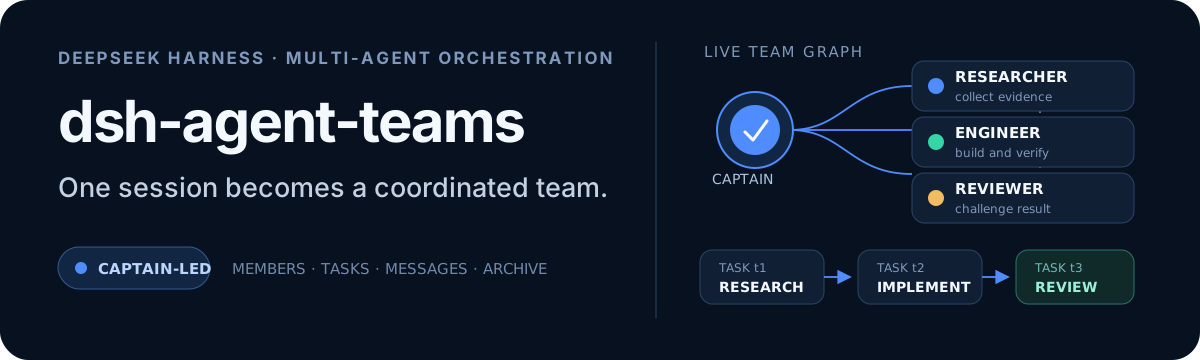
Turns the DeepSeek Harness session into a captain that builds a durable sub-agent team, splits goals into dependency-aware tasks, and coordinates work via direct messages and a live Web UI.
Gives coding agents design judgment, letting Claude Code, Cursor, and 70+ agents generate and iterate high-quality UI, presentations, and graphics right from the terminal.
Run the Pi ecosystem's plugins on DeepSeek Harness, unmodified, via a compatibility layer that implements Pi's public extension ABI on DSH's native services.