dsh-taskswarm
Run the following command in DeepSeek Harness:
dsh plugin install february2015/dsh-taskswarm
Paste the following prompt into your AI chat to install this plugin:
Run dsh plugin install february2015/dsh-taskswarm in your DeepSeek Harness terminal to install the plugin; the source code is hosted at https://github.com/february2015/dsh-taskswarm .
About this plugin
The native subagents and conversational workflows in DSH excel at ad-hoc delegation, but when you face a batch of multi-task, dependency-ordered projects that need to run in parallel, there is no isolation, no quality gate, and no crash recovery—kill the process and all in-flight work is lost. TaskSwarm adds a project-level orchestration layer on top: it topologically layers tasks into waves by their dependency DAG, runs tasks within each wave concurrently in isolated git worktree lanes, routes output through an independent reviewer (PASS or REVISE), resolves merge conflicts semantically via a dedicated merger agent, and integrates everything into a single branch.
The whole pipeline is built for production resilience: every lane commits checkpoints at step boundaries so a crash never loses committed work; durable on-disk state supports pause, resume, and single-lane re-runs; a file mailbox lets the supervisor and workers communicate asynchronously without sharing context; and a zero-dependency Web Dashboard auto-starts with each batch, giving you real-time visibility into wave progress and lane status. Notifications are generated once by the engine in fully formed bilingual messages, so the supervisor never burns tokens re-explaining them.
If you regularly run multiple AI agents in parallel inside DSH and want them to stay isolated, produce reviewable output, survive process crashes, and remain observable end-to-end, TaskSwarm is the orchestration layer built for that scenario.
Use Cases
- Split a batch of interdependent dev tasks into waves and advance lanes in parallel
- Let multiple AI workers fill isolated git worktrees per module, then review and merge results
- Crash-recover a long-running batch from checkpoints without losing completed work
Best For
- Developers who run multi-agent workflows in DSH daily
- AI orchestration engineers who need to decompose and parallelize large tasks
- Production AI teams that value review quality, crash recovery, and observability
Related Plugins
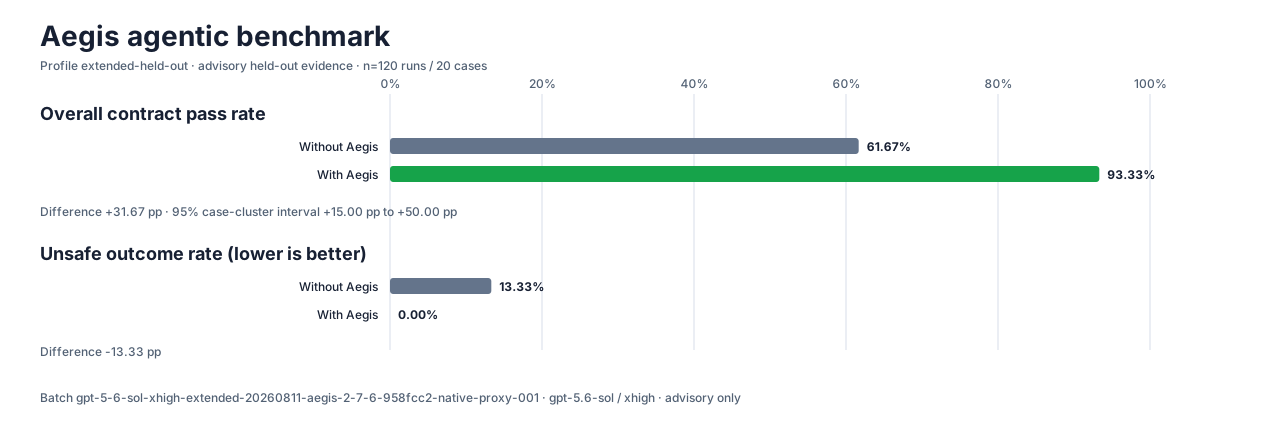
A method pack that makes AI coding agents plan against your real baseline, prove completion with fresh evidence, and reduce reworks and unsafe changes.
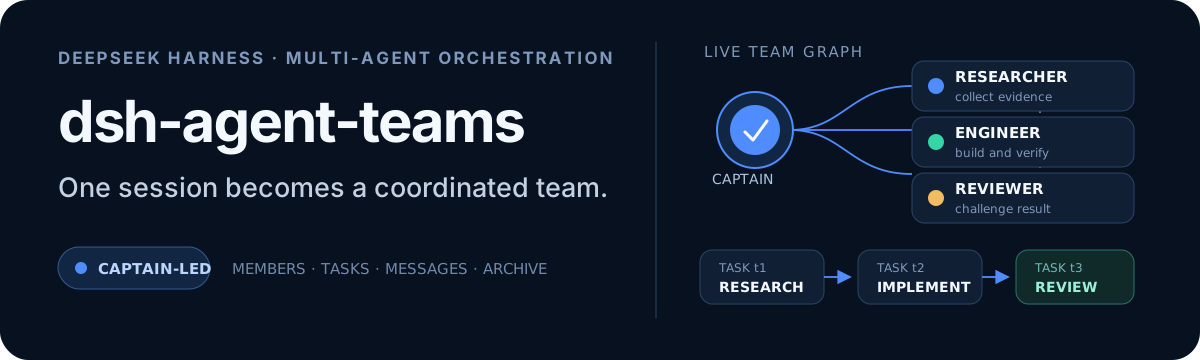
Turns the DeepSeek Harness session into a captain that builds a durable sub-agent team, splits goals into dependency-aware tasks, and coordinates work via direct messages and a live Web UI.
Gives coding agents design judgment, letting Claude Code, Cursor, and 70+ agents generate and iterate high-quality UI, presentations, and graphics right from the terminal.
Run the Pi ecosystem's plugins on DeepSeek Harness, unmodified, via a compatibility layer that implements Pi's public extension ABI on DSH's native services.