dsh-surface-contract-proof
Run the following command in DeepSeek Harness:
dsh plugin install dongsheng123132/dsh-surface-contract-proof
Paste the following prompt into your AI chat to install this plugin:
Run dsh plugin install in the DeepSeek Harness terminal to add this plugin; the full source is at https://github.com/dongsheng123132/dsh-surface-contract-proof, and the inspect and verify tools become available after a session restart.
About this plugin
After upgrading the DSH ToolRuntime, MCP, or CLI pipeline, the key question is whether recorded request/response envelopes still preserve the same semantic contract. dsh-surface-contract-proof offline-verifies SHA-256-pinned JSON fixtures across all three machine surfaces, checking schema versions, success/conflict bits, exit-code mapping, timeout and out-of-order behavior, and result digests without executing targets, calling the network, or replaying side effects.
Safety guarantees: all three surface types must be present; fixtures must bind target revisions and byte hashes; missing, stale, or drifted fixtures fail closed. Reports expose only hashes, identities, statuses, and differing field names-never request arguments, response bodies, or credentials. Paths are restricted to workspace-relative regular files with atomic read-back verification.
Ideal for DSH developers and platform engineers performing upgrade regressions or contract audits. Unlike generic Pact or OpenAPI tools, it is purpose-built for the three DSH machine surfaces and operates fully offline.
Use Cases
- Offline-compare recorded envelopes after upgrading ToolRuntime, MCP, or CLI to confirm the semantic contract has not drifted
- Fail-closed validation of schema versions, exit-code mapping, and conflict semantics with SHA-256-pinned fixtures before release
- Audit whether success, conflict, and timeout behaviors remain identical across all three DSH surfaces between revisions
Best For
- Platform engineers maintaining DSH ToolRuntime or MCP services
- Release managers who need repeatable offline regression evidence
- Developers performing contract audits and upgrade decisions in the DSH ecosystem
Related Plugins
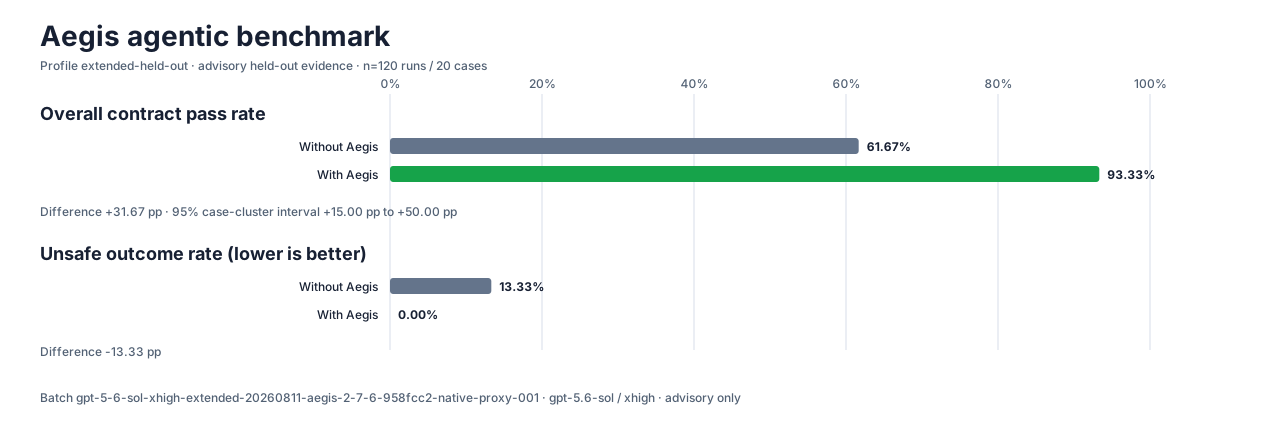
A method pack that makes AI coding agents plan against your real baseline, prove completion with fresh evidence, and reduce reworks and unsafe changes.
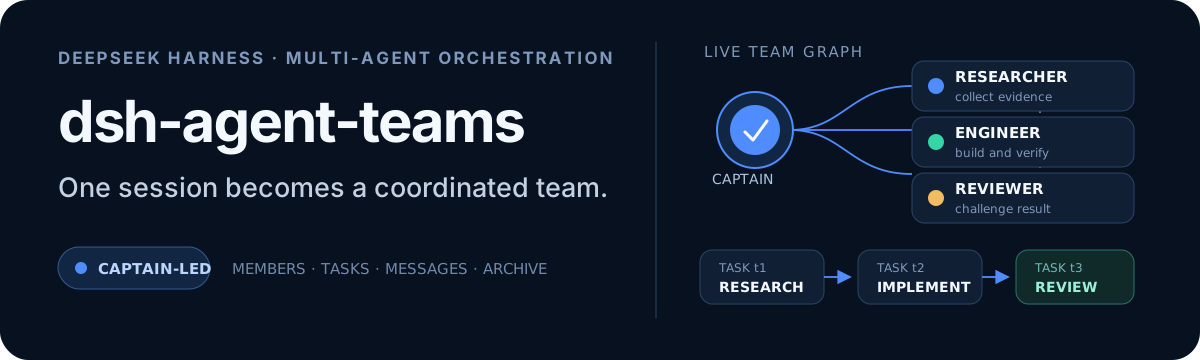
Turns the DeepSeek Harness session into a captain that builds a durable sub-agent team, splits goals into dependency-aware tasks, and coordinates work via direct messages and a live Web UI.
Gives coding agents design judgment, letting Claude Code, Cursor, and 70+ agents generate and iterate high-quality UI, presentations, and graphics right from the terminal.
Run the Pi ecosystem's plugins on DeepSeek Harness, unmodified, via a compatibility layer that implements Pi's public extension ABI on DSH's native services.