dsh-mcp-settings
Run the following command in DeepSeek Harness:
dsh plugin install aka-danielZhang/dsh-mcp-settings
Paste the following prompt into your AI chat to install this plugin:
Run dsh plugin install aka-danielZhang/dsh-mcp-settings in DeepSeek Harness to install the bundle from https://github.com/aka-danielZhang/dsh-mcp-settings, then restart the Web profile to manage MCP servers from Settings > MCP.
About this plugin
If you are managing multiple MCP servers on DeepSeek Harness, hand-editing configuration files, troubleshooting connection states one by one, and constantly weighing credential security against usability can be a real grind. dsh-mcp-settings bundles the three MCP plugins originally embedded in Harness (the manager, the inventory service, and the settings UI) into a single installable out-of-tree bundle, letting you handle the full lifecycle from configuration to monitoring directly in the Web settings page.
Its core responsibilities span three entries: the manager owns the mcp.servers namespace, starts and stops one in-box MCP client fiber per enabled server, and publishes a merged connection status; the inventory service exposes a read-only mcpInventory/list Remote; and the settings page offers dual Form and JSON editing, per-server enable toggles, a status poll every two seconds (up to sixty seconds), and live tool counts. For credentials, HTTP servers use authorizationCredentialRef to build a Bearer header while stdio servers use envCredentialRefs to bind environment-variable references, so keys always stay inside the Harness credential service and never leak into the MCP settings document. When a credential rotates, only the affected servers restart while the rest of the connections remain untouched.
This plugin is aimed at teams and individual developers who run a DeepSeek Harness development build (currently compatible with 0.1.0-rc.7), need a centralized Web dashboard for multiple MCP servers, and have explicit requirements for credential isolation. Note that it depends on the Harness build emitting the mcp-client/status event, which has not yet landed on the public default branch, so pair it with the matching development release.
Use Cases
- Configure and toggle multiple MCP servers from a single Web settings page
- Isolate secrets in the Harness credential service via reference names instead of writing them into config
- Monitor live connection status and restart only affected servers during credential rotation
Best For
- Developers running a DeepSeek Harness development build who need a Web-based MCP dashboard
- Teams operating multiple stdio or HTTP MCP servers that require centralized management
- Engineers with explicit requirements for credential isolation and secure rotation workflows
Related Plugins
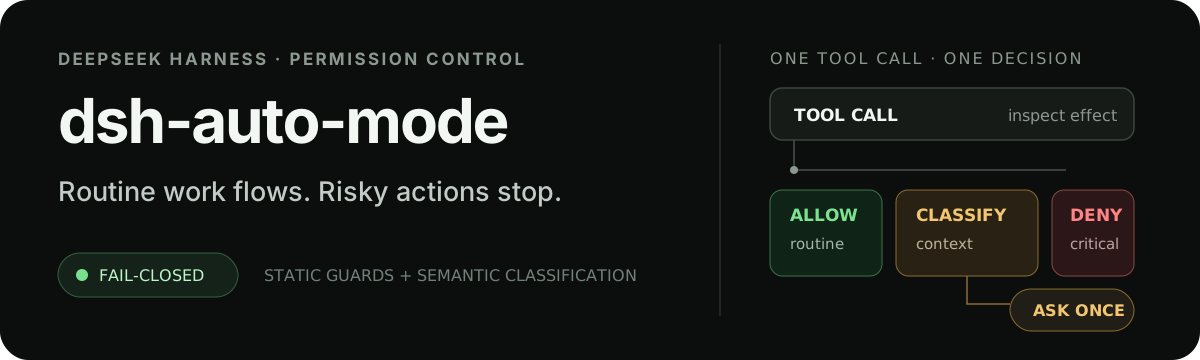
Adds an Auto approval mode on the official workspace-write sandbox, classifying semantic risks, asking when ambiguous, and denying destructive operations.

Undo/rollback system for DSH: config & plugin snapshots, one-click undo/redo/restore, message-level revert, secret masking, safe mode, and offline WebUI/GUI/CLI rescue tools for when DSH won't start.
Packages all 87 SKILL.md files from upstream reverse-skill as a DeepSeek Harness plugin that auto-registers them for authorized reverse engineering, penetration testing, and security research.
Dockyard DSH is a native DeepSeek Harness plugin that unifies official OAuth/client sessions for Codex, Antigravity, Grok, Claude, and Cursor, providing account pool, model catalog, and quota status.