dsh-guardian
Run the following command in DeepSeek Harness:
dsh plugin install akira399/dsh-guardian
Paste the following prompt into your AI chat to install this plugin:
Install it in DeepSeek Harness by running dsh plugin install akira399/dsh-guardian; the source is available at https://github.com/akira399/dsh-guardian.
About this plugin
In a DSH environment with multiple plugins and agents, a single missing inject declaration can crash the entire plugin tree, a silent tool-call loop or runaway subagent recursion can stall a session indefinitely, and an ill-timed host restart can kill a task mid-execution. These failures share one trait: hard to diagnose after the fact, hard to notice before they happen.
dsh-guardian builds four lines of defense around four real-world lessons. A preflight scanner statically checks that every ctx usage in a new plugin matches its inject declarations, catching broken plugins before they can take down the host. A sliding-window loop detector flags repeated tool calls and steers the agent toward a different approach. A nesting-depth counter stops subagent recursion from running away. A safeToRestart status endpoint, backed by a safe-restart script, refuses to restart the host while any session is still running. Every action is detection, gentle steering, or event logging only. The plugin never terminates a task, and config changes take effect hot without a restart.
Ideal for users who maintain multiple DSH plugins, orchestrate multi-agent workflows, or need to restart the host regularly. It does not alter the existing workflow; it simply adds a quiet safety net that nudges the agent back on track when something goes sideways.
Use Cases
- Statically scan inject declarations before deploying a new plugin to prevent host crashes
- Monitor subagent nesting depth to cap runaway recursion in multi-agent workflows
- Check safeToRestart before restarting the host to avoid killing in-flight tasks
Best For
- Developers maintaining multiple DSH third-party plugins
- Users orchestrating multi-agent or tool-loop workflows
- Ops engineers who restart the DSH host frequently
Related Plugins
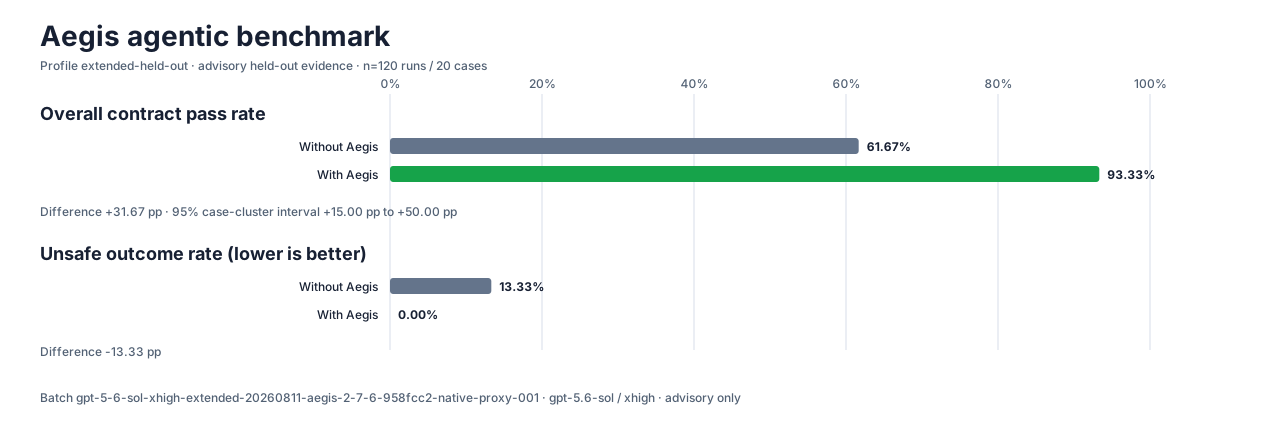
A method pack that makes AI coding agents plan against your real baseline, prove completion with fresh evidence, and reduce reworks and unsafe changes.
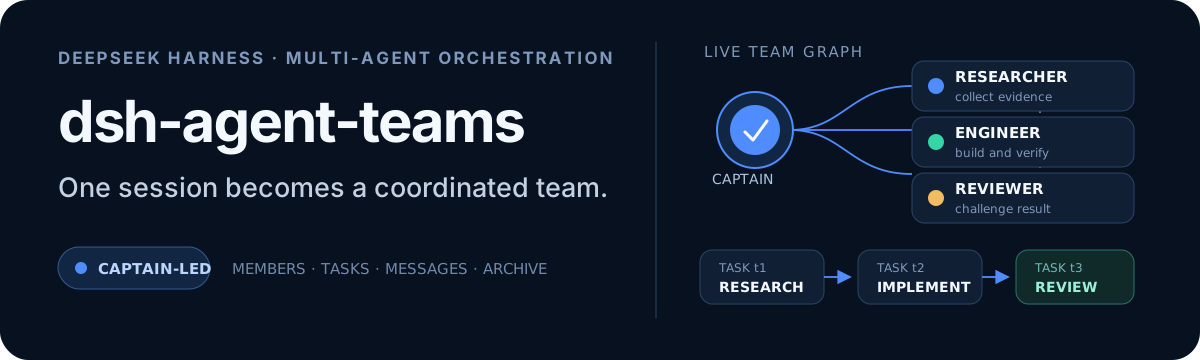
Turns the DeepSeek Harness session into a captain that builds a durable sub-agent team, splits goals into dependency-aware tasks, and coordinates work via direct messages and a live Web UI.
Gives coding agents design judgment, letting Claude Code, Cursor, and 70+ agents generate and iterate high-quality UI, presentations, and graphics right from the terminal.
Run the Pi ecosystem's plugins on DeepSeek Harness, unmodified, via a compatibility layer that implements Pi's public extension ABI on DSH's native services.