dsh-agent-lead
Run the following command in DeepSeek Harness:
dsh plugin install JunguangJiang/dsh-agent-lead
Paste the following prompt into your AI chat to install this plugin:
Run dsh plugin install JunguangJiang/dsh-agent-lead in the DeepSeek Harness CLI to install the plugin; source code is available at https://github.com/JunguangJiang/dsh-agent-lead .
About this plugin
Running multiple AI agents on the same codebase invites a familiar mess: the main agent plans and edits at the same time, two subagents silently modify the same file, and acceptance checks turn into rubber-stamping. dsh-agent-lead's lead mode draws a hard line. Once you toggle /lead on, the orchestrator's write, edit, and str_replace_editor tools are blocked outright; it can only understand, decompose, dispatch, verify, and supervise. Every code change must flow through assign to a background subagent, and each dispatch pops up a model picker so you decide which model does the work and what it costs.
The plugin's heart is the scope territory contract combined with a four-step dispatch decision chain. Every subagent must declare a one-line responsibility summary and a list of file or directory paths upon creation, recorded in a per-session ledger. Before any dispatch the orchestrator must call lead_status to inspect the territory map; the system performs automatic path-overlap detection and rejects the assign call if two agents' paths collide, naming the conflict and suggesting alternatives. Six priority-ordered rules—single writer, rework goes to the original owner, independent review needs a fresh agent, same-domain work reuses existing agents, independent new domains spawn new ones, and contaminated agents retire—cover every routing decision from "should I create a new agent?" to "what does the full task brief look like?"
This is built for solo developers or small teams using dsh on medium-to-large multi-file changes who want disciplined orchestration without ceding control. If you are cost-sensitive about which model handles which subtask, already think in terms of work packages, and want an auditable, conflict-free pipeline between agents, lead mode turns your mental dispatch board into a concrete, tool-enforced workflow.
Use Cases
- Medium-to-large multi-file changes that must be split into parallel subtasks without two subagents writing the same code
- Picking a different LLM per dispatch to match task difficulty and keep token spend under control
- Tracking multiple running subagents in a long session—who's active, who's queued, whose scope overlaps whose
Best For
- Developers using dsh for multi-agent work who already think in work packages
- Solo developers who are cost-sensitive and want to pick the LLM per task
- Small teams needing an auditable dispatch workflow to prevent subagent conflicts
Related Plugins
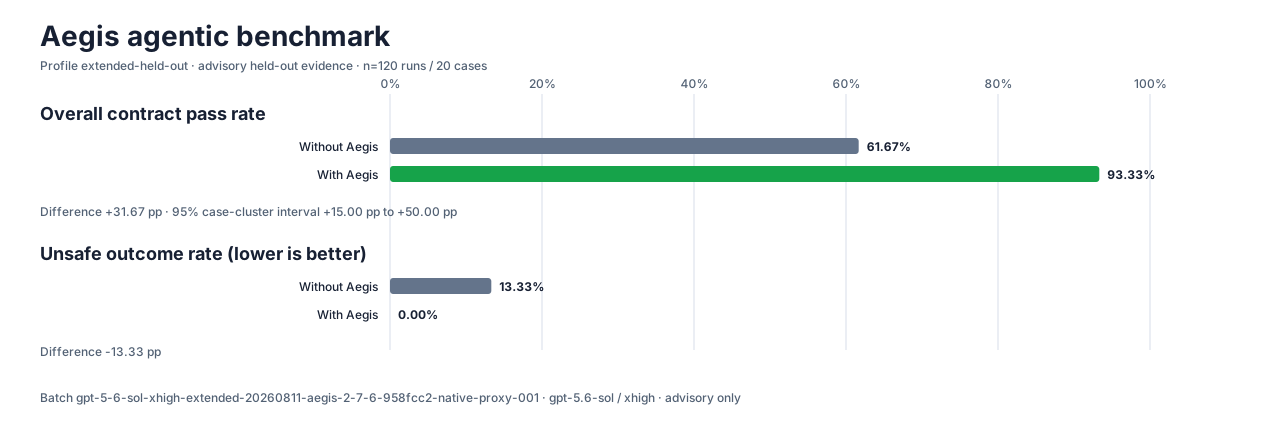
A method pack that makes AI coding agents plan against your real baseline, prove completion with fresh evidence, and reduce reworks and unsafe changes.
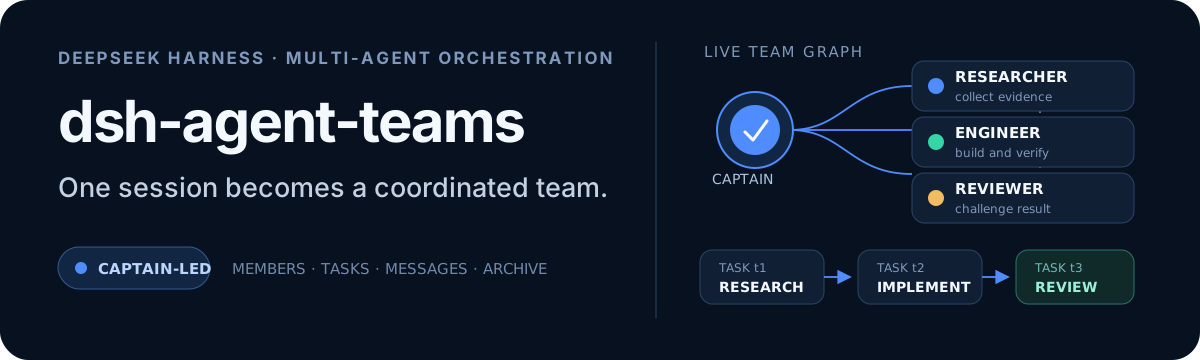
Turns the DeepSeek Harness session into a captain that builds a durable sub-agent team, splits goals into dependency-aware tasks, and coordinates work via direct messages and a live Web UI.
Gives coding agents design judgment, letting Claude Code, Cursor, and 70+ agents generate and iterate high-quality UI, presentations, and graphics right from the terminal.
Run the Pi ecosystem's plugins on DeepSeek Harness, unmodified, via a compatibility layer that implements Pi's public extension ABI on DSH's native services.