
dsh-harmony
Run the following command in DeepSeek Harness:
dsh plugin install memorax-ai/dsh-harmony
Paste the following prompt into your AI chat to install this plugin:
Install the dsh-harmony plugin in DeepSeek Harness from the source repository https://github.com/memorax-ai/dsh-harmony.
About this plugin
dsh-harmony addresses a practical problem in the DeepSeek Harness plugin ecosystem: when one plugin needs to change the internal behavior of another plugin that does not expose the right extension point, developers often have to maintain a fork, edit dependencies manually, or reapply patches after every upgrade. Harmony provides a controlled runtime patch coordination layer that loads patches before the target runs and transforms compiled code in memory, leaving installed files unchanged.
Its core capabilities include Source Patches that locate TypeScript AST nodes and rewrite source ranges, along with patch ordering, enablement controls, status inspection, composite patches, and visible failure handling. For browser plugins, it can keep provider-owned style tags ordered according to patch order, while React-aware patching through dsh-harmony-react can modify compiled JSX calls or shared component definitions.
dsh-harmony is best suited for DSH plugin developers and platform maintainers who need to customize, integrate, or repair behavior inside other plugins without taking on a long-lived fork. It does not turn compiled internals into a stable public API, but it makes those dependencies explicit, ordered, inspectable, and reversible, which is useful for teams that want safer runtime extensions with less maintenance overhead.
Screenshots

Use Cases
- Modify the internal behavior of other DSH plugins without maintaining a fork.
- Order, enable, disable, and inspect runtime patches across plugins.
- Adjust browser plugin styles or compiled React component behavior.
Best For
- Engineers building DeepSeek Harness plugins.
- Platform maintainers customizing or fixing third-party plugin behavior.
- Integration teams reducing fork and manual patch maintenance.
Related Plugins
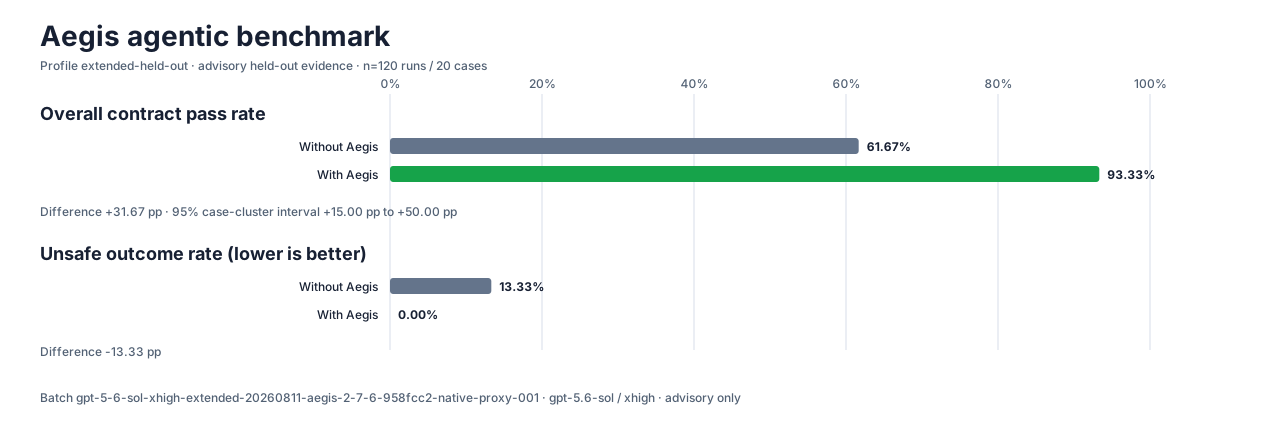
A method pack that makes AI coding agents plan against your real baseline, prove completion with fresh evidence, and reduce reworks and unsafe changes.
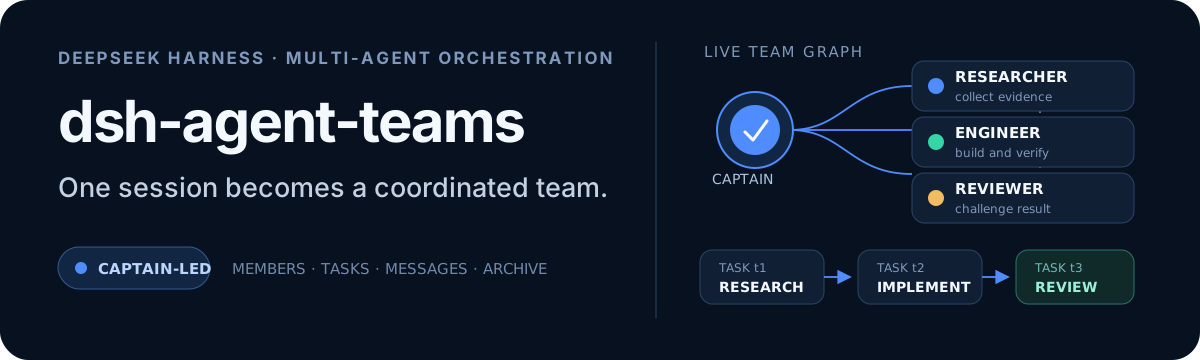
Turns the DeepSeek Harness session into a captain that builds a durable sub-agent team, splits goals into dependency-aware tasks, and coordinates work via direct messages and a live Web UI.
Gives coding agents design judgment, letting Claude Code, Cursor, and 70+ agents generate and iterate high-quality UI, presentations, and graphics right from the terminal.
Run the Pi ecosystem's plugins on DeepSeek Harness, unmodified, via a compatibility layer that implements Pi's public extension ABI on DSH's native services.