dsh-codex-keychain
Run the following command in DeepSeek Harness:
dsh plugin install CpfPatrick/dsh-codex-keychain
Paste the following prompt into your AI chat to install this plugin:
In DeepSeek Harness, please run dsh plugin install CpfPatrick/dsh-codex-keychain and refer to https://github.com/CpfPatrick/dsh-codex-keychain for installation instructions.
About this plugin
When integrating ChatGPT Codex models into DeepSeek Harness, traditional methods often rely on insecure plaintext authentication files, creating potential security risks. dsh-codex-keychain is designed to address this pain point, serving as an independent OAuth provider that connects directly to the Codex backend without requiring OpenAI Platform API keys or reusing legacy auth files.
The core highlight of this plugin is its cross-platform native secure storage mechanism. It utilizes the operating system's credential manager—be it macOS Keychain, Windows Credential Manager, or Linux Secret Service—to securely manage tokens. This ensures all sensitive data remains protected within the system, eliminating the risk of plaintext file leaks while supporting automatic token refresh and device code login for seamless usage in headless environments.
If you are a DeepSeek Harness user seeking the ultimate balance of security and development experience, this plugin is an ideal choice. It not only perfectly integrates DSH's native features like streaming and tool calling but also offers a dedicated web settings page and headless CLI support. Whether for daily development or automated scripting, it allows you to leverage the powerful capabilities of ChatGPT Codex without compromising on credential storage security.
Use Cases
- Securely integrate ChatGPT Codex models in local environments
- Automatic token refresh and storage in automation scripts
- Integration usage in headless servers or CLI environments
Best For
- DeepSeek Harness users prioritizing maximum security
- Developers requiring CLI/headless access
- DevOps engineers valuing native system credential management
Related Plugins
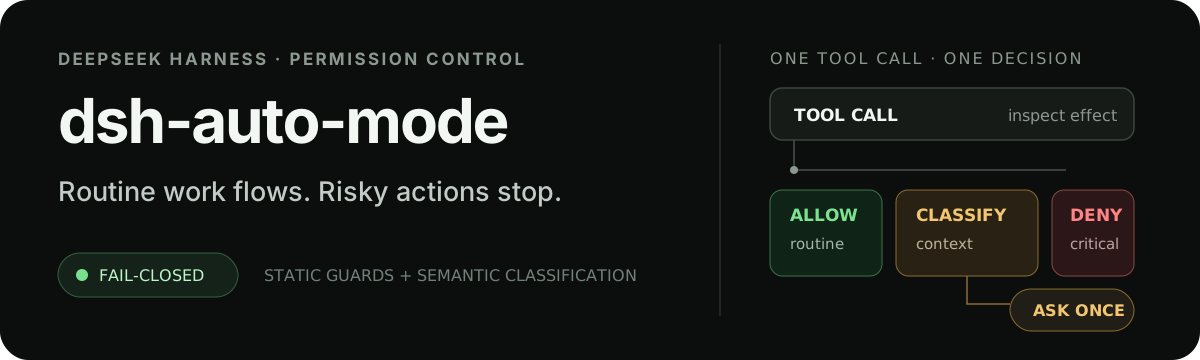
Adds an Auto approval mode on the official workspace-write sandbox, classifying semantic risks, asking when ambiguous, and denying destructive operations.

Undo/rollback system for DSH: config & plugin snapshots, one-click undo/redo/restore, message-level revert, secret masking, safe mode, and offline WebUI/GUI/CLI rescue tools for when DSH won't start.
Packages all 87 SKILL.md files from upstream reverse-skill as a DeepSeek Harness plugin that auto-registers them for authorized reverse engineering, penetration testing, and security research.
Dockyard DSH is a native DeepSeek Harness plugin that unifies official OAuth/client sessions for Codex, Antigravity, Grok, Claude, and Cursor, providing account pool, model catalog, and quota status.