dsh-update-notifier
Run the following command in DeepSeek Harness:
dsh plugin install stuarthu/dsh-update-notifier
Paste the following prompt into your AI chat to install this plugin:
To install this plugin in DeepSeek Harness, run the command `dsh plugin install stuarthu/dsh-update-notifier`. The source code is hosted at https://github.com/stuarthu/dsh-update-notifier.
About this plugin
In the DeepSeek Harness (dsh) ecosystem, plugin updates often happen silently. You install a tool, and after some time, it changes without any interface notification, potentially leading to configuration drift or unexpected behavior. dsh-update-notifier exists to solve this exact pain point. It acts as a vigilant gatekeeper for your plugins, checking the difference between your installed plugins and the registry hourly (or via a manual command). It uses semantic versioning for safe comparisons and never installs updates automatically. Instead, it renders updates as an interactive "bubble" question. You must explicitly check and approve the upgrades yourself before the Agent executes them, ensuring that every update remains firmly under your control.
This plugin is ideal for users or teams who prioritize environment stability and require strict version control. It not only provides an automated check mechanism but also places a heavy emphasis on security—nothing gets upgraded without your explicit click. Furthermore, it possesses robust fault tolerance, gracefully handling network failures, timeouts, or UI rendering issues to ensure the check process never breaks down. Whether for daily development or production environments, it serves as a reliable assistant for your dsh toolchain, keeping your tools up-to-date without requiring you to constantly monitor the screen.
Use Cases
- Periodically check installed plugins for new versions.
- Review changelogs and manually approve upgrades.
- Manually trigger checks to handle network delays or specific needs.
Best For
- DevOps engineers managing a large number of plugin versions.
- Developers who value toolchain stability.
- Enterprise teams requiring strict update control.
Related Plugins
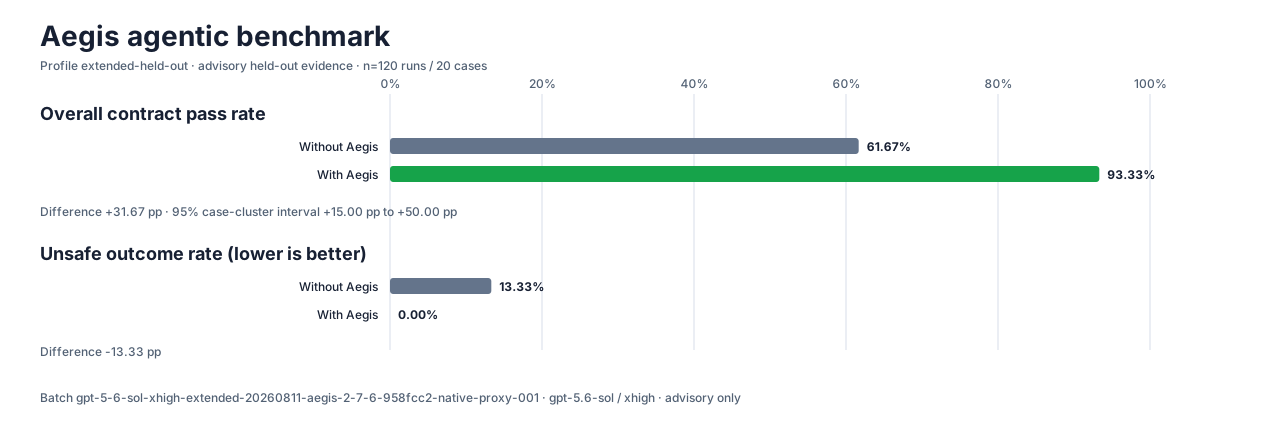
A method pack that makes AI coding agents plan against your real baseline, prove completion with fresh evidence, and reduce reworks and unsafe changes.
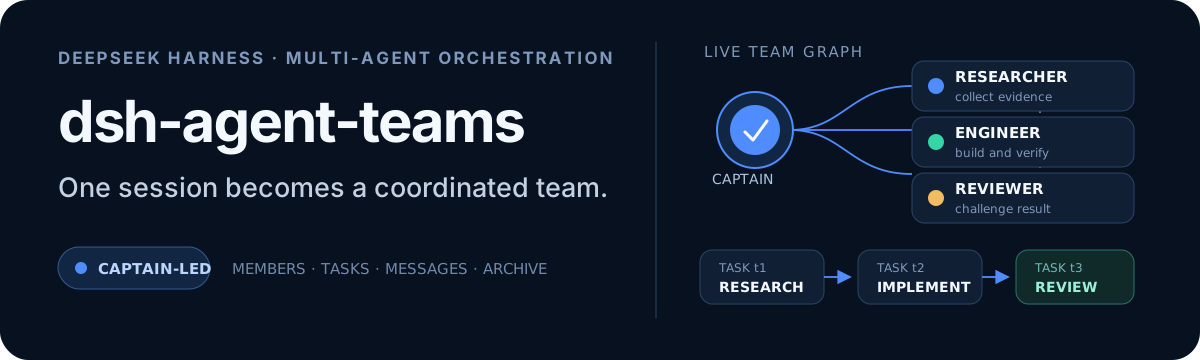
Turns the DeepSeek Harness session into a captain that builds a durable sub-agent team, splits goals into dependency-aware tasks, and coordinates work via direct messages and a live Web UI.
Gives coding agents design judgment, letting Claude Code, Cursor, and 70+ agents generate and iterate high-quality UI, presentations, and graphics right from the terminal.
Run the Pi ecosystem's plugins on DeepSeek Harness, unmodified, via a compatibility layer that implements Pi's public extension ABI on DSH's native services.