dsh-anchored-standard
Run the following command in DeepSeek Harness:
dsh plugin install Jungod1121/dsh-anchored-standard
Paste the following prompt into your AI chat to install this plugin:
In DeepSeek Harness, run dsh plugin install Jungod1121/dsh-anchored-standard to install the plugin from its source repository: https://github.com/Jungod1121/dsh-anchored-standard
About this plugin
dsh-anchored-standard is a two-phase workflow preset for DeepSeek Harness built around a very specific observation: the first request sent to DeepSeek V4 Pro can strongly shape the reasoning trajectory that follows. Presenting too many tools and a long prompt at the beginning may push the model into heavy orchestration too early, while a purely minimal setup can be too narrow for real engineering work. This preset tries to balance the two by anchoring the first turn with a concise prompt and a small tool surface, then exposing the full Standard catalog after the session records its first durable tool call or reply.
The preset chooses an anchor based on the first user message: spec for fixing, maintaining, or debugging; react for building or creating from scratch; and weak for ambiguous tasks where the model classifies the instruction itself. The opening request is kept as clean as possible, with only the selected persona and a limited set of bootstrap tools. After the anchor is established, later requests receive the full Standard tool catalog while preserving the chosen persona, and the state is stored in durable session events so refresh and resume remain consistent.
It is best suited to developers and workflow authors who want more deliberate control over V4 Pro’s early behavior in DeepSeek Harness, especially those working on maintenance, debugging, or new project creation who need both a clean first turn and access to a complete toolset later. Because the approach is experimental and its referenced scores come from a narrow evaluation task, it is a good fit for users who want a testable workflow strategy rather than a universal performance guarantee.
Use Cases
- Use the spec anchor for fixing, maintaining, or debugging existing projects.
- Use the react anchor when building or creating something from scratch.
- Use the weak anchor for ambiguous tasks where the model self-classifies.
Best For
- Developers who want to shape the first-turn reasoning trajectory of DeepSeek V4 Pro.
- Workflow authors who need a clean first request followed by access to the full tool catalog.
- Users working on debugging, maintenance, or project creation who want balanced anchoring and tool coverage.
Related Plugins
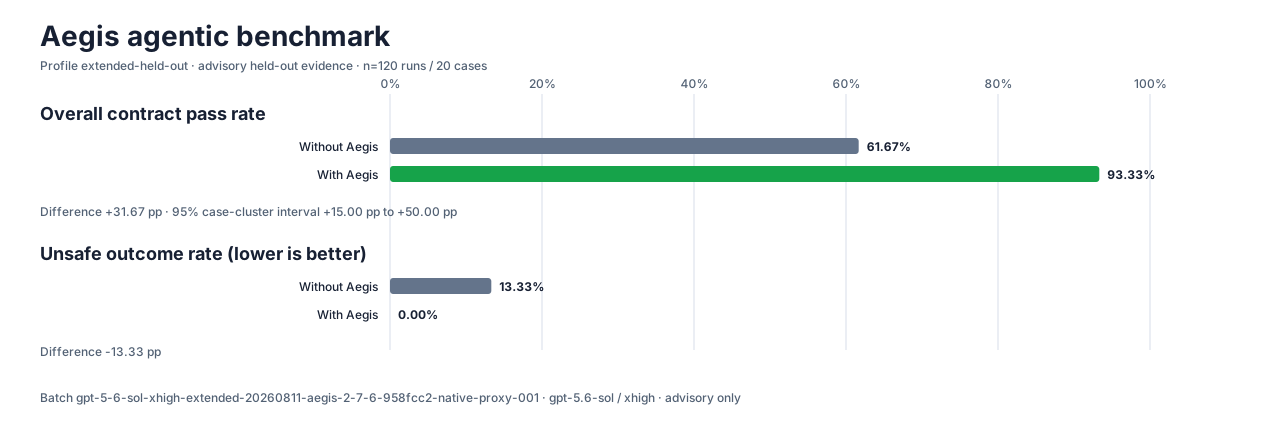
A method pack that makes AI coding agents plan against your real baseline, prove completion with fresh evidence, and reduce reworks and unsafe changes.
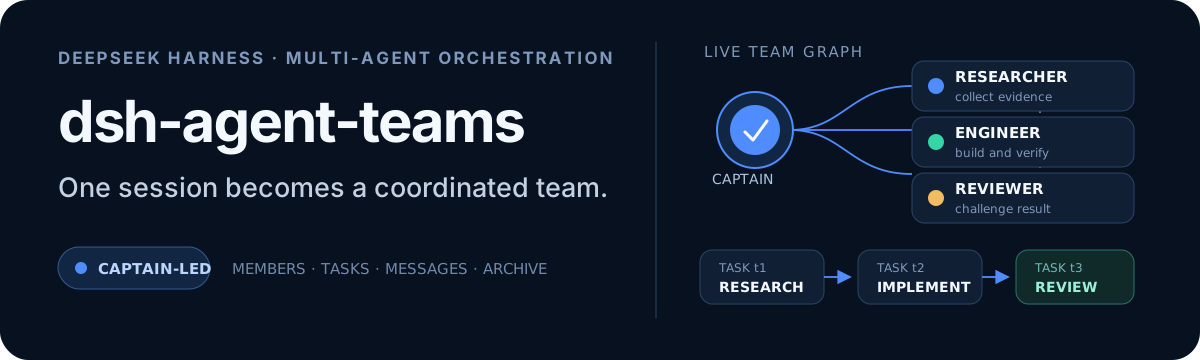
Turns the DeepSeek Harness session into a captain that builds a durable sub-agent team, splits goals into dependency-aware tasks, and coordinates work via direct messages and a live Web UI.
Gives coding agents design judgment, letting Claude Code, Cursor, and 70+ agents generate and iterate high-quality UI, presentations, and graphics right from the terminal.
Run the Pi ecosystem's plugins on DeepSeek Harness, unmodified, via a compatibility layer that implements Pi's public extension ABI on DSH's native services.